Europe's flashpoint. This is where Russia tests NATO every day


A constant noise hangs over Kybartai, a small town on the western edge of Lithuania. Metal hits metal, brakes squeal. A few hundred meters from the railway station there is the border with the Königsberg Oblast, a Russian exclave in the middle of Europe.
For several years now, the harsh, hilly areas where Lithuania, and thus the EU and NATO, border with Russiaare crossed by barbed wire fences. A tired Russian guard stands in front of his booth and looks at the railing, which he rarely raises anymore. The old German farms with the Russian tricolor flag flying in front of them are now, according to many Lithuanians, enemy territory.
There is traffic only at the border station. Russian trains pass through Lithuanian territory day and night. Despite very tense relations between the EU and Russia, it still applies transit agreementwhich was concluded in 2003. Lithuania was just about to join the EU, and Russia was concerned about its exclave's transport links and supplies. Brussels allowed Moscow to run trains from the exclave to Belarus and from there on to the main part of the country.
In addition to goods transported by rail, up to eight sleeper trains pass through the southern part of the country on the Baltic Sea every day. This is still the case today, even though in the context of the war in Ukraine these trains are perceived as potential security risk. From Königsberg, Russians can travel by train to Moscow, St. Petersburg and even to Adler in southern Russia, a city on the Black Sea on the border with Georgia.
The train journey to Moscow takes 19 hours. Russian state railways call it Yantar, amber. After two and a half hours of traveling through the exclave, the gray-red train passes through the Liepona, a border river so narrow you could jump over it. Behind her, eight Lithuanian border guard officers are waiting for him at Kybartai station.
Special rules
The heavy iron door in the rear carriage opens. Tatiana nods to the border guards, but doesn't speak. She works as a conductor for the Russian state railways. She is dressed in an elegant beige blazer, a sheepskin hat and a scarf in Russian national colors. Passengers are strictly prohibited from leaving the train. They have to stay in their sleeping cars, even the toilets are locked. Only conductors and drivers are allowed to enter the Lithuanian platform to clear ice that may form on the brakes.
“Sometimes you can recognize them,” says Dainius, who has worked in the border guard for 20 years. He nods at the Russian conductor. “But this is not the time to chat,” he adds. Dainius watches the platform and six officers board the train to check the passengers' passports and make sure they all have UTD, i.e. transit permitwhich must be applied for at the Lithuanian Embassy.
To prevent spies or soldiers from moving through NATO territory, the requirements for obtaining a transit permit are very strict. The embassy checks the background of applicants and requires identification evidence to justify the tripsuch as family members, real estate or studies in Königsberg. Soldiers are not allowed to transit, nor are military materials or dual-use goods transported.
However, some risks remain. And although this applies to Lithuanian territory, the country does not have much say in the matter of transit.
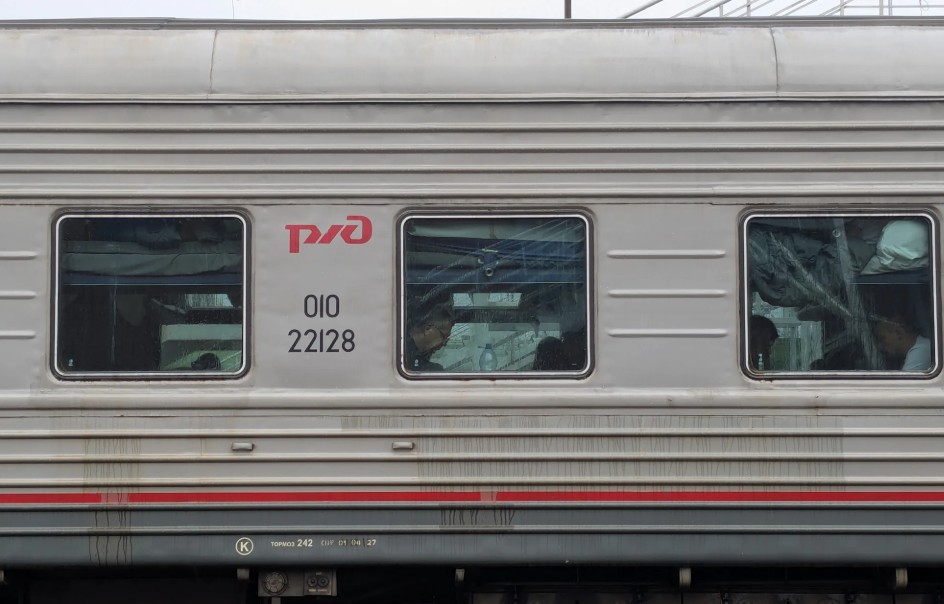
Passengers on a Russian trainJulius Fitzke / Die Welt
A foothold in NATO
The agreement was concluded between Russia and the European Union, which also covers the costs. Transit security is expensive, the EU allocates EUR 25 million (PLN 105 million) to monitoring trains.
In June 2022, four months after the start of the war in Ukraine, there was a dispute over the transit agreement. Lithuania banned the transport of coal, steel and iron to Königsberg through its territory and did not allow many freight trains. Reason: compliance with applicable sanctions.
Russia, which is unable to independently supply its exclave by sea, has threatened severe consequences. For Moscow, the Koenigsberg region has strategic and military importance as a bridgehead in the heart of NATO. The area has a port on the Baltic Sea and is heavily militarized, with Berlin only 460 km away. However, under pressure from the European Commission, trains can use the transit route again from July 2022.
The train waits at Kybartai station for an hour. In the carriages, Russians in tracksuits lounge on their bunks, some eat ready-made pasta or drink tea – hot water is available in each carriage. Children's legs hang from the upper shelves, and there are bottles of juice and cookies on the tables. You can hear muffled laughter behind the glass.
Emergencies
— Incidents are rare, says Rustamas Liubajevas, commander of the Lithuanian border guard. Only recorded since 2003 five escape attemptsthe last one in June. A 21-year-old Russian opened the train doors during the ride and jumped out into a Lithuanian forest.
He was searched for and later captured with the help of helicopters. — Sometimes they carry passengers symbols that are not allowed in Lithuania says Liubajevas. These may be, for example, signs glorifying the war in Ukraine, such as the letter Z on clothes. – In such a case, the person may be refused entry – explains the commander. Additionally, medical emergencies sometimes occur. — Then we stop the train at the nearest possible place and the officers ensure that the injured person receives help.
Rokas V., another border guard, says that trains sometimes have to stop in the interior of the country. This happens during hot summers, when high temperatures hamper the operation of on-board electronics. Occasionally, trains hit moose at night and then they also have to stop.
For the Lithuanian Border Guard this is it cause for concern: localization systems track the train's position and an alarm is triggered in the event of unplanned stops. In addition, the Lithuanian government regularly sends helicopters and drones to accompany the train on its 227-kilometer route through the country.
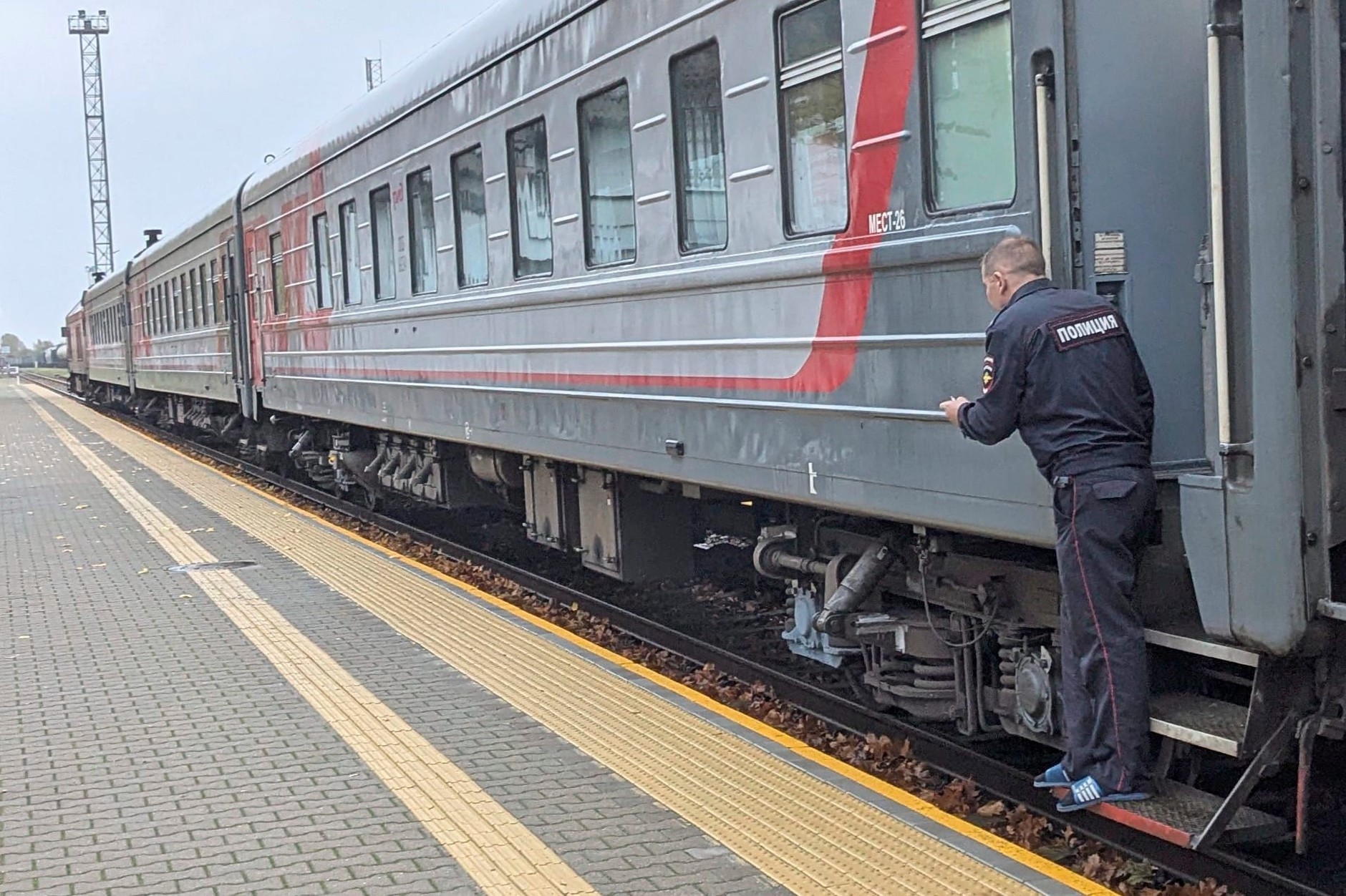
Russian policemanJulius Fitzke / Die Welt
War in the background
At the other end of Lithuania there is Kena station, located less than four kilometers from the border with Belarus. When Jantar enters the station, several border guards are waiting there again. They are to stamp their passports and check that none of the passengers have gone missing while traveling through the country. Three years ago, Lithuanian railways placed posters depicting Russian war crimes in front of train windows on the platform. Shot men in Bucza, corpses in the mud, an old lady in a hospital bed, lifting bloody leg stumps. Underneath is the inscription: “Russia is committing genocide in Ukraine. It's because you don't believe it.”
The border guard knocks on the metal door, and the conductor in a white, blue and red scarf lets the men inside without a word. In the deserted station hall, there are still terminals where Russians and Belarusians could previously register to enter the country. The devices have become useless because from March 1, 2024, no passenger can leave the train, much less enter Lithuanian territory – even with a Schengen visa.
A Russian policeman, who is also traveling by train to Moscow, ignores the conductor's strict prohibition on leaving the compartments. A uniformed man is smoking a cigarette on the bottom rung of the compartment door. However, he did not dare to set foot on the Lithuanian platform.
The train is moving. The Lithuanian locomotive has been disconnected, and the journey continues with the huge colossus from Belarus, spewing black smoke. Children are playing outside the train windows, an old woman is waving her hand. The train disappears in the forest. The hills on the horizon already belong to Belarus.