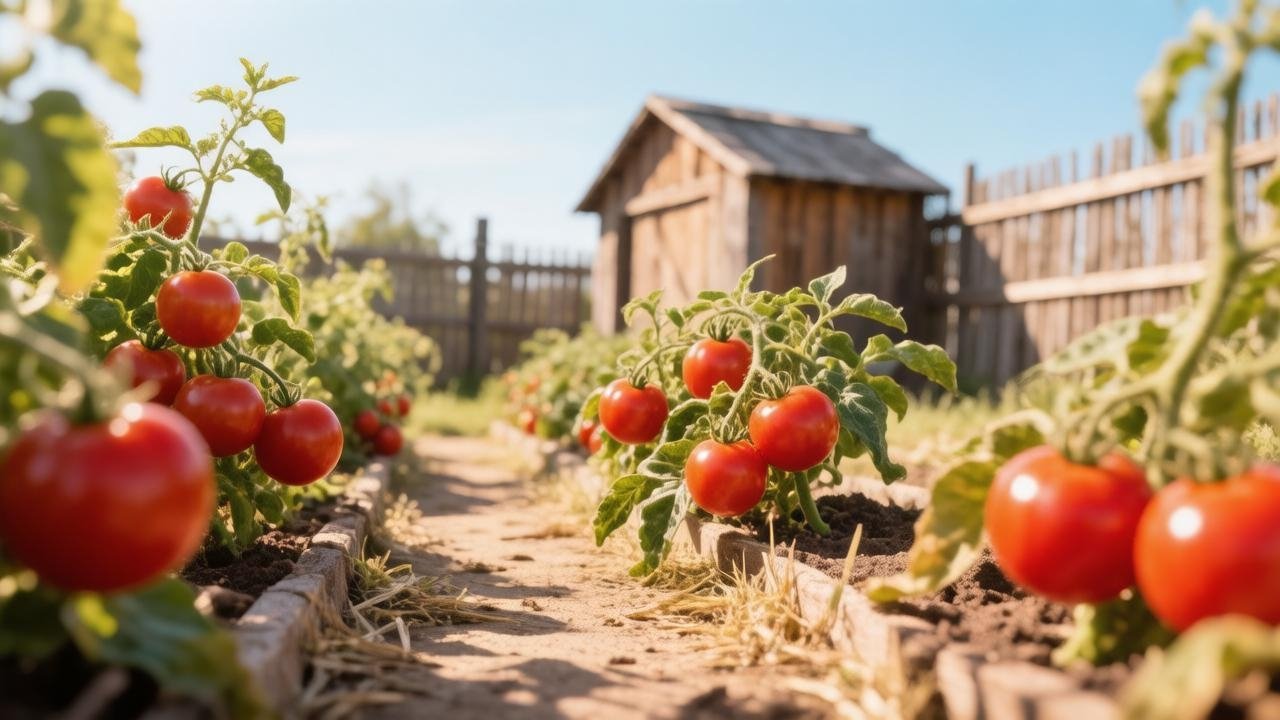
After transplanting to a permanent place, a tomato can present surprises: the leaves curl and dry, the stem acquires a purple tint, or necrotic spots appear on the plant. Even experienced gardeners sometimes confuse these symptoms with crop starvation. The situation is aggravated by temperature changes, different soil composition, dry or humid air.
The author of the Zen channel “In the Garden at Valentine's” (12+) identified three reasons that you need to know about.
Tip #1: The culture is just cold
Many gardeners strive to plant seedlings as early as possible due to the short season. The guideline of warming up the soil to +15 °C is only a minimum threshold, and not a comfort zone. The ideal soil temperature for planting should be +18…+22 °C. In cold soil, the root system functions poorly; even in bright sunshine, the plant cannot obtain water and nutrition in the required volume. Hence the yellowing and drying of the leaves, and signs of a lack of phosphorus or nitrogen.
It is useless to feed in such a situation: root doesn't work. Fertilizing will only create the risk of excess elements when the heat returns. What really helps is keeping the greenhouse warm, covering it with spunbond at night and watering only with settled water at room temperature.
Tip #2: It’s all because of the bright sun
Gardeners often underestimate the influence of ultraviolet radiation. When growing seedlings, lamps do not provide the full spectrum of the sun, so after planting, the tender leaves literally burn: they turn yellow, turn white and dry out. This is precisely why hardening is needed, but not by cold (you can’t get used to it), but by gradual accustoming to bright light. Before planting, it is useful to feed the tomatoes with potassium and phosphorus to store energy and strengthen tissues. And immediately after transplantation, no fertilizers are applied – it’s already hard for the plant.
Tip No. 3: the problem is in fertilizing
Many people underestimate the fact that immediately after transplantation the roots are injured, new hairs have not grown, and the tomato will not absorb high concentrations of salts. They only need low doses, not a “planting hole” of fertilizer. Functional disorders (burns, destruction of chlorophyll) cannot be corrected by nutrition. Seedlings need warmth, water and time to adapt. No element will cure a sunburn.
“If it’s warm and there’s a lot of sun, the seedlings need to be shaded both in the greenhouse and in the beds (that’s how it works out). Throw in agrofibre, shade netting, cucumber netting, and other available means,” shares the author of the blog.