An article entitled “Vladimir Putin is losing control of Russia” appeared in the British magazine The Economist. The author is a former senior government official from the Kremlin who wished to remain anonymous. He claims that “every new step taken by Vladimir Putin, aimed at ensuring his stay in power, only accelerates the process of disintegration”.
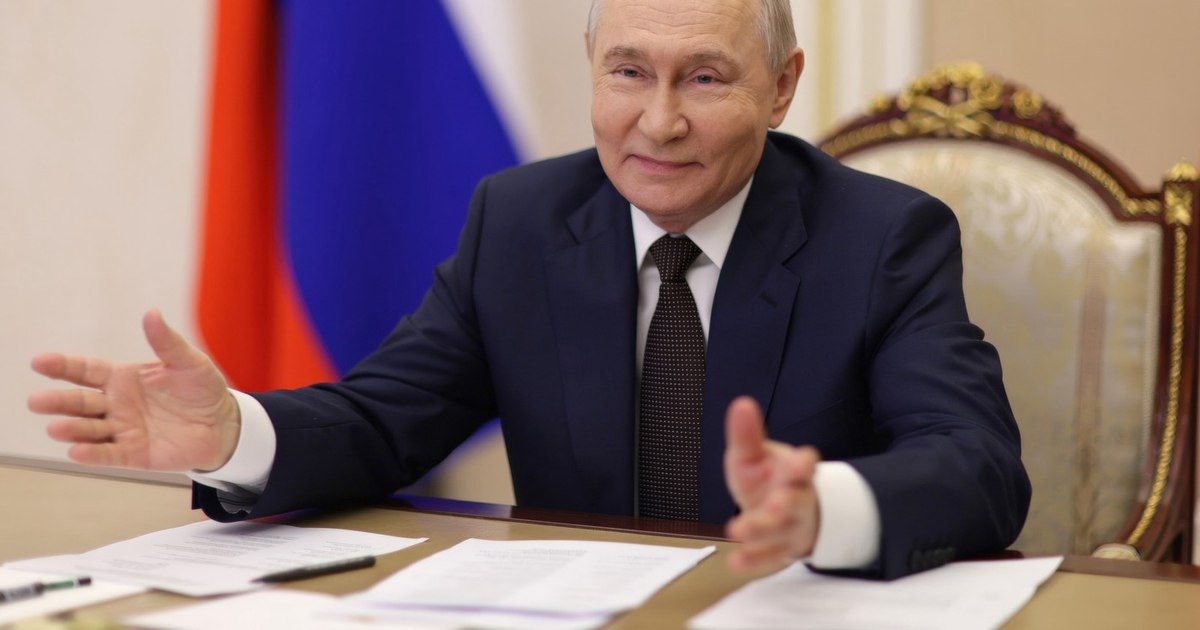
Russian President Vladimir Putin/PHOTO: Profimedia
The article describes a profound change within the Moscow power system: the elites no longer talk about the war in Ukraine as “our project” but “Putin's war”.
According to the author, in the circles of power in Russia, the feeling that President Vladimir Putin has pushed the country to a standstill, and no one knows what comes next, is becoming more and more clear. The first sign would have been a change in the language used by officials, governors and businessmen close to the Kremlin.
“Until last year, everyone said 'we' and 'ours'. Now, they're talking about 'his decisions', 'his war', 'his agenda'”, notes the author.
The former official claims that this is not an open revolt against the Kremlin leader, but a psychological rift between power and its own elites. The regime continues to control the repressive apparatus and the monopoly of force, but it would have lost something essential: the ability to offer a credible vision of Russia's future.
The analysis identifies four main reasons for this erosion of Putin's authority.
1. The costs of war are becoming impossible to hide
The first factor is the rising cost of the war in Ukraine. According to the author, the Kremlin initially tried to present the conflict as a “special operation” carried out by the military and paid mercenaries, while the population was supposed to go about their normal lives.
But the prolonged war brought inflation, higher taxes, deteriorating infrastructure, and a wave of restrictions and censorship.
“Society pays the costs of war at the national level without receiving a clear purpose in return,” the text reads.
2. Elites demand rules and protection
The second reason is the growing discontent of the economic elites. After Western sanctions, many oligarchs and businessmen repatriated their capital and assets to Russia.
The problem is that, without the protection of Western courts and the international legal system, conflicts between interest groups must be resolved within a system considered arbitrary and unpredictable.
The author claims that over the past three years, private assets worth about 5 trillion rubles — the equivalent of about $60 billion — have been confiscated, nationalized or transferred to people close to the Kremlin.
“Even those loyal to the regime no longer demand democracy, but clear rules and institutions capable of arbitrating conflicts,” says the former Russian official.
3. Russia would have been left without a reference model
The third factor is the change in the geopolitical context. According to the author, Russia imagined it could reshape the world order, but in reality it accelerated global chaos and the weakening of international rules.
Moreover, Russia would now face a profound identity crisis. For centuries, the Russian state defined itself in relation to Europe and the West—either by trying to catch up with them or by opposing them.
“The West, as a unitary cultural and political model, is itself in crisis. Russia no longer has an external point of reference to define its own path,” notes the author.
4. Repression without the promise of a future
The fourth element invoked is the intensification of ideological control and repression, without the regime offering the population a clear perspective on the future.
According to the analysis, the old social contract — the state does not intervene in private life and citizens do not get involved in politics — has collapsed.
In the past, the Kremlin bought the loyalty of the population through stability and consumption. Today, the author says, the system offers only surveillance, censorship and restrictions instead.
“The problem is not just repression, but repression without purpose,” warns the former official.
“Every move makes the situation worse”
The conclusion is bleak: Russia would find itself in a situation comparable to the “zugzwang” in chess — a moment when any move made by a player worsens its position.
The author believes that the system built by Putin can survive as long as the leader from the Kremlin remains in power, but each new step taken to consolidate control actually accelerates the regime's degradation.
“He can intensify repression. He can start a new war. But he can no longer rebuild the link between power and the future,” concludes The Economist.