The earthquake story of the genius who saved millions of people from death. How did he get to be mutilated and humiliated the parent of artificial intelligence

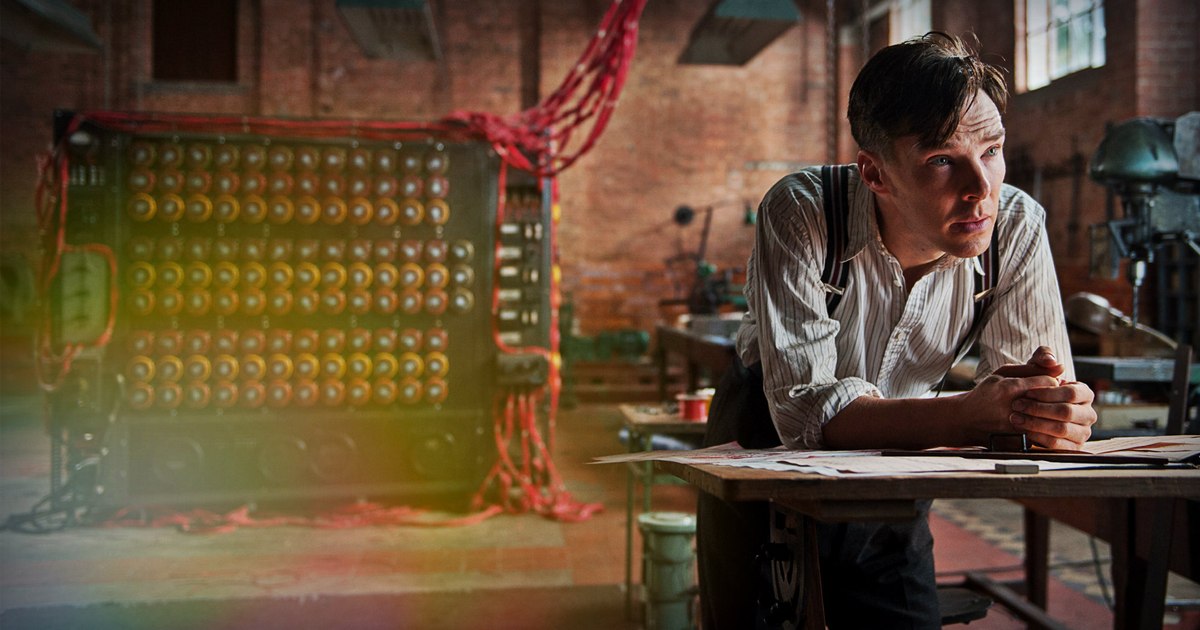
All the technology we enjoy today is part of the research of a British genius, the man who laid the basis for studying artificial intelligence. Although it is said to have saved the lives of millions of people, he was humiliated and pushed to suicide because of his sexual orientation.
Alan Turing and his photo machine: Archive
The course of history has been modeled by many truly exceptional people. Whether they were warriors, prophets or scientists, their contribution changed the destiny of mankind. Many of these geniuses of humanity have not been rewarded as their importance. On the contrary, some were not understood by their contemporaries and, despite their enormous contribution to the development of humanity, have become persecuted, marginalized and even killed. One of the best examples is Alan Turing, a British mathematician who is said to have saved millions of lives in World War II, but also the one who made a decisive contribution to the development of computer science, in the appearance of first computers and artificial intelligence. However, he was humiliated, physically and morally mutilated by his contemporaries, deceiving only 41 years.
The miracle kid in Paddington, a fan of Einstein
Alan Mathison Turing was born on June 23, 1912, in Paddington, in central London, in a fairly wealthy family. His father, Julius Mathison Turing, was a state official in British India and his mother, Ethel Sara, was the daughter of a chief railway engineer in Madras (British India) and a member of a vase family among Anglo-Irish Protestants. With more parents left with the service in British India, Alan Turing grew with some family friends.
From an early age he showed a special inclination for mathematics and exact sciences. Had exceptional results. At the age of 14 he solved advanced mathematics problems without studying elements of mathematics analysis. Later, at the age of 16, he came across the work of Albert Einstein and fell in love. In 1931 he came to study mathematics at the University of Cambridge and then, after graduation, he was chosen at King's College as a recognition of his research in the field of probability.
The parent of computer science
Alan Turing was a real phenomenon that made major contributions in the field of mathematics since the student. The more math deepened the more the area of activity. Turing Studia and brought news in cryptanalysis, logic, philosophy and mathematical biology, as well as in us scientific fields, such as the one who will bear the name of computer science. Turing was a true computer parent, after being passionate about algorithms and building a machine to be able to make calculations and all kinds of oppositions. It all started from trying to solve an endless problem in the world of mathematics. Between 1935 and 1936, at the same time with Alonzo Church, a great American mathematician and logician, Alan Turing worked on the decidability of problems, starting from Gödel's incomplete theorems.
In mid -April 1936, Turing sent Max Newman the first sketch of his calculations. In the same month, Church published his work “An insoluble issue of elementary theory of numbers”, with conclusions similar to Turing's work, still unpublished at that time. Finally, on May 28 of the same year, Alan Turing finishes the work “About the calculable numbers, with an application to the problem of solving the problem”. It was published in the magazine “Proceedings of the London Mathematical Society”. In this paper, Turing reformulated the results of Kurt Gödel in 1931 on the limits of demonstration and calculation, replacing the universal formal language based on Gödel's arithmetic with the formal and simple hypothetical devices that became known as Turing cars.
The British has shown that the “universal car of calculation” would be able to perform any mathematically imaginable calculation if it were representable as an algorithm. His work was called “easily the most influential math work in history”, laying the foundation. In addition, through its famous Turing car made a special contribution by establishing the fundamental logical principles of the digital computer. Specialist John von Neumann acknowledged that the central concept of the modern computer is due to Turing's work. In 1936, Turing moved to the United States to study at Princeton University Mathematics Logic under the leadership of Alonzo Church. He finishes his studies in 1038 and returns to London.
The man who saved millions of lives with the help of science
After returning from the United States, in 1938, Alan Turing began following the courses of the Government School of Code and Cigature, and at the outbreak of the war with Germany in September 1939 he moved to the organization's headquarters during the war, Bletchley Park, Buckinghamshire. Their main purpose was to decrypt German radio messages transmitted with the help of the enigma used by the Nazi army. Polish researchers, in particular a team of Polish mathematicians, led by Marian Rejewski, had managed to invent a broken codes that they called the bomb.
The success of the bomb depended on the German operating procedures, and a modification of these procedures in May 1940 made it useless. So there was a need for another investment that would give the Allied troops the advantage of knowing, in real time, all the military movements of the Germans. And here Alan Turing intervened. Together with a team of specialists, the British designed a car capable of breaking all German codes, adapting to procedural changes. The machine was called Bombes (no bomb) and was truly effective, turning Turing into a real hero. Bombes provided information on the allies about the movements of the German troops on tape. Basically, they found out, without the Nazis realizing, all their band movements and all the intentions.
Until the beginning of 1942, the crypto -analysts at Bletchley Park decoded about 39,000 messages intercepted each month, a figure that later increased to over 84,000 per month, ie two messages per minute, day and night. In the same year, Turing showed his genius again and developed the first systematic method for breaking the encrypted messages of the Germans. Turing's new machine was baptized “Tunny”. At the end of the war, Turing was appointed officer of the Order of the British Empire for his work to break the codes. He was a national hero and the specialists say that through his extraordinary discoveries Turing has shortened the war for at least two years and saved millions of lives.
Turing and modeling a new world
After the end of the war, Turing returned to the applications of mathematics in civil life. He was recruited by the National Physics Laboratory in London and started working on an electronic computer. Its project for the automatic calculation engine (MAC) was the first complete specification of a universal digital computer with electronic stored program. If Turing's Ace had been built as planned, he would have had much more memory than any of the other early computers and would have been faster. However, his colleagues from NPL believed that the engineering was too difficult to be tried and built a much smaller car, the pilot model in 1950. Dissatisfied with the results, Turing went to the University of Manchester, where he was allowed to create. At Manchester, Turing makes another premiere: writes the first programming manual. His systems, included in this manual, were the basis of the first digital electronic computer, in 1951, called Mark I. British Alan Turing is also considered one of the founding parents of artificial intelligence. It has developed the hypothesis that the human brain is largely a digital computing machine. Based on these considerations, the British researcher has elaborated the so -called “test turning” by which it could be determined whether an artificial computer is thinking. In short, Alan Turing was one of the people who opened new roads and prepared, through its inventions, it was digital later.
Humiliated, marginalized, mutilated
Although Alan Turing's contributions were colossal, only if we consider that it saved so many lives during World War II, the British researcher ended up being marginalized and humiliated. The society at that time could not accept the sexual orientation of Alan Turing. More precisely, it was homosexual. Although discreet, Turing was released in 1952. At that time, homosexuality was considered a serious crime in the UK, so Alan Turing was convicted of “serious indecency”.
The authorities gave him a choice between prison and “chemical castration”. Turing chose the second option. So he suffered a 12 -month hormonal “therapy”. Meanwhile, he worked at Manchester, on a project on artificial life. He had been expelled, because of the sexual orientation, and from the headquarters of government communications, where he had actually served his homeland during the war. On June 7, 1954, Alan Turing was found dead in his bed, poisoned with cyanide. The official verdict was suicide. Turing is supposed to have not been able to overcome the humility and suffering caused by the process and chemical castration. In reality, however, Turing's death remained a mystery.