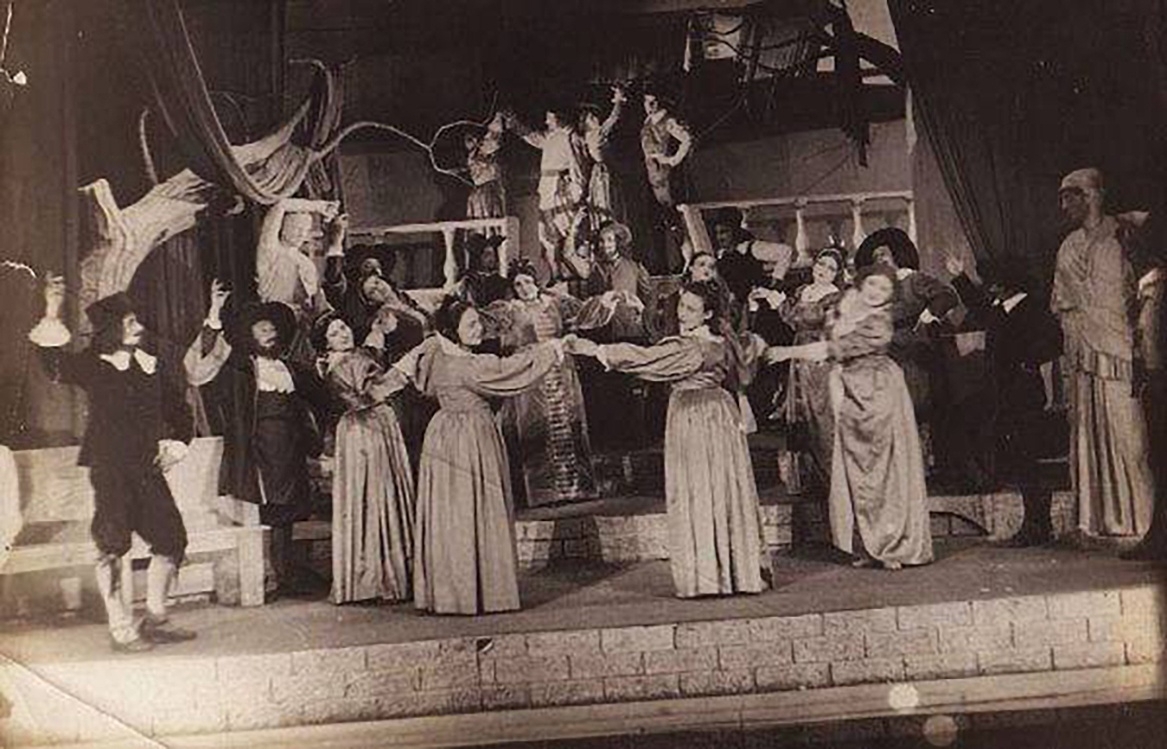
Scene from the performance of the GOSET theater Uriel Acosta Karla Gutskova
Photo: State Archive of the Jewish Autonomous Region
May 11, 1934
The newspaper “Birobidzhan Star” (12+) in 1935 published information that on May 11, 1934 the opening of the State Jewish Theater (GOSET) took place. At the opening of the theater, the production “The Evening of Sholom Aleichem” (0+) was shown. The group arrived on the shores of Bira in May 1934 with an already established repertoire.
Old GOSET building. Photo: Photo: State Archive of the Jewish Autonomous Region
The theater was born simultaneously with the formation of the Jewish Autonomous Region. In a young region, he became a major factor in the development of national culture. Emmanuil Kazakevich was appointed the first director of the theater. During the period of work in the theater, a team of qualified actors was created. By the early 40s, GOSET was the center of cultural life in the region.
In 1937, M. Goldblat became the director of the theater. The most creative period in the theater’s life is associated with his name.
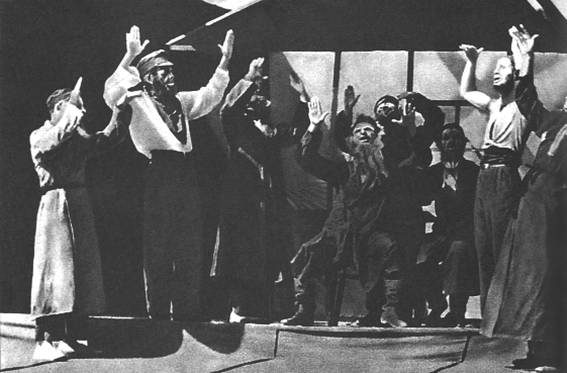
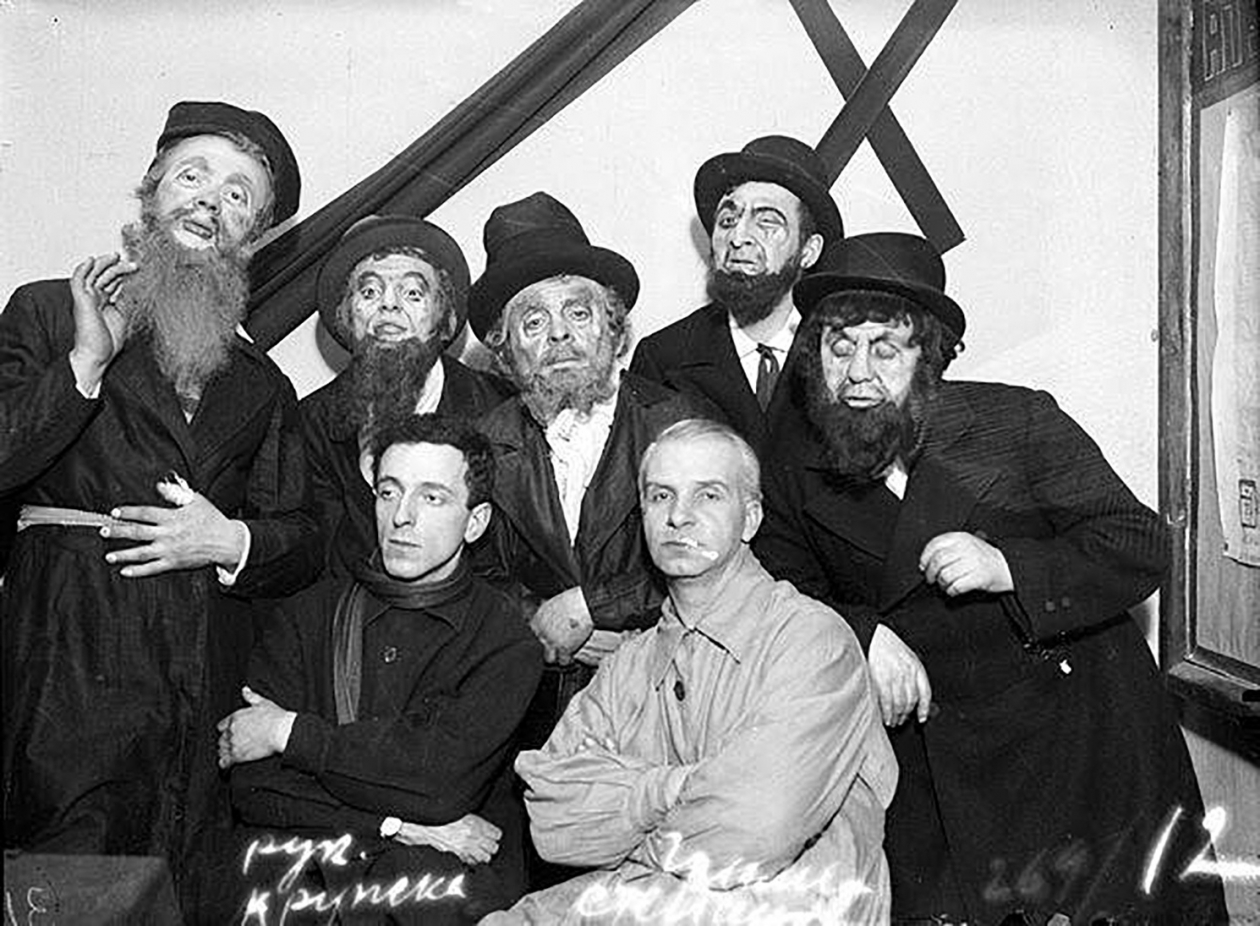
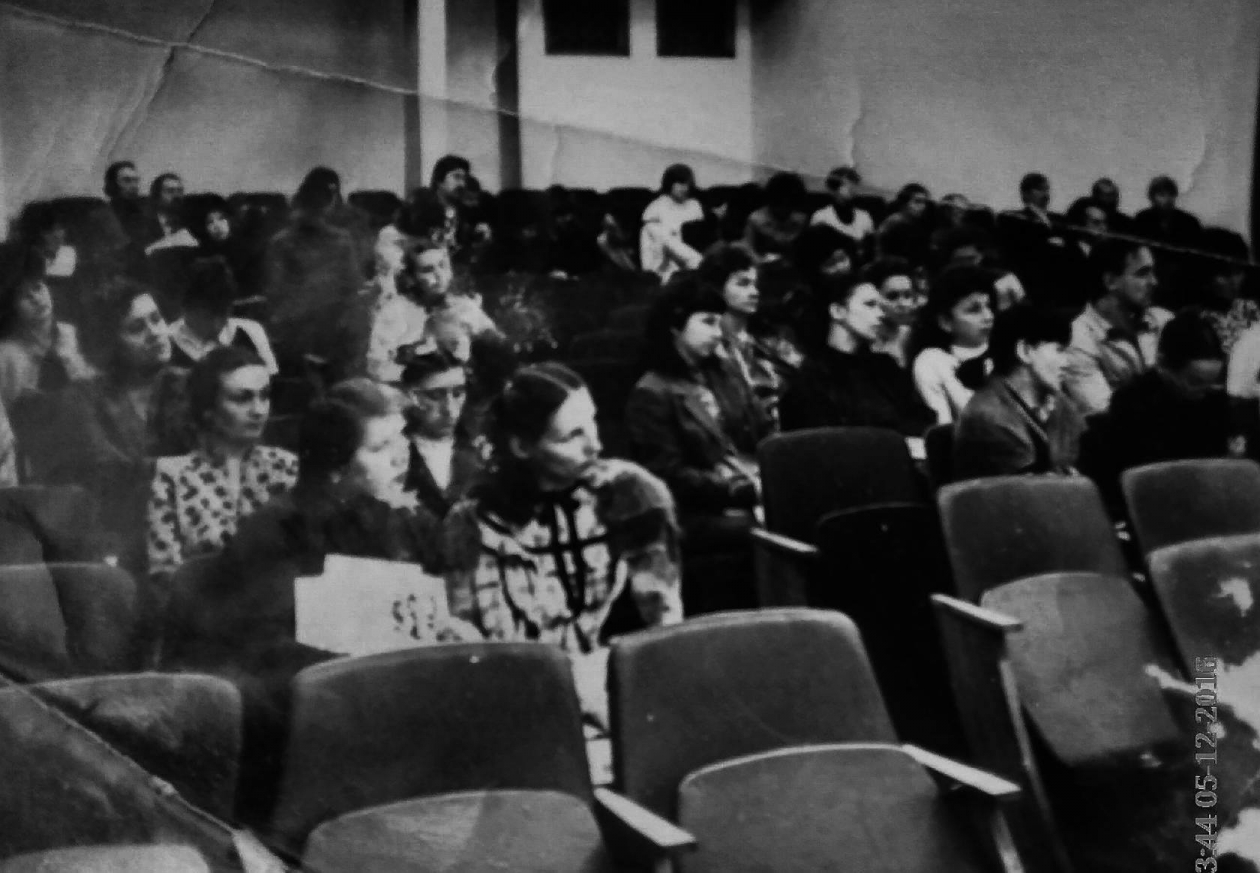
The theater met the first days of the war on tour in Khabarovsk, and then in Komsomolsk-on-Amur. During the war, the theater had to work in difficult conditions. In 1943, inspired by the victories of the Red Army, the theater staff raised funds for the construction of a tank column.
At the end of 1947, a directive came from Moscow to transfer the theater to economic accounting. On October 28, the Russian branch of the theater opened.
On December 7, 1948, the premiere of the play based on A. Ostrovsky’s play “Talents and Admirers” (12+) took place. In addition to performances, in 1948 alone, theater artists prepared 213 concerts and performed them in the region.
On the morning of November 5, 1949, a telegram marked “Governmental” was delivered to the theater. It reported that “the Council of People's Commissars of the RSFSR, taking into account proposals on art matters, decided to close the State Theater in Birobidzhan as unprofitable…”.
In December 1949, the Birobidzhan State Jewish Theater ceased to exist.
May 11, 1944
The book by D. Weisserman “Birobidzhan: Dreams and Tragedy” (12+) contains information that on May 11, 1944, the following telegram was sent to Ambidzhan from the chairman of the regional executive committee, Mikhail Zilbershtern, to New York:
“The regional executive committee of the Jewish Autonomous Region, on behalf of the workers of the region, on the day of its tenth anniversary sends you and, in your person, all members of the Ambidzhan society its warm greetings. We express our warm gratitude for your willingness to take an active part in the patriotic cause of placing orphans in our region, for your expressed desire to supply vocational schools with machines and equipment. The celebration of the tenth anniversary of the Jewish Autonomous Region is clear evidence that the Jewish people live and fight together with all freedom-loving peoples democratic countries. We are proud of the brilliant victories of the Red Army and the army of the allied countries, defeating the Nazi invaders. We wish you new success in your fruitful work to bring about a common victory.”
May 11, 1948
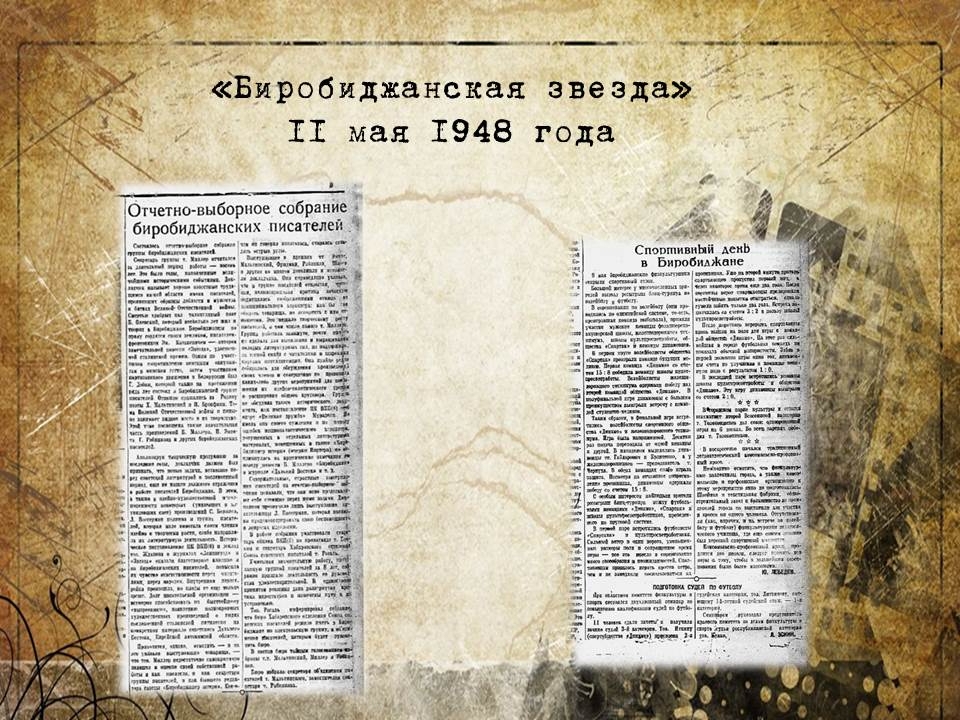
Clippings from the newspaper “Birobidzhan Star”. Photo: Photo: Regional Library
The newspaper “Birobidzhan Star” on May 11, 1948 informed readers that a reporting and election meeting of Birobidzhan writers took place in Birobidzhan. The organization's secretary, B. Miller, reported on the eight years of work of the writers' organization. B. Miller named the well-known names of writers in our region who showed examples of courage and valor in the battles of the Great Patriotic War.
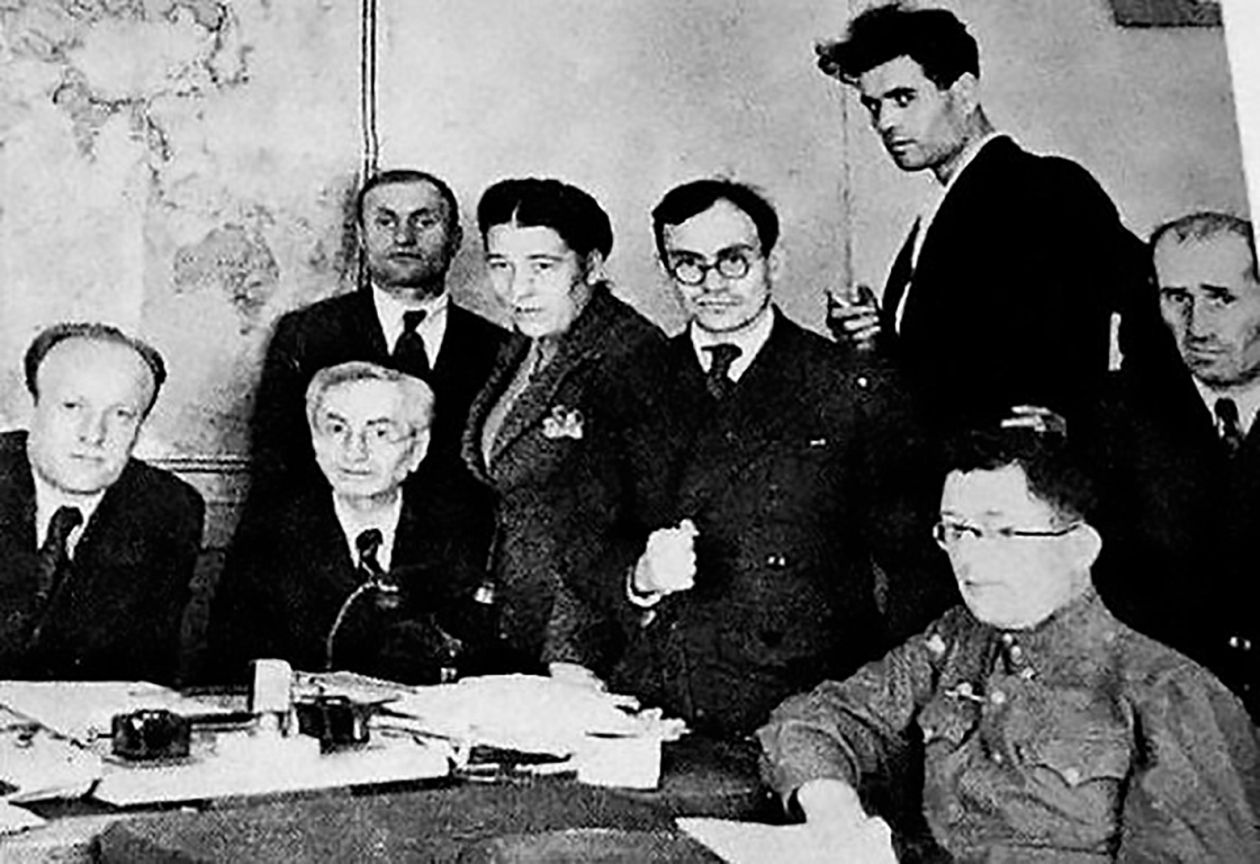
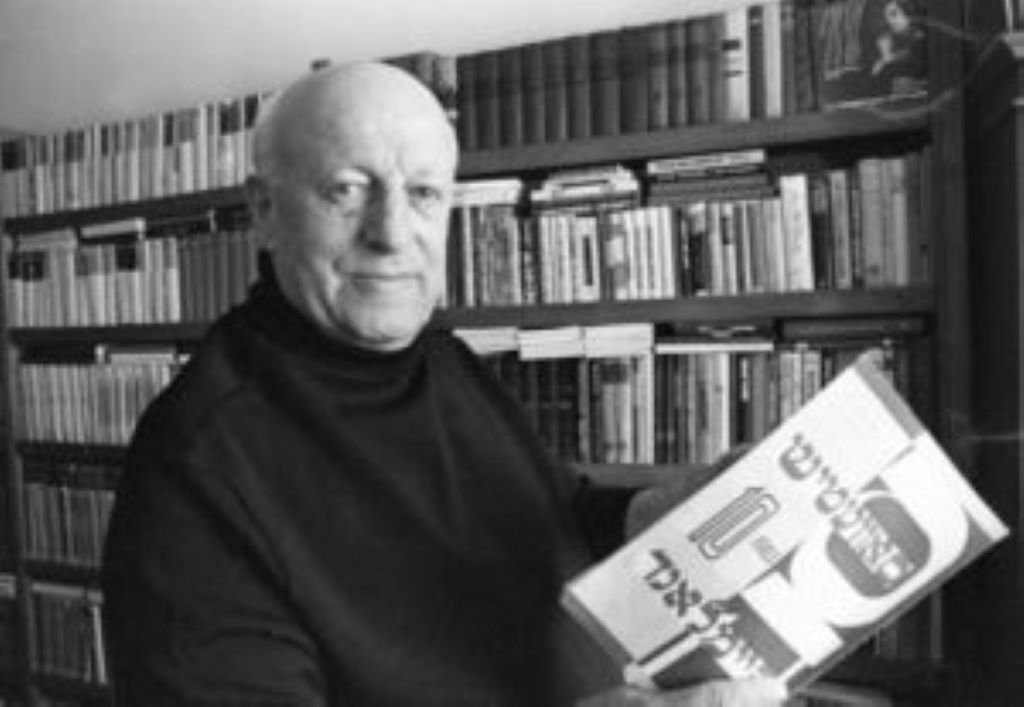
The secretary of the Khabarovsk branch of the Union of Soviet Writers, Comrade Rogal, took part in the meeting. Comrade Rogal informed the meeting that the bureau of the Khabarovsk branch of the Union of Soviet Writers had decided to have in Birobidzhan not a writing group, but an association of writers, which would be led by the bureau. The following were elected to the bureau by secret ballot: Secretary of the Writers' Association – Kh. I. Maltinsky, Deputy Secretary – G. B. Rabinkov and B. S. Miller.
May 11, 1966
The Bureau of the Regional Committee of the CPSU, during the All-Union Festival of Amateur Arts and the Show of Children's Technical Creativity, planned to hold district and city shows of children's technical creativity (0+), a regional festival of amateur art (0+).
The issue “On the leadership of the Smidovichi district committee of the CPSU of cultural and educational work among students” was considered. The adopted resolution outlines measures for the active participation of clubs, red corners, libraries and film installations in preparation for the 50th anniversary of Soviet power, in the All-Russian amateur arts show (0+).
May 11, 1974
A ceremonial meeting of the regional committee of the CPSU and the regional Council of Workers' Deputies was held, dedicated to the 40th anniversary of the formation of the Jewish Autonomous Region.
The first secretary of the regional committee of the CPSU L. B. Shapiro made a report “40 years of the Jewish Autonomous Region”. He noted that the 40th anniversary of the region, the flourishing of its economy and culture, is one of the brightest manifestations of the triumph of the Leninist national policy of the CPSU, the unbreakable friendship and fraternal cooperation of socialist nations and nationalities.
Pioneer builders G.A. made a great contribution to the development of the region. Venderov, Zh. K. Karnaukh, N. M. Fridman, T. I. Gorin, M. I. Grishchenko, G. A. Pashnin, I. G. Roitman, B. G. Drabkin, F. N. Subbotin, A. B. Backman, A. G. Yakimov, G. V. Kostyal, P. T. Kachan and many others.
The participants of the ceremonial meeting sent a welcoming letter to the CPSU Central Committee, the Presidium of the Supreme Soviet of the USSR, and the Council of Ministers of the USSR.
May 11, 2007
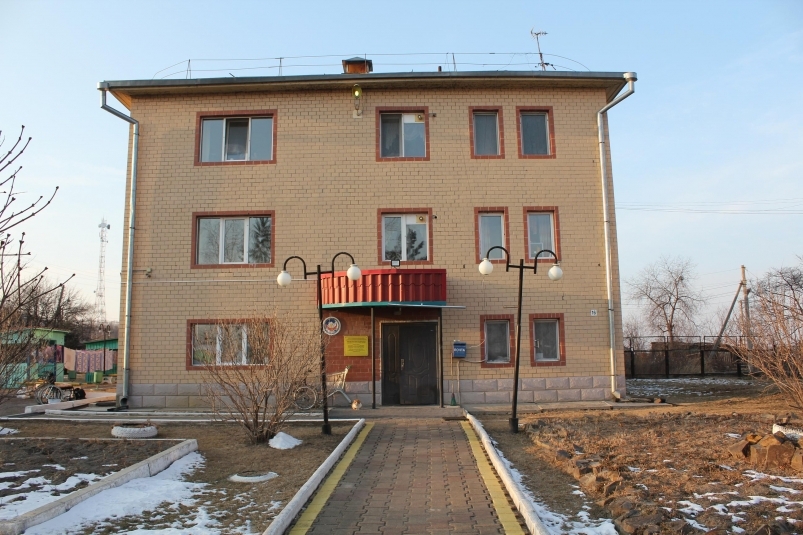
Birofeld boarding house for the elderly and disabled. Photo: Photo: Government of the Jewish Autonomous Region
A low-capacity boarding house for elderly and disabled citizens began operating in the village of Birofeld, Birobidzhan district. The social institution has 34 living rooms and 48 beds. The boarding house has its own kitchen, dining room, laundry, rooms for doctors and staff.
The Birofeld boarding home for the elderly and disabled was created on the basis of the government decree of the Jewish Autonomous Region dated January 19, 2005 No. 9-pp “On the creation of the regional state institution “Birofeld boarding home for the elderly and disabled.”