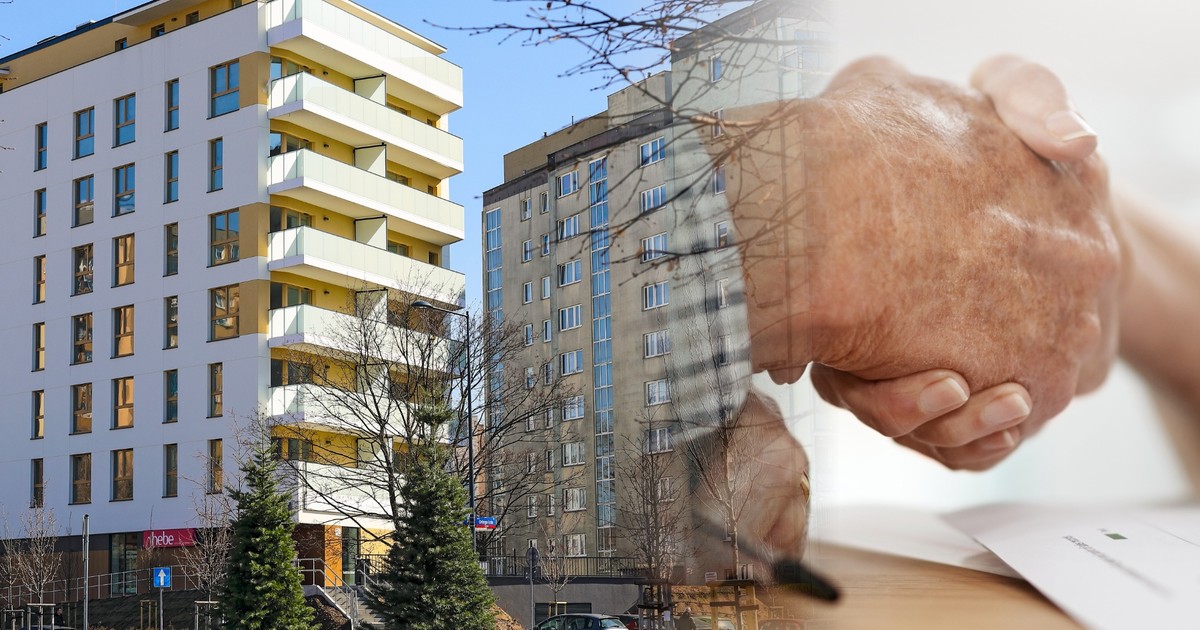
Just a decade ago annuity contracts were a niche solution in Poland. Today, they are becoming one of the symbols of social and economic changes related to the aging of society. Seniors are increasingly handing over apartments or houses in exchange for care, maintenance or monthly cash benefits. The latest data from the Ministry of Justice show a record increase in the number of such contracts. Experts point out that this is not only the result of demographic changes, but also a signal of growing problems with financing life in retirement.
In 2025, 19,876 annuity contracts were concluded in Poland – according to data from the Ministry of Justice analyzed by the GetHome.pl portal. This is more than twice as many as in 2013, when 8,506 such notarial deeds were signed. The upward trend has been virtually continuous for several years.
A life annuity contract means that the owner of the property transfers an apartment, house or plot of land to another person or entity, and in return receives a guarantee of maintenance and care for the rest of his life. Pursuant to the Civil Code, the buyer should provide the annuitant with, among others: housing, food, help in case of illness or organization of a funeral.
In practice, most often it concerns seniors who own real estate, but their pension no longer allows them to cover their daily expenses. An increasing number of older people cannot count on family support.
Read more about it: Record of annuity contracts in Poland. Why do seniors give up their apartments?
— The growing number of such contracts shows changing social needs. This is no longer a marginal phenomenon, but one of the ways to deal with the problem of low pension benefits and loneliness of older people – Polish economist Marek Zuber tells Business Insider.
GetHome.pl experts point out that the vast majority of contracts concern apartments and houses, and only about 15 percent includes agricultural properties. Importantly, the increase in popularity is visible both in large cities and smaller towns.
Reverse mortgage and annuity. What is the difference?
Three concepts are often confused in the public debate: annuity contract, annuity and reverse mortgage. Although all of them concern the use of the value of the property by the senior, they differ in their legal structure.
An annuity contract is a solution regulated in the Civil Code. The senior gives the property to a specific person or company and in return receives care and maintenance.
An annuity works similarly, but instead of care benefits, the senior primarily receives monthly cash payments and the opportunity to live in the apartment for the rest of their life.. Such products are mainly offered by mortgage funds in Poland.
On the other hand a reverse mortgage in the strict sense was to be a banking product based on the Reverse Mortgage Act of 2014. The senior would receive funds from the bank, and the repayment would take place after his death by taking over or selling the property.. The problem is that Polish banks have practically not introduced this solution to their offer.
— I am a supporter of reverse mortgages, absolutely. But the problem is this one the product was never really developed in Poland – says Marek Zuber.
As the economist emphasizes, some companies operating on the market offered seniors very low benefits in relation to the value of the apartmentswhich discouraged customers and built a negative image of the entire segment.
— The mechanism itself can be very beneficial, especially for older people, single people or people without heirs. It allows you to improve your standard of living while maintaining the ability to live in the property for the rest of your life – he explains.
Read also: Moving in retirement. Why more and more seniors choose the city
The annuity is growing. Seniors get extra money
Despite the limited scale the annuity market in Poland is systematically developing. Data from the Association of Financial Enterprises show that mortgage funds paid almost PLN 7 million in benefits to customers in 2024, i.e. 46.5 percent more than a year earlier.
The average age of the clients was 76.7, and the average value of the transferred property was PLN 468.9 thousand. zloty. The average area of apartments was 51.4 sq m.
The amount of the monthly pension depends on the age of the senior and the value of the property. The older the person and the more expensive the apartment, the higher the benefit. According to ZPF data the average annuity currently equates to roughly 40 percent. average pension paid by ZUS.
For many seniors, this is a real support for the home budget.
— A reverse mortgage may be the answer to the need for an additional source of income for seniors, especially in the context insufficient retirement savings – assess financial market experts.
The problem is all the more visible – that Poles still save relatively little for old age. Research by ZPF and the Institute of Economic Development of the Warsaw School of Economics shows that only 17.2 percent people save money with retirement in mind.
Reverse mortgage in Poland. Why do banks not want this product?
According to Marek Zuber, the main barrier to market development today is not regulations, but the structure of the entire financial sector.
— Polish banks finance themselves mainly with short money, i.e. deposits and deposits. Meanwhile a reverse mortgage is a very long-term product – explains the economist.
As he adds, In developed economies, there are extensive markets for mortgage bonds and bonds, which enable financing of long-term liabilities. In Poland, this segment practically does not exist.
They are an additional problem huge borrowing needs of the state.
— Today, the State Treasury issues gigantic amounts of bonds that compete for capital with other financial instruments. In such a situation It would still be difficult for banks to finance long-term mortgage products on a large scale says Zuber.
The economist also draws attention to reputational risk. There have been many debates surrounding the reverse mortgage over the years controversies related to private contracts concluded on unfavorable terms for seniors.
— The product was often portrayed as “preying on the elderly”. For banks, this is an additional image barrier, he emphasizes.
According to Zuber the market today is in a vicious circle. Few customers mean difficulties in risk assessment and poor offer terms. And poor conditions result in little customer interest.
– To break this, you would need an entity ready to invest billions of zlotys and build this market segment over the years – he estimates.
See also: ROD plot for PLN 1,000. zloty? It's possible. But the price doesn't come out of nowhere
Pensions of the future are getting lower. “It's a question about the safety of seniors”
However, the importance of such products may increase with demographic changes and declines in future retirement benefits.
Prof. Joanna Tyrowicz, economist and member of the Monetary Policy Council, points out that the key question sounds different today than it did just a few years ago.
— To what extent can a reverse mortgage help older people with the greatest needs in financing current expenses? In other words: do these people own real estate of significant value? – says Business Insider Polska.
As he emphasizes, the problem does not concern only the banking market, but the entire social security system.
— The development of such services could bring significant social benefits, especially with the decline in the amount of retirement benefits for people with the so-called new portfolio, i.e. vintages from 1968 and younger – notes Joanna Tyrowicz.
The economist adds that the discussion about a reverse mortgage is actually a question about financing care and everyday life in old age.
— It's a broader issue real security for basic care needs in the period when we can no longer earn our own living – he emphasizes.
The growing number of life annuities and annuities shows not only a change in seniors' approach to apartment ownership. This is also a signal that For some older people, real estate becomes the last real financial security in old age.