Are apartment prices rising because of flippers? “We are rather an element that organizes the market”

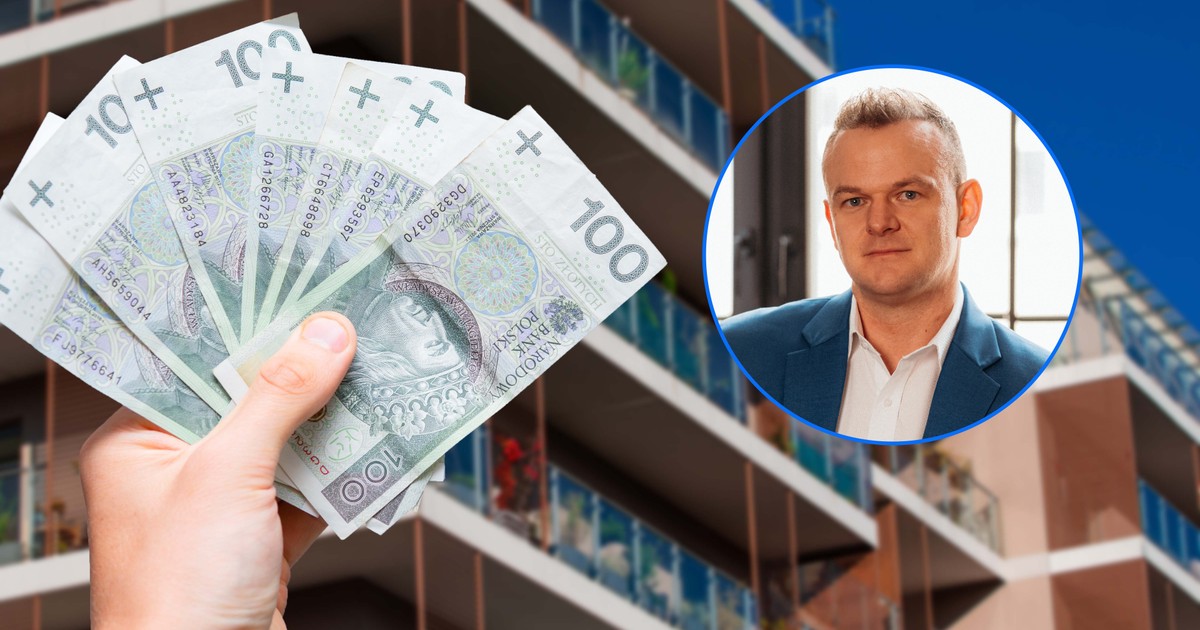
Dawid Worach has been operating on the real estate market as a flipper for years, conducts investment training and recently published a book about flipping. In an interview with Business Insider Polska, he explains why he thinks so flippers have become a symbol of the housing crisis and where the sources of high prices really should be sought.
Anna Korólczyk-Lewandowska, Business Insider Polska: Buyers say it straight: flippers contribute to the increase in apartment prices. Why do you think the market should believe that it is not you but “the system” that is the problem?
David Worach: The narrative that flippers are one of the main causes of rising housing prices is simply a convenient simplification. In fact, we are talking about a group that constitutes approximately 1 percent. market, so its impact on the price level is marginal.
Read also in BUSINESS INSIDER
Real estate prices are influenced primarily by macroeconomic factors: the cost of money, the availability of mortgage loans, inflation, state policy, land supply and the pace of administrative procedures. These are the mechanisms that really shape the market.
Flippers operate rather on its outskirts – they enter the segment of problematic properties: indebted, neglected, with an unregulated legal status. These are not apartments that the average buyer competes for. We put them back into circulation and only then do they reach a wide range of buyers. In this sense, we are an element that organizes the market rather than destabilizing it.
Read also: Where to invest? Real estate, regional cities and new trends
The morality of flipping and real estate profit
Is buying apartments cheaper from people in difficult situations and selling them at a higher price after renovation morally neutral or simply profitable?
This question is based on the assumption that one side of the transaction is being exploited in some way, and I disagree with that. Real estate transactions are voluntary – the seller makes a decision in a specific life situation, and the buyer assumes the risk and responsibility.
Flipping is a business activity that involves identifying an opportunity, solving a problem and adding value. This may be renovation, sorting out legal issues, changing the function of the premises or improving the standard.
Profit is a reward for risk, capital and competence. If we start to question the morality of such actions, we would basically have to question the functioning of the entire investment market.
What will you say to buyers who feel they paid more just for marketing and “nice photos”?
This is a real problem, but it cannot be generalized to the entire market. There are investors who make quick, superficial renovations and focus mainly on selling the image, not the real quality of the product.
On the other hand, there are also people who actually improve the standard of apartments and provide value that was not there before.
The market should verify this, but buyers' responsibility is also key. Buying an apartment is usually the biggest financial decision in your life, so it should be preceded by a thorough analysis: checking the technical condition, documents, and quality of workmanship. Buying solely based on photos or emotions will always be risky.
Dawid Worach, president of the management board, JD Holding International
Read: Ministry of Finance on KSeF for landlords. When do you need to issue an invoice?
You wrote a book about flipping. You conduct training and educate potential new participants in this market. Do you take responsibility for people who enter the market without experience after your training or reading your book?
No, because it doesn't work that way. Education is about providing knowledge and showing the mechanisms of how the market works, but everyone makes investment decisions independently.
During training, I also talk about risks, mistakes and costs that are often omitted in the marketing narrative. This is not a promise of easy money, but a demonstration of the reality of this business.
I have no influence on how someone will use this knowledge – whether they will approach it responsibly or whether they will treat it as a quick way to make money.
Where is the place in all this for people who want to buy an apartment for themselves?
It's not like flippers are taking apartments from “normal people.” In many cases, we operate in a completely different market segment.
We buy properties that require knowledge, time and capital – often in a condition that excludes them from mortgage financing. For the average buyer, this is an insurmountable barrier.
After renovation and sorting out the legal situation, such an apartment returns to the market as a finished product – and only then does it become available to a wide range of buyers. In this sense, we respond to a real market need.
Why do buyers hear: “if you don't like it, don't buy”?
It may sound brutal, but the real estate market does not operate on the principle of justice, but on the principle of supply and demand.
The price is the result of negotiations and decisions of two parties. If the buyer believes that the price is too high, he has the right to resign or try to negotiate.
The problem is that buyers' expectations are often disconnected from market realities. This leads to frustration, which later translates into the assessment of the entire industry.
See also: Thailand attracts real estate investors, but experts warn. “Doesn't forgive mistakes”
Hate, frustration and housing market regulations
So you think that the hate against flippers is simply the frustration of people being pushed out of the market?
To a large extent yes. The housing market is difficult, prices are high and the availability of apartments is limited, so emotions are natural.
However, directing this frustration solely towards pinball players is a simplification. This is a small group of market participants that has no real impact on its fundamentals.
It is much easier to point to a specific “culprit” than to deal with more complex systemic problems.
Would you support restrictions on pinball activities?
I am in favor of regulations that organize the market and eliminate unfair practices, but provided that they are created in a thoughtful way.
Regulations based on emotions and social pressure often have the opposite effect – they limit supply, increase costs and ultimately hit buyers.
We need solutions based on data and dialogue with market participants, not simple bans.
Is there a limit beyond which profit ceases to be a “reward for risk”?
There is no single objective limit. The value of the property and the level of profit are always verified by the market.
If someone is willing to pay a certain price, it means that he considers it adequate to the value he receives.
Investing in real estate involves high risk – both market and operational – so profit is its natural element.
In Poland, transparency of offer prices for apartments by developers and free access to transaction prices have been introduced. How do you evaluate this solution from the perspective of the market and your own business?
Price transparency is a step towards greater market transparency and equal access to information. This is a real value for buyers because it reduces information asymmetry and allows them to make more informed decisions.
From an investor's perspective, this means greater transparency, but also less room for negotiation and price arbitrage. The market is becoming more “readable”, but at the same time less flexible.
However, it must be said clearly: price transparency alone will not solve the problem of housing availability or their high prices. It is an ordering tool, not a systemic solution.
A few final words. You have a chance to defend yourself and the industry.
Flipping is a business activity based on risk, capital and the ability to spot opportunities. I do not identify with unfair practices and I do not want to be a spokesman for pathology, but I also do not agree to the simplistic narrative in which flippers are the main source of problems in the housing market.
If we want real change, we must look at the entire system, not just its most visible part.