3/20
|
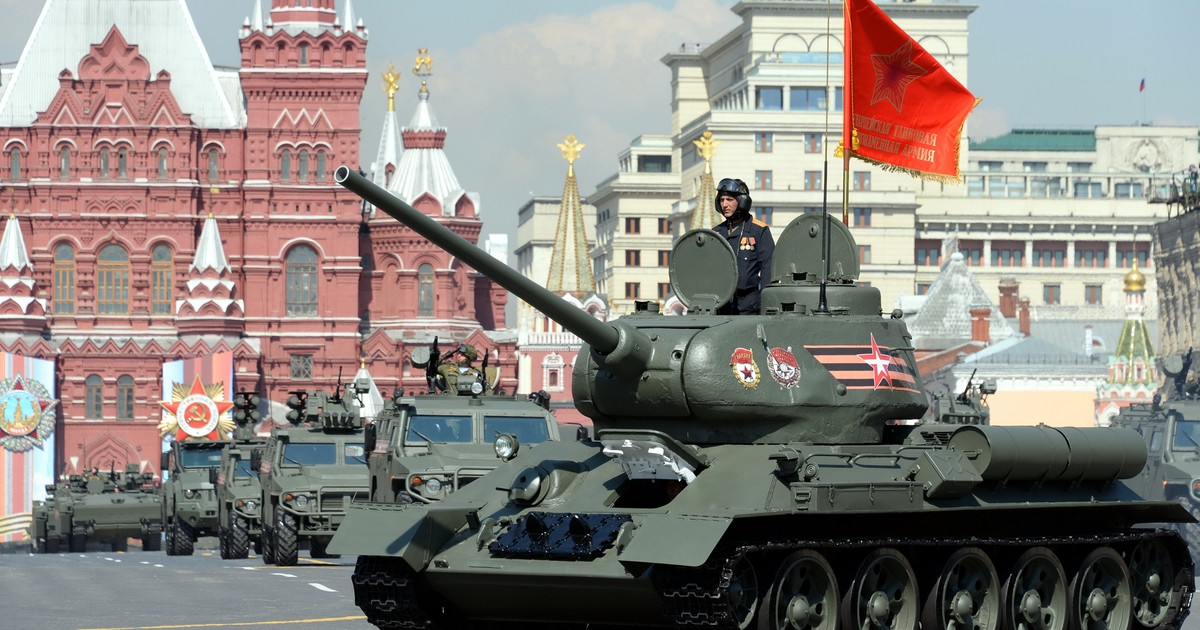
T-80 tank
|
fifg / Shutterstock
The T-80 tank is not seen in parades every year, so its presence in 2026 is also a big question mark. The T-80BVM is a deeply modernized version of the Soviet T-80 main battle tank, introduced into service in the Russian army in 2017. It is characterized primarily by the replacement of the classic Kontakt-5 reactive armor with the more modern Relikt, and a significant improvement of the fire control system. as well as the ability to fire 9M119M Refleks-M guided missiles. It is powered by a GTD-1250 gas turbine with a power of 1,250 HP. The tank weighs approximately 46 tons, is armed with a 125 mm 2A46M-4 cannon and is still one of the fastest and most dynamic vehicles in the Russian arsenal.
4/20
|
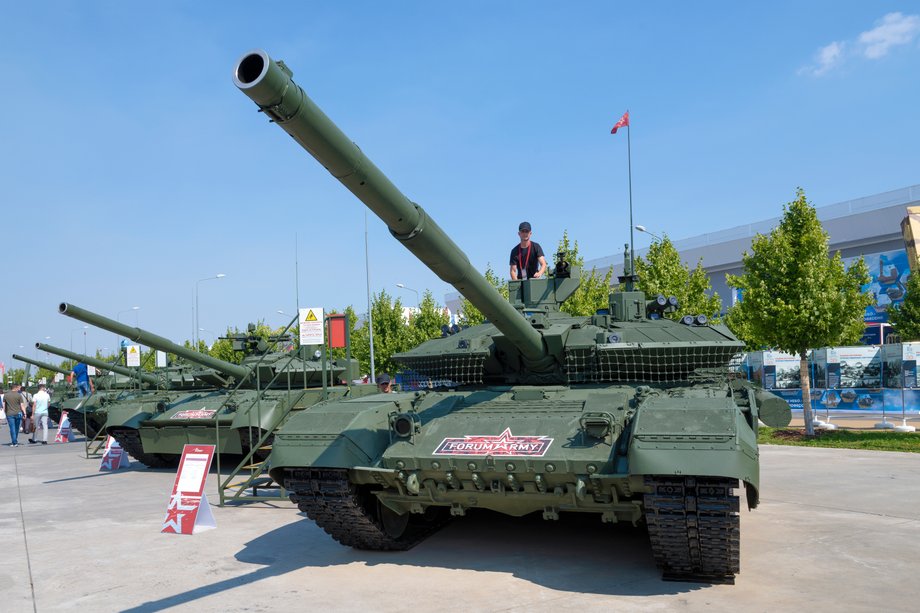
T-90M “Proryv” tank
|
Karasev Viktor / Shutterstock
The T-90M “Proryv” is the latest modernization of the Russian T-90 tank, mass-produced since 2019, and currently the main main battle tank of the Russian army. It is armed with a 125 mm 2A46M-5 cannon with autoloader and Refleks-M guided missiles, and the fire control system includes a Sosna-U thermal imager and a panoramic commander's instrument. The armor was reinforced with the Relikt ERA generator and the characteristic cage shield on the turret and sides. Powered by a V-92S2F diesel engine with a power of 1,130 HP and a weight of 48 tons, it reaches a speed of 60–65 km per hour.
5/20
|
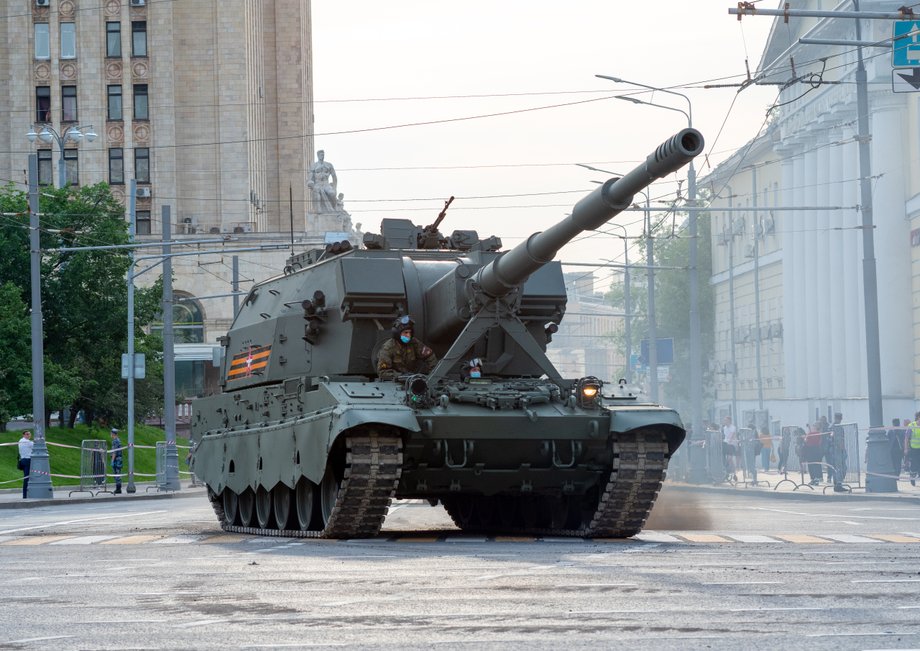
2S19 Msta-S self-propelled gun howitzer
|
FotoIgor / Shutterstock
The 2S19 Msta-S is the basic Russian 152 mm self-propelled howitzer, entered into service in 1989 as the successor to the 2S3 Akatsiya. It is armed with a 2A64 52-cal. howitzer, which allows it to fire conventional ammunition at a distance of up to 25 km, and with Krasnopol guided missiles at a distance of over 30 km.
6/20
|
BMP-1
|
Kremlin.ru / public domain
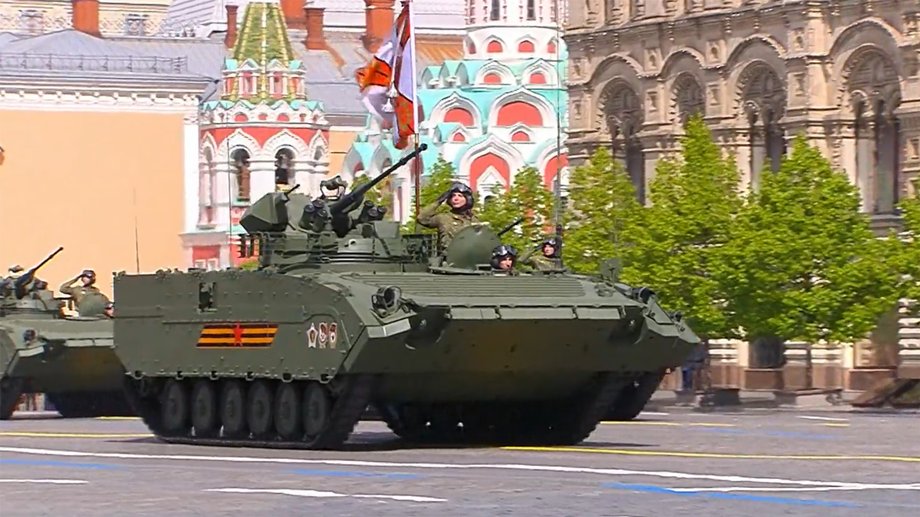
The BMP-1 is a Soviet infantry fighting vehicle (IFV) introduced into service in 1966 – the first mass-produced vehicle of this class in the world. It is armed with a 73 mm 2A28 Grom smoothbore gun, a 9M14 Malyutka (AT-3 Sagger) anti-tank guided missile launcher and a 7.62 mm PKT coupled machine gun. Powered by a UTD-20 diesel engine with a power of 300 HP and a combat weight of only 13.2 tons, it reaches a speed of 65 km per hour. on land and 7–8 km per hour in the water. It is characterized by good mobility and the ability to land 8 soldiers under fire, although its thin welded armor (max. 19-23 mm) provides protection only against small arms and shrapnel.
7/20
|
BMP-2
|
Free Wind 2014 / Shutterstock
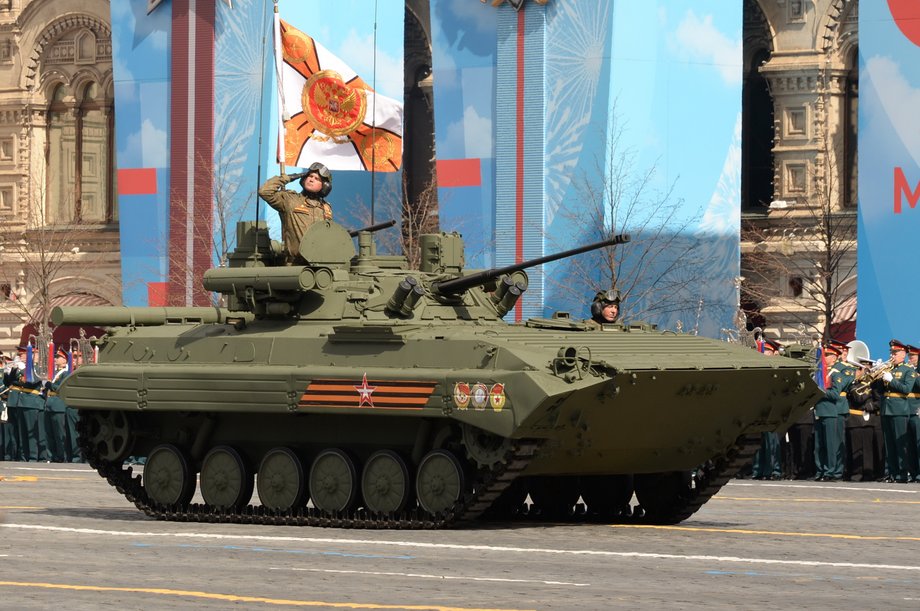
The BMP-2M is a deeply modernized version of the Soviet BMP-2 infantry fighting vehicle, equipped with a new “Berezhok” combat module and introduced into service with the Russian army in 2010–2020. It is armed with a 30 mm 2A42 automatic cannon, a 7.62 mm PKT coupled machine gun, four Kornet-E anti-tank guided missile launchers and an AGS-30 automatic grenade launcher. The fire control system includes a thermal imager, laser rangefinder and stabilization, which significantly increases effectiveness at night and on the move. Powered by a UTD-20 diesel engine with a power of 300 HP and a combat weight of approximately 14.5 tons, it reaches a speed of 65 km per hour. on land and 7 km per hour in the water.
8/20
|
BMP-3
|
Karasev Viktor / Shutterstock
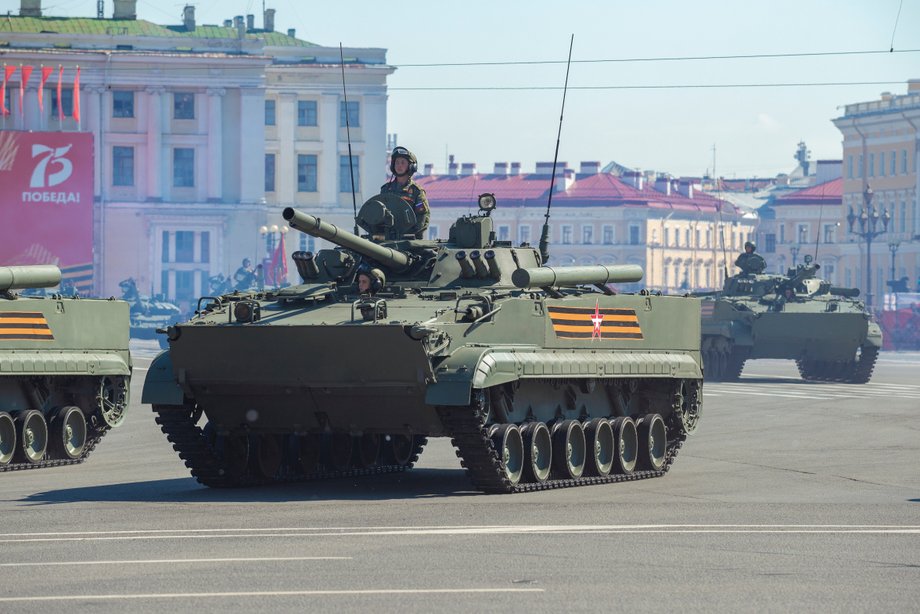
The BMP-3 is a third-generation infantry fighting vehicle, introduced into service in 1987. It is armed with a 100 mm 2A70 cannon (firing 9M117 Bastion guided missiles), a 30 mm 2A72 automatic cannon and two 7.62 mm PKT machine guns. Powered by a UTD-29 diesel engine with a power of 500 HP and a combat weight of 18.7 t, it reaches a speed of 70 km per hour. on land and 10 km per hour in the water. It is characterized by aluminum armor with ceramic inserts, better protection than the BMP-1/2 and the ability to land 7 soldiers, combining the firepower of a light tank with the mobility and amphibiousness typical of infantry vehicles.
9/20
|
BMD-4
|
limipix / Shutterstock
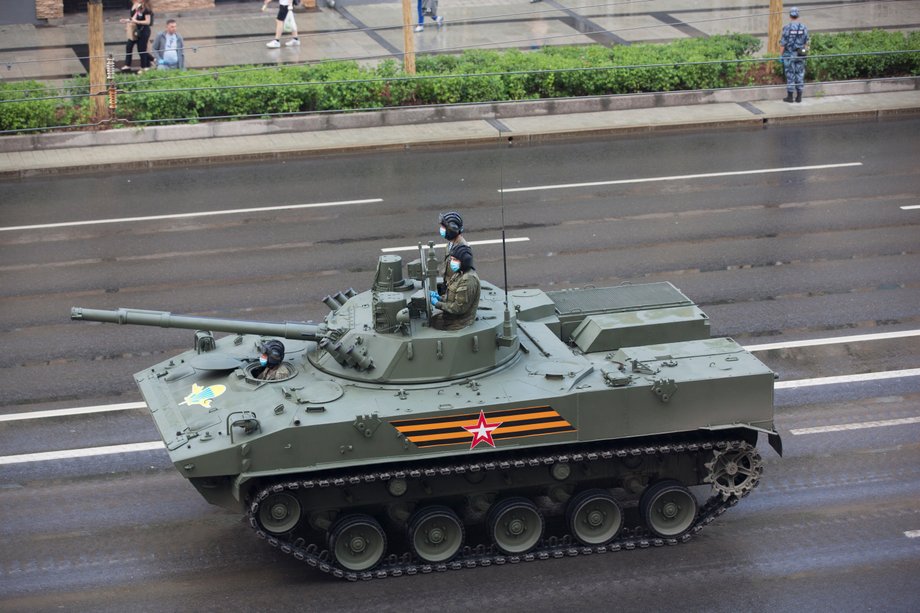
BMD-4 (BMD-4M) is a Russian third-generation amphibious combat vehicle (BMD) for the airborne forces (VDV), introduced into service in the early 2000s and mass-produced in a modernized version. It is armed with a two-man Bakhcha-U turret with a 100 mm 2A70 cannon (firing Arkan/9M117 guided missiles), a 30 mm 2A72 automatic cannon and a 7.62 mm PKT machine gun. It is characterized by aluminum armor, hydropneumatic suspension that regulates ground clearance, a crew of 3 + 5 landing soldiers and a very high firepower to weight ratio.
10/20
|
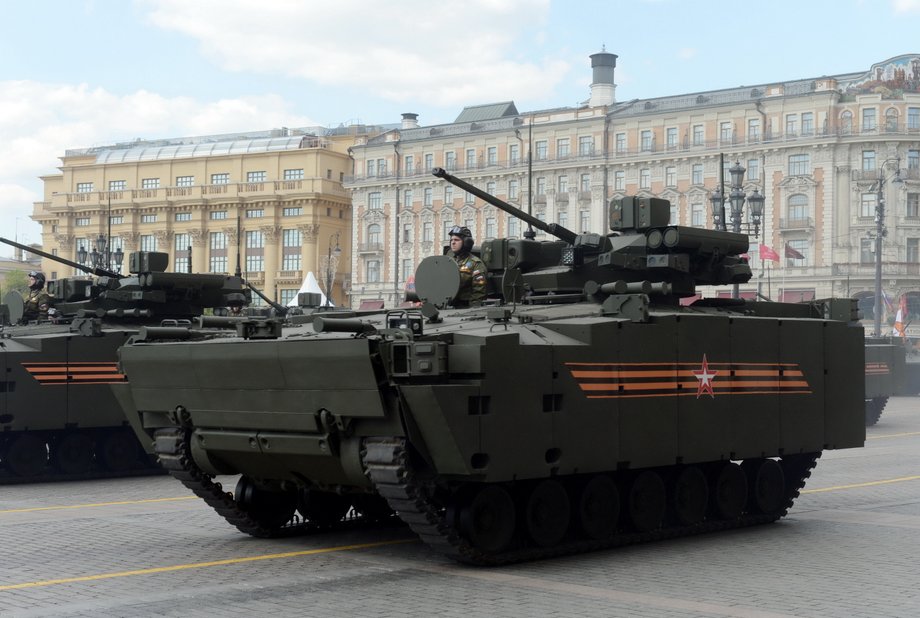
Kurganets-25
|
Free Wind 2014 / Shutterstock
Kurganets-25 (Kurganets-25) is a new generation tracked infantry fighting vehicle, developed as a successor to the BMP-2 and BMP-3. The vehicle is still in the testing and development phase (as of 2026). It is armed with an unmanned Bumerang-BM turret with a 30 mm 2A42 automatic cannon, a coupled 7.62 mm PKT machine gun and four Kornet-EM anti-tank guided missiles.
11/20
|
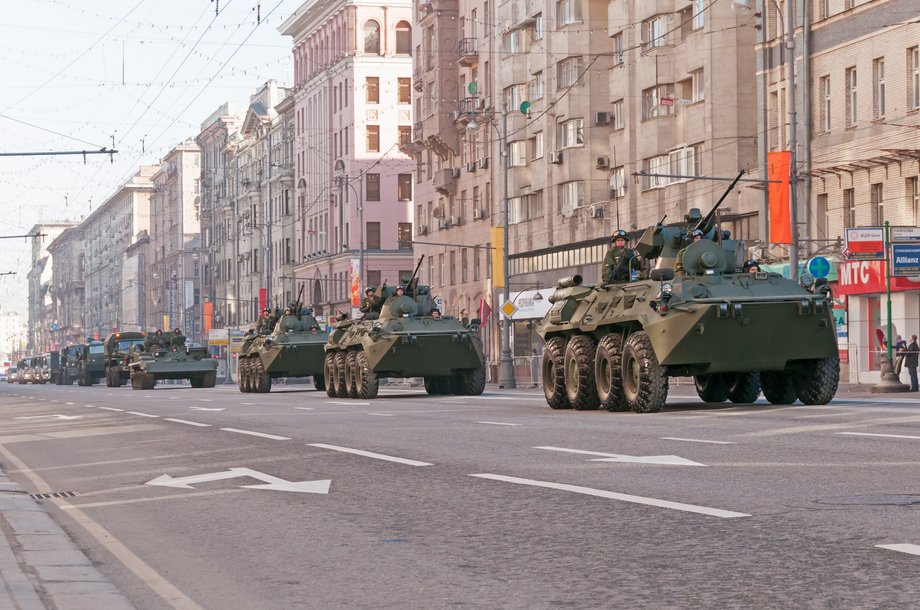
BTR-82
|
Shujaa_777 / Shutterstock
The BTR-82 (mainly the BTR-82A version) is a Russian 8×8 wheeled armored personnel carrier, introduced into service in 2013 as a deep modernization of the BTR-80. It is armed with a 30 mm 2A72 automatic cannon (or 14.5 mm KPVT in the base version), coupled with a 7.62 mm PKT machine gun, with the ability to fire on the move and with stabilization. It is characterized by reinforced armor (protection against 12.7 mm bullets at the front), a new fire control system with thermal imaging, better ergonomics and the possibility of landing 10 soldiers.
12/20
|
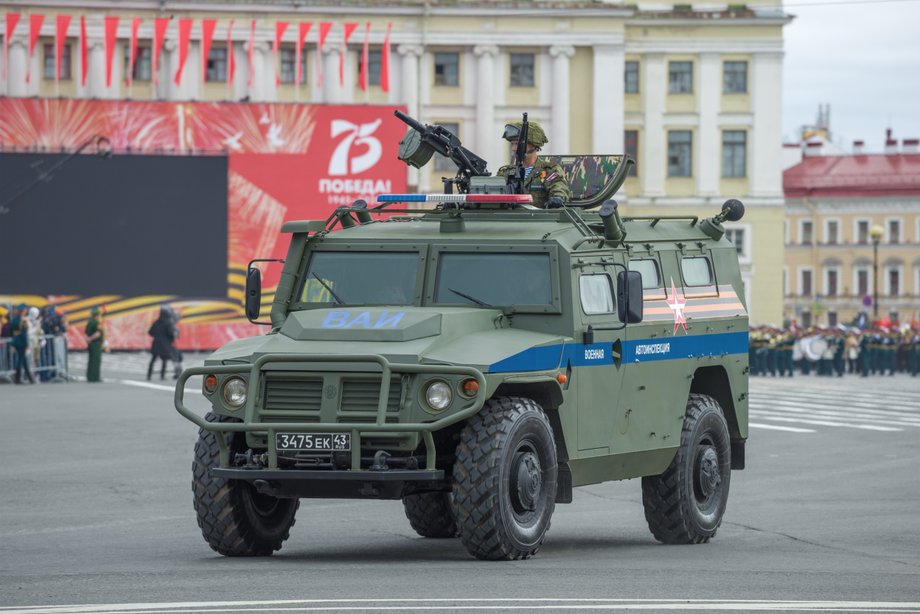
GAZ Tigr-M
|
Karasev Viktor / Shutterstock
GAZ Tigr-M is a multi-role armored 4×4 patrol and reconnaissance vehicle, introduced into service in the Russian army since 2010 as a modernization of the base Tigr.
13/20
|
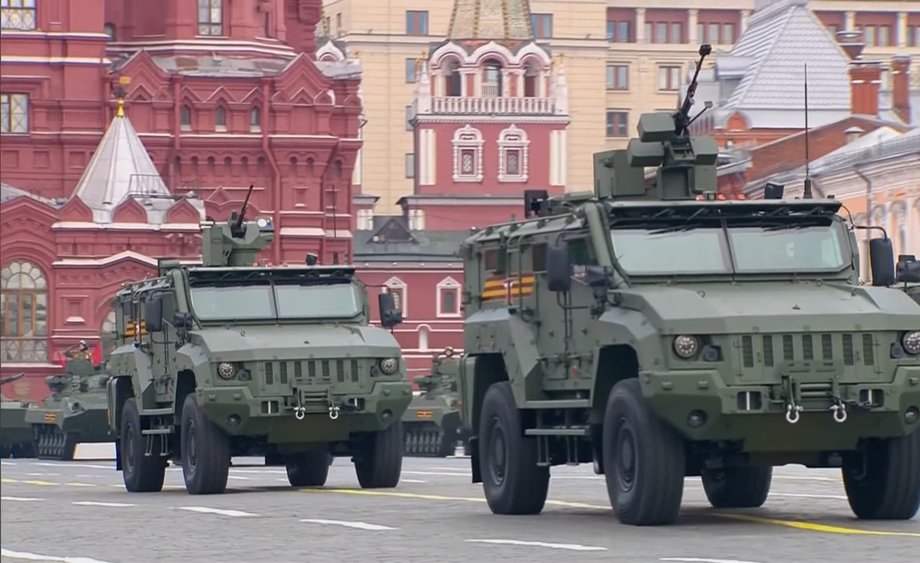
KAMAZ-53949
|
Kremlin.ru/Sputnik
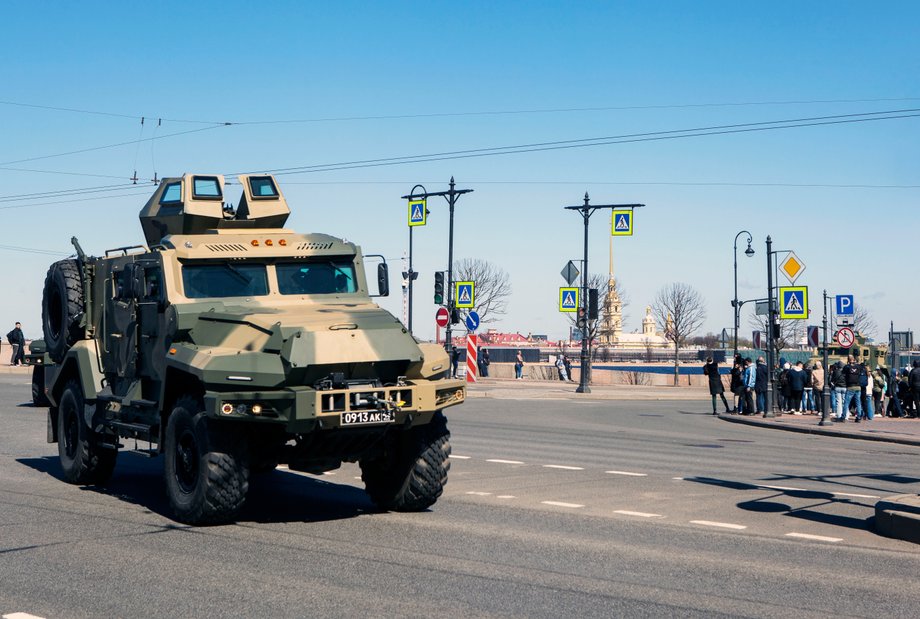
KAMAZ-53949 (K-53949 Tajfun-K) is a Russian 4×4 armored multi-role vehicle from the Typhoon family, introduced into service with the Russian army in the second half of the 2010s as a light MRAP/APC. It is characterized by high anti-mine and ballistic protection – it withstands the detonation of 6 kg of TNT under the hull – and a modular structure allowing the transport of 2 crew members and 8 landing troops. With a combat weight of approximately 14 tons, it reaches a maximum speed of 100 km per hour. on the road and a range of up to 1000 km. So far, two versions of KAMAZ-53949 armored cars have been presented at parades – with a turret with a 12.7 mm Kord machine gun operated by a soldier and a remotely controlled variant.
14/20
|
AMN-590951 (VPK Ural)
|
Sergei Afanasev / Shutterstock
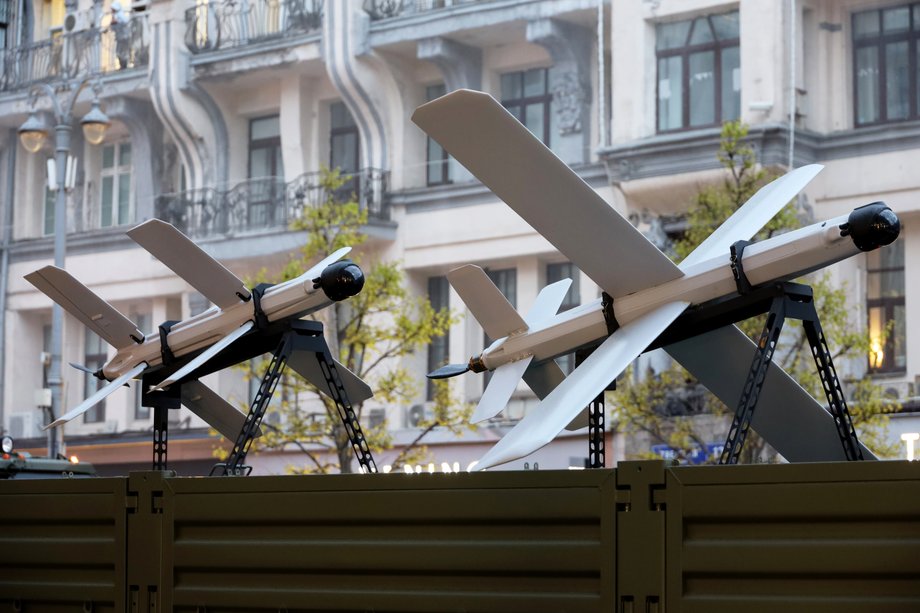
VPK-Ural (VPK-59095S / AMN-590951) is a Russian 4×4 armored multi-role vehicle developed by the Military Industrial Company (VPK) on the Ural-53099 chassis, presented in 2019 as a light MRAP for transport and support tasks. It is characterized by high anti-mine and ballistic protection – it withstands detonation of up to 6.5 kg of TNT under the hull – and a modular structure enabling the transport of crew and troops or the installation of various equipment and weapons.
15/20
|
Drones
|
Oleg Elkov / Shutterstock
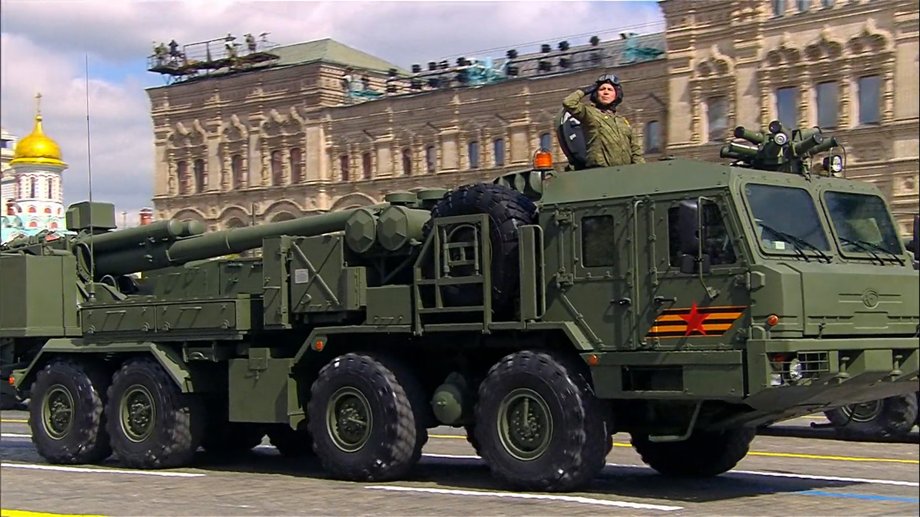
At parades in recent years, we have seen Russian Łancet, Orlan, Harpia and Geran drones, which Russia uses during the war in Ukraine.
16/20
|
2S44 Hiacynt-K
|
Kremlin.ru / public domain
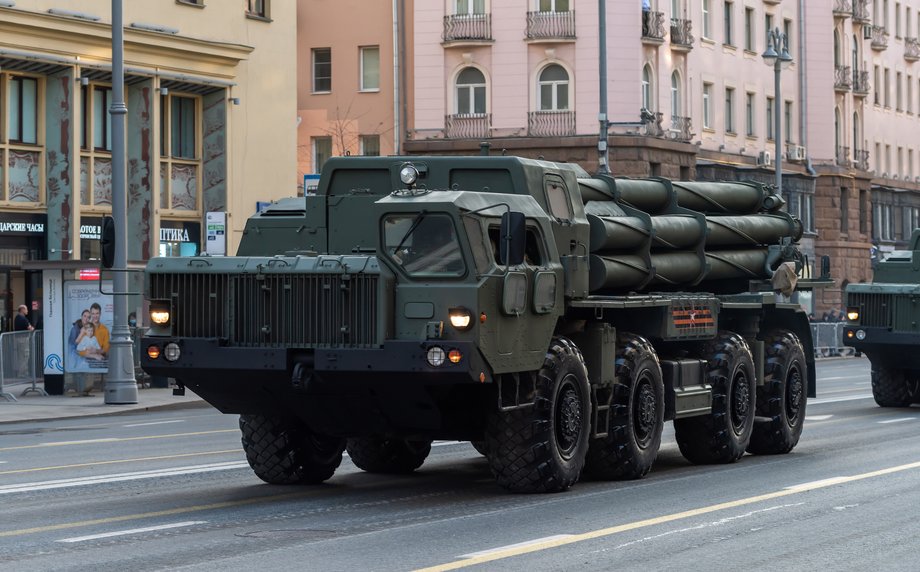
The 2S44 Hyacinth-K is a new Russian 152 mm wheeled self-propelled howitzer introduced into service with the Russian Army in 2025 as a deep modernization of the 2S43 Malva. It is armed with a 2A36 Giacynt-B rifled gun with a barrel length of 50 calibers, capable of hitting targets at a distance of up to 30.5 km. It is characterized by high mobility, additional protective screens, a crew of 5 people and the ability to carry up to 20 missiles.
17/20
|
Tornado-S MLRS
|
fifg / Shutterstock
Tornado-S 9K515 is a Russian 300 mm multi-launch rocket system (RSZO), a deep modernization of 9K58 Smerch, introduced into service in the Russian army in 2016. It is armed with 12 rocket guides with new 9M542/9M544 guided missiles (with GLONASS correction), with a range of up to 120 km and the ability striking point and area targets. It is characterized by an automated fire control system, short preparation time for firing (3 minutes) and high precision, which makes it one of the most effective rocket artillery systems in the Russian arsenal.
18/20
|
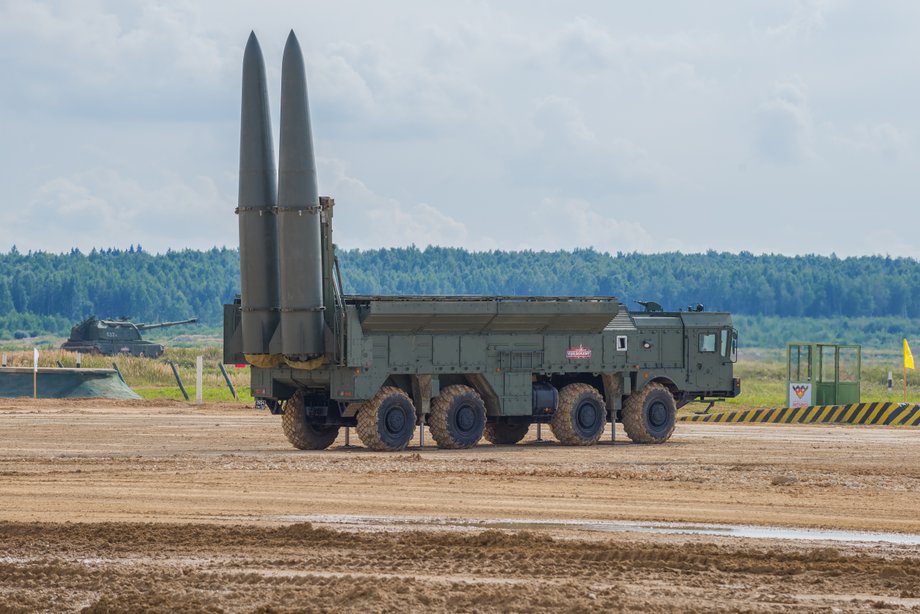
9K720 Iskander
|
Karasev Viktor / Shutterstock
The 9K720 Iskander (Iskander-M) is a Russian operational-tactical short-range ballistic missile (SRBM) system, introduced into service in 2006 and considered one of the most effective in its class. It is armed with two 9M723 (quasi-ballistic) missiles on one TEL 9P78-1 launcher, with a conventional or nuclear warhead weighing 480–700 kg, a range of up to 500 km, a speed of Mach 6–7 and maneuvering up to 30G in the terminal phase. The launcher on the MZKT-7930 8×8 chassis with a diesel engine with a power of approximately 500–600 HP and a combat weight of approximately 42 tons reaches a speed of 70 km per hour. Preparation time for the shot is from 4 to 16 minutes.
19/20
|
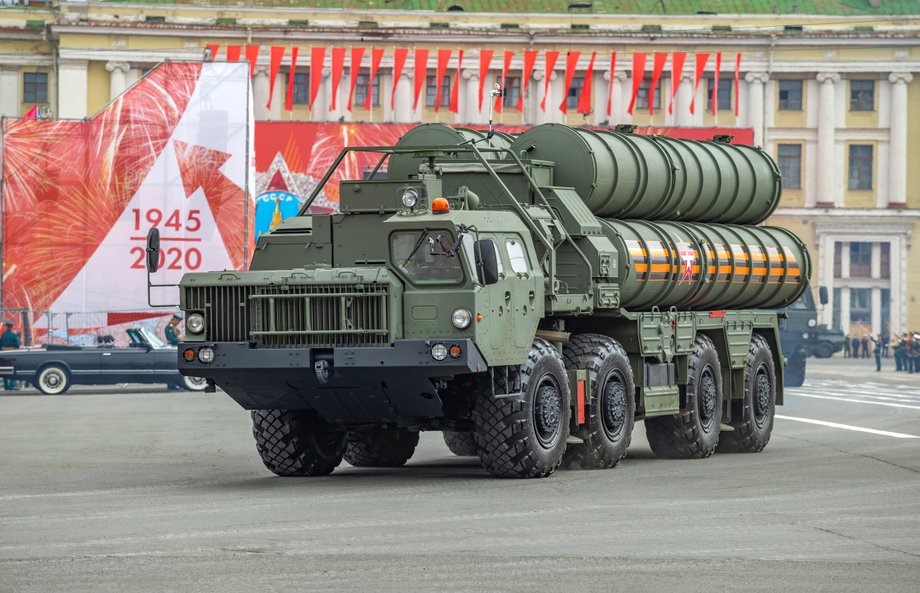
S-400 Triumph
|
shushonok / Shutterstock
The S-400 Triumf (NATO: SA-21 Growler) is a long-range air and missile defense system introduced into service in 2007 as the successor to the S-300PM2. The system is capable of simultaneously combating up to 36 air targets (planes, helicopters, cruise, ballistic and hypersonic missiles) at a distance of up to 400 km (40N6 missile) and an altitude of 27-30 km. It consists of the 5P85TE2/TE3 launcher on an 8×8 chassis, the 92N6E Grave Stone multi-function radar, the 91N6E Big Bird early detection radar and the 55K6E command point. The whole thing is fully mobile – the unfolding/folding time is approx. 5-10 minutes, and the speed of the combat column is up to 60 km per hour.
20/20
|
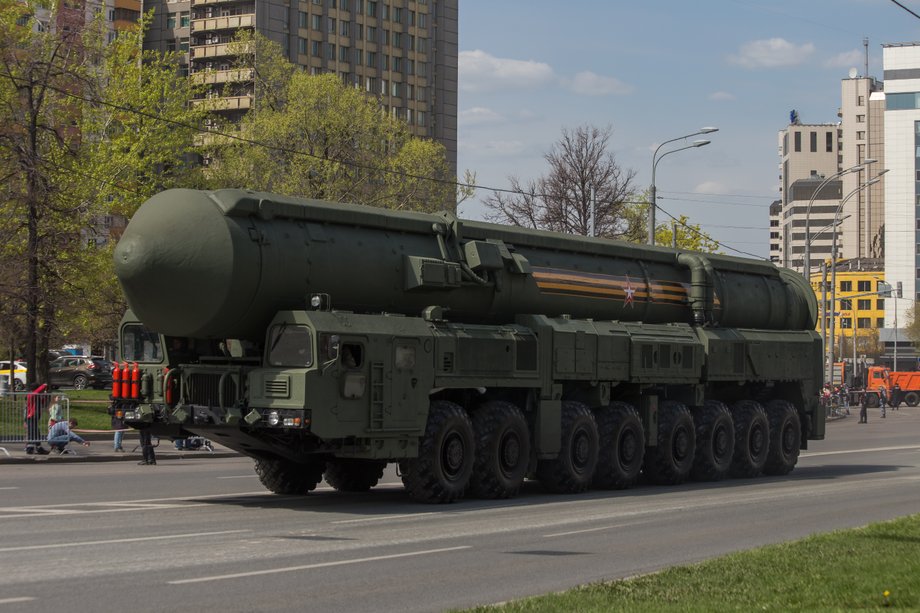
RS-24 Jars intercontinental ballistic missile
|
Andrew Lipatov / Shutterstock
The RS-24 Jars (Ярс, NATO: SS-27 Mod 2 / SS-29) is a Russian mobile intercontinental ballistic missile (ICBM) with MIRV warheads, introduced into service in 2010 as the successor to the Topol-M. It is armed with a three-stage solid-fuel rocket with a length of approx. 22 m and a take-off mass of 46-49.5 t, capable of carrying 6 independently guided nuclear warheads with a power of 150-300 kt each, with a range of up to 12,000. km and speed up to Mach 25. Yars is currently the basis of the mobile component of the Strategic Missile Forces of Russia.