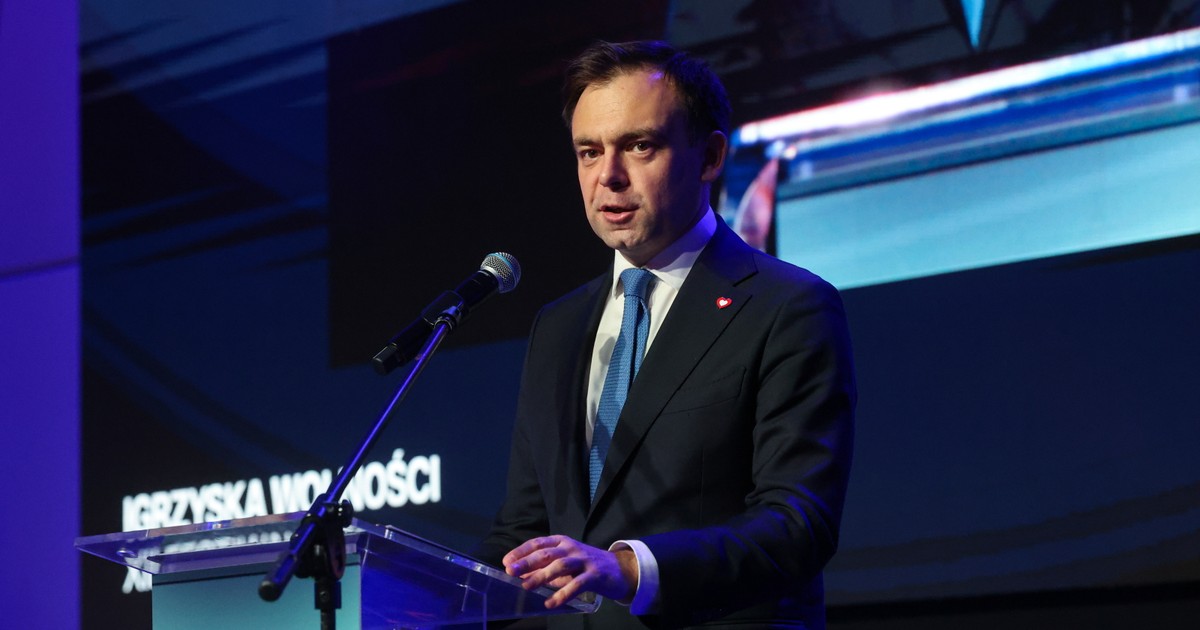
The Union of Entrepreneurs and Employers (ZPP) and the Defense Institute published on Thursday the report “Economic costs of war for Poland”, presented during the Defense24 Days congress in Warsaw.
The authors of the report analyze three different scenarios of Russia's aggression against Poland, pointing out that contemporary conflicts lead to a deep economic breakdown and long-term civilizational losses. The report presents three independent scenarios, from least to most destructive.
Limited and regional aggression
In the first scenario – with limited impacts – GDP falls by 11.2% in real terms, inflation reaches 80% and public debt increases to 85%. GDP. Precise attacks on Naftoport and the Gdańsk Refinery cut off the main oil import channels, causing 20 percent. diesel shortage. The destruction of the terminals in Małaszewicze eliminates Poland from the land trade route. After two months of fighting, the sides would reach a ceasefire in which Russia would maintain control over the Baltic states and the credibility of NATO and the European Union would be seriously questioned.
The next scenario – a regional invasion with occupation of Podlasie, Warmia and Masuria – predicts a decline in GDP by 29.4%. and inflation reaching 160 percent. There would be approximately 2 million internal refugees, and the destruction of the Via Baltica route would increase the costs of international transport by over 90%. After 20 days of fighting, Russia would propose a ceasefire assuming the gradual withdrawal of troops within 10 days, but maintaining control over the Baltic countries.
- Read also: Deterrence is more than just spending. Expert on NATO's eastern flank
Front on the Vistula and San River
The worst-case scenario – a full-scale invasion from three directions – assumes stabilization of the front line on the Vistula and San rivers. In a zone up to 100 km from the area occupied by the aggressor, the invader would destroy 80 percent. key infrastructure. Unemployment in free areas would exceed 43%, and monetary destabilization would lead to spontaneous euroization and dollarization of trade. After 120 days, NATO forces would launch a counterstrike and force Russian troops to withdraw beyond Poland's borders.
Reconstruction costs. Staggering numbers
In all three scenarios, analysts estimate the total costs of rebuilding the entire economy at PLN 0.8-1.2 trillion in the case of limited strikes, to PLN 3.5-5.5 trillion in the case of full-scale aggression. The largest component of these losses is critical infrastructure: energy, transport and telecommunications. The authors of the report estimated the costs of its reconstruction at PLN 550 billion in the mildest scenario and up to PLN 3 trillion in the event of a full-scale war.
Digital resilience as a priority
The authors of the analysis show the long-term social effects of aggression, including the risk of mass trauma and permanent outflow of highly qualified employees. The emigration of specialists and environmental damage – such as soil contamination or land mining – could limit the country's development potential for years. In response to the presented scenarios, the authors of the report and industry experts indicate specific actions that could minimize the risk and effects of potential aggression. Analysts recommend, among others: building the state's digital resilience by transferring key administrative and financial systems to cloud infrastructure located in allied countries.
“The price of the state's unpreparedness for aggression would be incomparably higher than the cost of consistently strengthening the army, the state's resilience and public awareness,” emphasized Piotr Małecki, president of the Defence24 group, quoted in the report. Gen. Jarosław Gromadziński noted that the study shows the real effects of neglect in the construction of the security system and should constitute an impulse for long-term financing of the armed forces.
The president of ZPP, Cezary Kaźmierczak, called for a significant increase in defense spending, arguing that they constitute an investment that would avoid much higher costs in the event of war. He also stressed the importance of expanding civil defense as a relatively cheap and effective element of deterrence. “It is worth spending any money on armaments, otherwise we will pay a much higher price. Deterrence begins in the mind. The aggressor must know that entering Poland will not be a parade, but a bloodbath in which the entire society takes part, not just a professional army.” – emphasized Kaźmierczak.
- Read also: The war changes economic forecasts. Economists warn