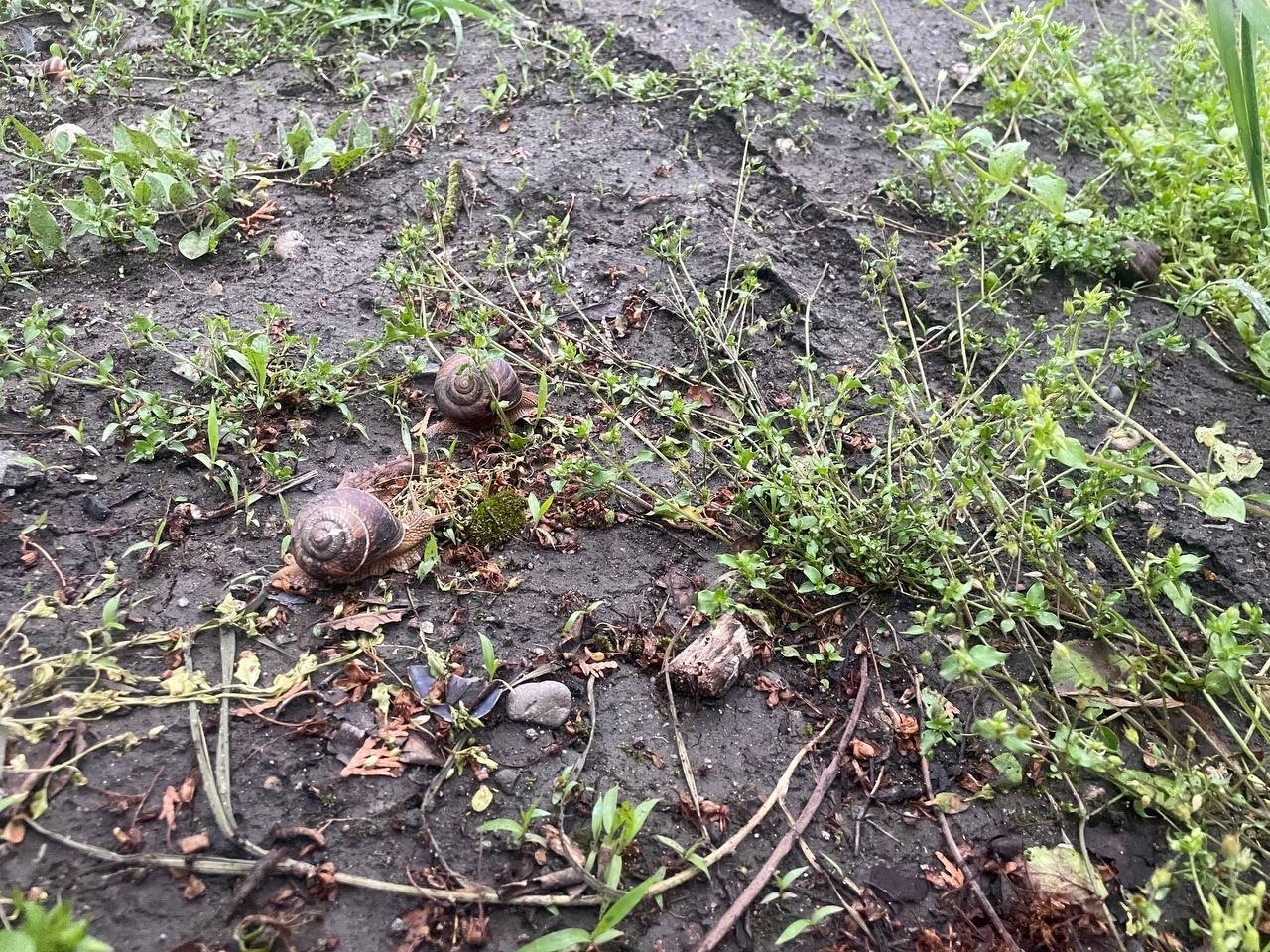
When it gets warm and damp outside, the slugs wake up. They crawl out of the ground, from under leaves, boards and debris. In central Russia, the first pests can be noticed as soon as the soil warms up to +5 °C – this happens at the end of March or beginning of April. And by May they are already multiplying with might and main and crawling onto cucumbers, cabbage and strawberries.
One slug eats 30–40 times its own weight in food per day. Therefore, even a couple of such guests will quickly turn the leaves into a sieve and spoil the fruits.
How to protect your garden in spring
Remove all cover. Disassemble old boards, bricks, garbage and compressed mulch (where slugs hide and lay eggs).
Create barriers around your garden beds. Use something that is difficult for slugs to crawl on: dry coarse sand, gravel, crushed eggshells, nut husks. And also ash or chalk: on a dry, scratching surface, the mollusk loses its mucus and leaves.
Arrange drainage and ventilation. Slugs love dampness: remove excess overhangs, do not allow stagnant water, pull out weeds and thin out dense growth so that there are no wet, shaded corners.
Remove carrion and damaged leaves. Rotting vegetables and gnawed greens are ideal food and shelter for slugs.
Collect by hand and set traps. Slugs are active at night or on rainy evenings. Walk around with a flashlight, collect them in a container and destroy them. And also make “beer traps” – small containers with beer or yeast solution. The shellfish crawl in there and can’t get out.
Is it possible to use chemicals and biological agents?
If there are too many slugs, spot treatment is acceptable. There are special granules for snails: they are laid out around the beds, but so that they do not touch the fruits and edible leaves. Soft barrier agents work well in greenhouses and on cucumbers: superphosphate, slaked lime, coffee grounds, dry soda. They burn the slug and stop it, but when used in moderation they do not harm the soil.
Based on materials from the Zen channel “URA.RU” (12+).