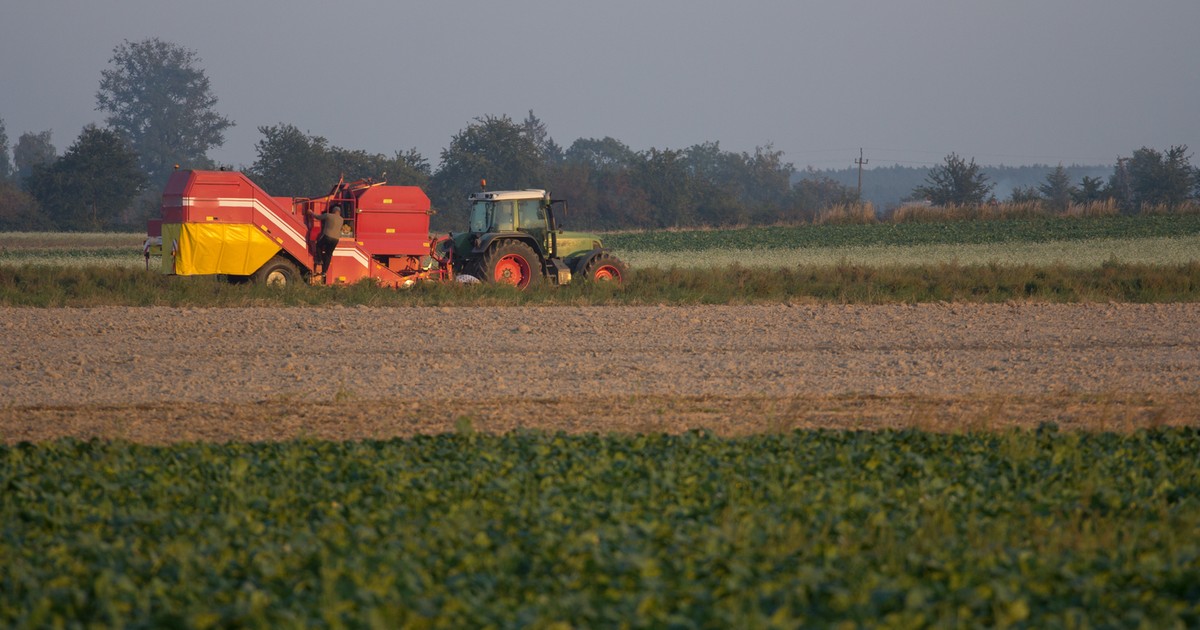
According to information provided by farmer.pl, data from the Institute of Meteorology and Water Management show that April 2026 was one of the driest in recent years in north-eastern Poland. In many locations, the amount of rainfall did not exceed 20-30%. long-term norm, and high temperatures and strong winds additionally accelerated the evaporation of water from the soil. IMWM-PIB also signals that the forecast rainfall will not bring a significant improvement in the hydrological situation.
Read also: Farmers are financially “exhausted”. “How are we supposed to function?”
The effects of drought are already visible
The Institute of Cultivation and Soil Science also points to the deteriorating conditions, which notes the development of agricultural drought in an increasing area of the country, including the Warmian-Masurian Voivodeship.
In a letter addressed to the administration, the Warmian-Masurian Chamber of Agriculture warns that the situation in the fields requires immediate response. Precipitation in recent months was only trace, and the meltwater quickly drained away, not providing the soil with adequate moisture.
The effects of drought are already visible in practice. Farmers decide to eliminate some crops by plowing them, especially in the case of rapeseed, which on many farms does not provide a chance for a yield that would ensure profitability of production. In its place, it is planned to sow corn or plants with a shorter growing season, which will still provide the possibility of obtaining a harvest in the current season – reports farmer.pl.
Will the losses be even greater?
According to the agricultural self-government, the key problem remains delays in launching municipal commissions assessing losses. The Chamber demands their immediate commencement, without waiting for the publication of IUNG-PIB reports, arguing that the delay prevents farmers from making rational and timely decisions regarding changes in sowing.
The lack of a quick reaction from the administration – as the Chamber warns – may lead to further deepening economic losses on farms and increasing tensions in the agricultural community. In the opinion of farmers' representatives, responsibility for the effects of such a scenario will fall on state institutions responsible for crisis response – emphasizes farmer.pl.