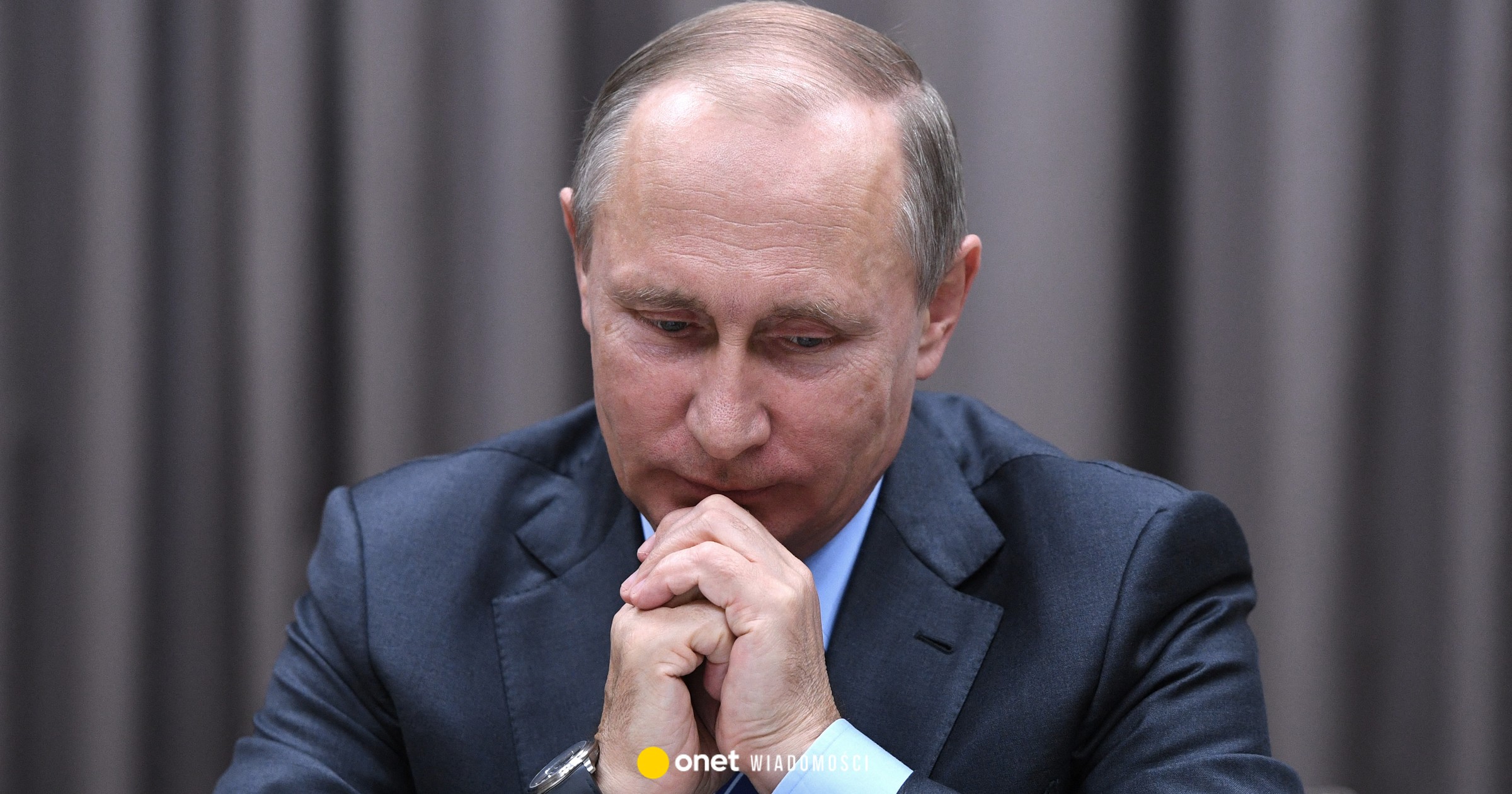
January was a failure for Vladimir Putin's army, February was a disaster, March was a difficult period, and April was a real disaster. From Moscow's point of view, May promises to be equally bad: burning refineries and oil storage facilities show the range of Ukrainian drones and cruise missiles.
Above all, however, they clearly show that the Russian army has no real means of defense against such attacks. Moscow, under the guise of threats, responded [do Ukrainy] asking for a ceasefire on May 8 and 9. Ukraine instead offered a ceasefire from May 6, which Russia ignored, carrying out attacks that killed many civilians. As a result, Kyiv rejected Russia's request for a temporary ceasefire. Instead of timid de-escalation, everything points to renewed escalation.
However, Russia's demonstrations of force will not hide one thing: the “special operation”, as the Kremlin calls its war against Ukraine, is not going well from the Russian point of view.
Russia with no chance of making progress on the front?
According to Ukrainian military expert Mykola Beleskov from the Ukrainian National Institute of Strategic Studies (NISS), Moscow's superiority in terms of the number of armed forces and conventional weapons is no longer an obstacle to Kiev's strategy. The expert points out Ukraine's advantages. He mentions the “ingenuity” of people, innovations and a “military-industrial” base that “reacts faster to changing needs than Russian ones.”
However, Beleskov is convinced: unless Russia's strategy changes fundamentally, Moscow cannot count on progress on the battlefield this year and, therefore, on improving its negotiating position. Ukraine's recent successes are not a coincidence but the result of “tactical and technological adjustments,” he says. At the same time, the expert predicts that Russia will use every opportunity, which means that bloody fighting will continue.
Ukraine takes the initiative
Although much information from the front cannot be independently verified, international observers largely agree: it is no longer possible to talk about a Russian offensive. According to the Institute for the Study of War (ISW), in April the Russian army lost more territory than it gained. As a result, it lost control over approximately 120 square kilometers of Ukrainian territory.
According to Dmytro Zhmailo from the Ukrainian Center for Security and Cooperation, this situation is the result of “active defense actions”, thanks to which Ukraine manages to take the initiative and liberate the areas. And this despite the enormous expenditure of forces and resources on the Russian side: in 2023, Moscow had 420,000. soldiers in Ukraine and its vicinity, and since December this number has increased to approximately 720,000.
Losses are high – according to estimates, in April they averaged over PLN 1,000. soldiers per day. However, these estimates cannot be independently confirmed. Many soldiers do not even reach the front.
Kiev's strategy is bearing fruit
Russia is now even more concerned about Ukrainian long-range attacks. “The European part of Russia is exposed to increasing Ukrainian attacks,” says Beleskov. It is also clear that Russia is failing to repel these attacks.
According to ISW, one quarter of Russia's territory is currently within the range of Ukrainian drones. In some cases, the Ukrainian army even managed to hit targets 2,000 meters away. km from the Ukrainian-Russian border – Moscow is only 450 km from the border.
The heavily fortified Crimean Peninsula has also been hit hard recently. According to Beleskov, this “campaign of medium-range strikes […] “is an essential element of Ukraine's current war strategy aimed at weakening the Russian war effort.”
A ceremonial parade without heavy equipment? Vladimir Putin has concerns
Russia, like every year, will celebrate the victory over Nazi Germany (Victory Day) with a parade on May 9. However, it is unlikely that any heavy equipment would pass through the streets of Moscow. Fears of Ukrainian drone attacks seem too great and warehouses are too empty. At the same time, Putin is afraid of a coup. Access to mobile internet has been severely restricted and security measures have been tightened.
At the same time, Moscow threatens to raze Kiev to the ground if Ukraine dares to attack the Russian capital on May 9. This type of behavior is typical for Russia, says Beleskov. However, Moscow “no longer has conventional reserves that could escalate the situation and deter Ukrainian attacks.” Putin is not ready to stop hostilities, says the expert. His ceasefire offer concerns the possibility of organizing Victory Day celebrations “without being humiliated by Ukrainian attacks.”
About Ukraine without Ukraine
However, there may be another aspect behind this proposal: Moscow floated the idea of a two-day ceasefire after a telephone conversation between Putin and US President Donald Trump, in which the issue of such a truce was reportedly discussed.
However, Ukraine was never officially informed about this. The fact that discussions about Ukraine are taking place without Ukraine's participation is not well received in Kiev. “This is a war between Russia and Ukraine. When the US and Russia negotiate, it is important that our side knows what they are talking about,” said President Volodymyr Zelensky. Although Ukraine's diplomatic position is better today than a year ago, “no one has any illusions that the Ukrainians could significantly influence Trump,” says Beleskov.