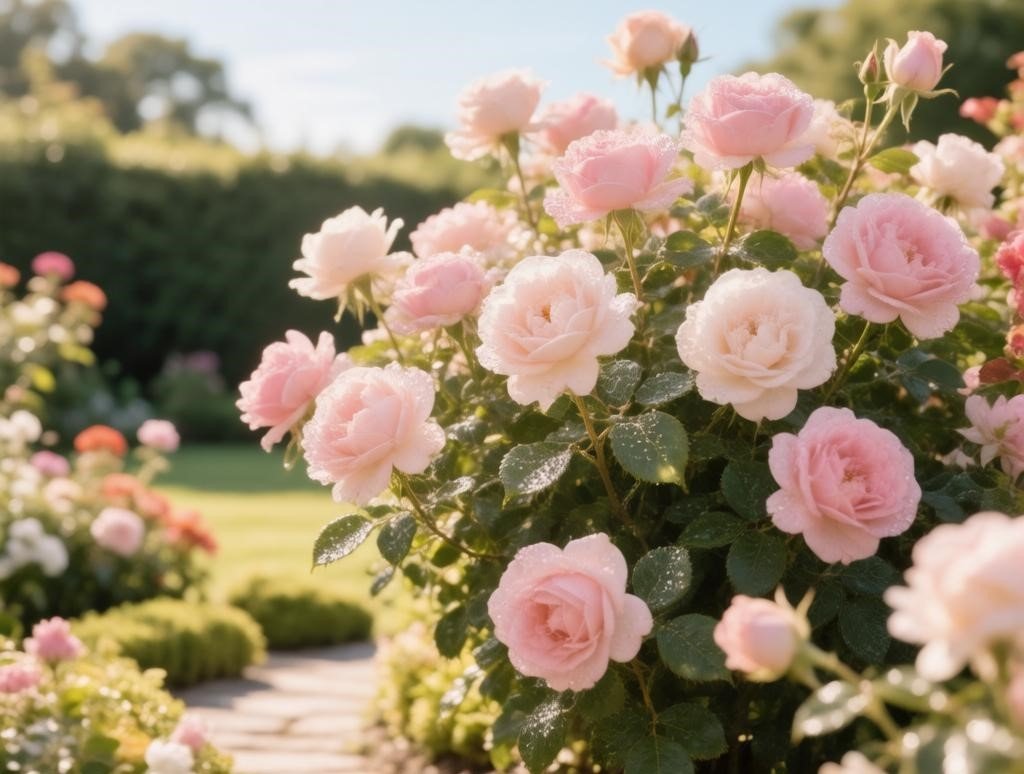
Many people dream of a luxurious rose garden, but are afraid of the difficulties with pruning, covering and treating diseases. Modern breeders have developed varieties that forgive the mistakes of beginners and delight with abundant flowering even with minimal attention. These plants seem to be created for those who want to enjoy the sight of flowers, and not fight for their survival.
Variety “Pink Queen” becomes a real find for lovers of classic beauty. The bushes are highly resistant to powdery mildew and black spot. Large double flowers of a rich pink hue appear on the shoots in waves throughout the summer. The plant tolerates rainy weather well and does not lose its decorative effect.
“Snow fake” attracts attention with its snow-white buds, which seem to glow in the twilight. This variety is ideal for beginner gardeners due to its strong immunity and ability to quickly recover from stress. The flowers stay on the bush for a long time, without falling off even under the influence of the wind. The compact shape of the bush allows it to be grown both in open ground and in containers.
“Scarlet Sunset” amazes with the brightness of colors and incredible heat resistance. The deep red petals do not fade in the sun, maintaining the intensity of the color until they fade. Powerful shoots confidently hold heavy inflorescences without requiring additional garter.
Plant these roses in a well-lit area with fertile soil. It is enough to add a little humus to the planting hole and ensure regular watering during dry periods. In return, the plants will thank you with lush and long-lasting flowering, turning the garden into a place of strength and inspiration.
Question and answer:
Where is the best place to plant unpretentious roses?
Roses prefer sunny places, protected from strong drafts. The area should be well ventilated to reduce the risk of developing fungal diseases.
How often to water roses in summer?
In dry weather, water once a week, pouring 10–15 liters of water under each bush. It is important to moisten the soil deeply so that roots develop in the lower layers of the soil.