The apartment rental market in Poland is going through a period of significant cooling, which – as the latest data shows – does not translate directly into a real relief in tenants' wallets.. Falling asking rents are only one side of the coin, because additional costs are rising at the same time. Effect? The total cost of living “rented” remains at a similar level, a the profitability of investment in apartments is decreasing. This is a situation that may have significant consequences for both tenants and landlords.
The latest analysis of the Morizon-Gratka Group shows that in March 2026, average net asking rents in the six largest Polish cities decreased in most apartment segments. The largest reductions concerned the smallest premises.
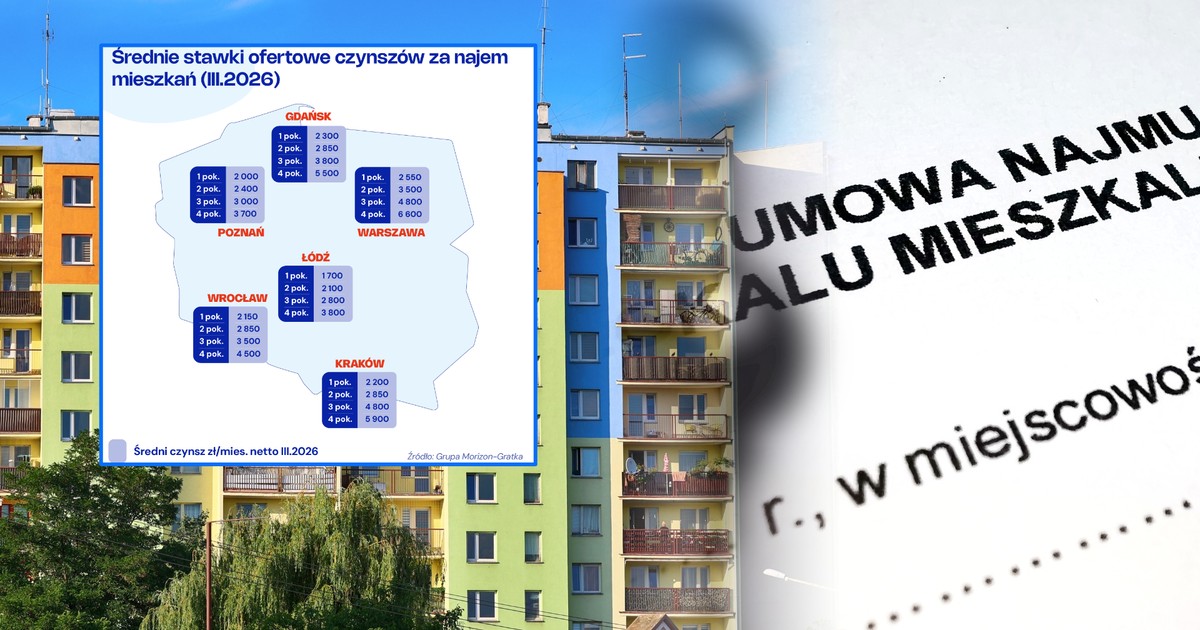
Average rental rates
Read also: ROD plot for PLN 1,000. zloty? It's possible. But the price doesn't come out of nowhere
The rent of studio apartments decreased by an average of 4.8%. compared to January this year, although – according to the data – in Gdańsk prices remained at the level of approximately PLN 2,300/month. In the case of two-room apartments, the declines reached approximately 3 percent, while in Poznań the rates remained stable (approx. PLN 2,400/month).
Smaller changes were recorded in the segment of larger apartments. Three-room apartments became slightly cheaper – by over 1%. in Kraków, Wrocław and Łódź. A more visible decline occurred in Gdańsk (approx. 5%). The exception is Warsaw, where rents increased by 1.1%. to the level of approximately PLN 4,800/month.
It looks even more interesting the situation in the case of four-room apartments. Most cities also saw declines — from approx. 2 percent up to 7.5 percent in Poznań. – With the exception of Łódź, we are observing a clear correction of rates in the large apartment segment – says Marcin Drogomirecki, real estate market expert of the Morizon-Gratka Group.
However, it is worth emphasizing that we are talking about offer rates. In practice – with limited demand – there is often further negotiation between tenants and landlords, which means that real prices may be even lower.
Rental costs: standard net rent, fees are increasing
Despite the decline in offer rates, tenants do not feel a significant improvement in their financial situation. The reason is simple – the cost structure has changed.
More and more often, advertisements include the so-called net rent, i.e. the amount that goes directly to the owner of the apartment. This includes administrative fees and utility costs, which often amount to several hundred PLN per month. Additionally, there are fees for the Internet, TV and parking space.
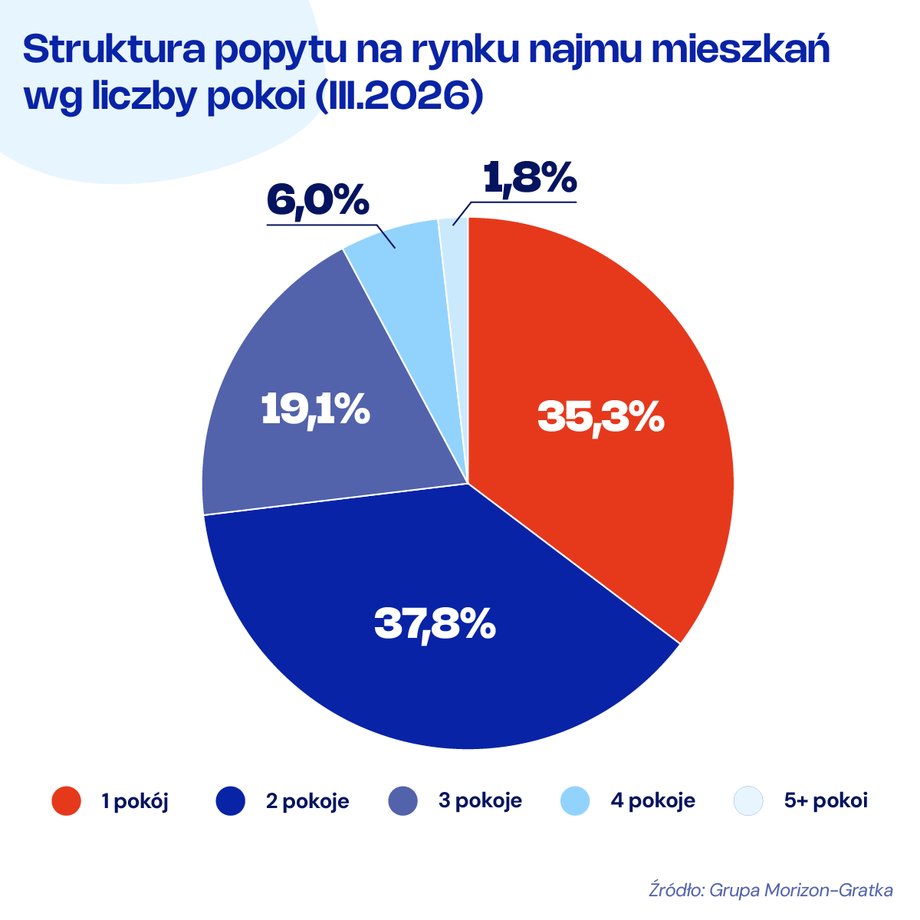
Lease structure
|
Morizon-Gratka Group
See also: Investment in an apartment for rent. We checked how Poles do it
– As a result, despite the decline in net rents, the total costs of renting apartments remain at a similar level – emphasizes Drogomirecki. As he adds, this a consequence of increasing fees independent of owners.
This phenomenon has another important effect. The real income of apartment owners is falling — both nominally and after taking into account inflation. Therefore, investing in long-term rental is becoming less profitable than a few years ago.
Rental demand: seasonality is back in play
It has an increasingly stronger impact on the rental market traditional seasonalitywhich has been disturbed in recent years, among others by the influx of refugees from Ukraine. Currently, their housing activity is much smaller and more often concerns changing the standard of the premises than looking for new apartments.
Students continue to play a key role. It is their decisions – related to the academic calendar – that determine the greatest fluctuations in demand. The greatest traffic occurs in the period from mid-August to the end of September, i.e. just before the beginning of the academic year. Moreover, sometimes the market slows down noticeably.
— We will have to wait until August for another seasonal revival in demand, says an expert from the Morizon-Gratka Group.
Rental market: increasing supply and possible withdrawal of apartments
The coming months may bring a further increase in the number of offers. At the end of the academic year, some of the apartments will return to the market after the end of the lease agreements concluded by students.
More supply means stronger competition between landlords and further downward pressure on rents. This, in turn, may encourage some investors to change their strategy.
— Some owners, especially those who have lower standard apartments or have difficulty finding tenants, may decide to sell the premises – Drogomirecki predicts.
Such a scenario could also affect the apartment sales market, increasing the availability of premises and potentially putting pressure on prices.
Although at first glance the situation of tenants seems to be improving, the reality is more complex. Falling asking rents do not mean real savings, and the market remains in a waiting phase — both on the part of tenants and owners. Everything indicates that the key decisions will only come in the coming months and the return of seasonal demand.