Peter Magyar wants to “revive” Austria-Hungary. “We shared one country.” This plan will overturn order in Europe

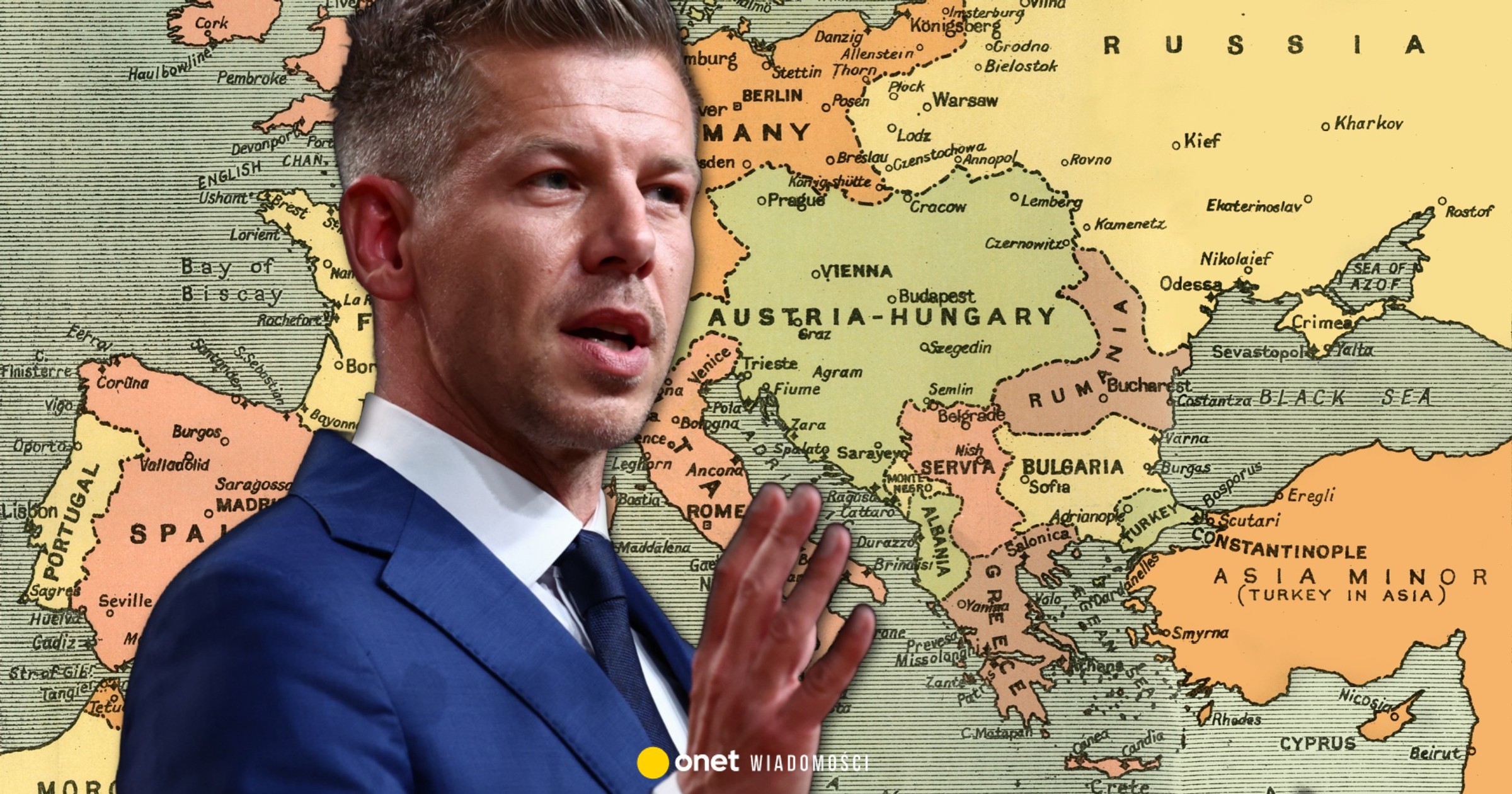
“In the past, we divided one country,” the future Hungarian prime minister said about Austria after the elections. The media call the Magyar plan a new project of “Austro-Hungary”. The head of the new Hungarian government may lead to a change in the balance of power between Poland, Slovakia, the Czech Republic and Hungary.
The foreign trips he has planned say a lot about the directions of the Hungarian Prime Minister's policy. He decided that his second visit, after Warsaw, would take him to Vienna – before his stay in Brussels.
Future Hungarian Prime Minister Peter Magyar announced shortly after the election that he wanted to restore closer relations with Vienna, which had deteriorated during Viktor Orban's 16-year rule.
Austrian media claim that the future Hungarian prime minister wants to revive Central Europe's influence on the EU by referring to its imperial past.
The border between Austria and Hungary, approximately 350 km long, is characterized by intense trade and human exchange. Since the EU's eastern enlargement, approximately 134,000 people have been working in Austria. Węgrów. Many of them travel to the West to commute to work.
However, relations between Hungary and Austria do not have to be easy even now, after the change of government in Budapest. Disagreements may arise over issues relating to security and foreign policy, as well as energy.
What's next for V4?
The Visegrad Group, known as the “Visegrad Four” or V4, consists of Slovakia, the Czech Republic, Hungary and Poland. Austria is not in it. Approximately 65 million people live in the countries that form the V4 format. Thanks to Poland, the V4 has considerable influence in Brussels, but at the same time the group is internally divided due to differences in views on the war in Ukraine and relations with Russia.
However, there is another format with Austria, namely the Slovakia Triangle, known as S3, which also includes Slovakia and the Czech Republic. There are no Hungarians or Poles in it.
Magyar wants to refer to the Slavkov Triangle rather than to V4. It is worth noting that Hungary's relations with Poland have suffered in recent years, and the path to improvement may be difficult.
Poland sees Russia as an existential threat. After winning the election, Magyar signaled his readiness to negotiate even with Russian dictator Vladimir Putin. He announced that he would review “all agreements” with Hungary regarding energy supplies from Russia, renegotiate them and “if necessary” terminate them. It remains to be seen what shape his policy towards Moscow will take.
On the Ukraine issue, Austria and Poland support additional EU aid for Kiev. Magyar wants his country to be excluded from the need for financial assistance to Ukraine due to Hungary's poor budget situation. Countries' opinions also differ on the issue of Ukraine's accelerated accession to the EU.
Although S3 has fewer people, the Gross Domestic Product (PKP) per capita in this format, thanks to Austria, per capita is much higher than the V4 average. For this reason, S3 is an important element within the EU, having a similar demographic strength as, for example, the Benelux countries (approx. 30 million people) or the Scandinavian countries.
“We want the V4 format to be stronger than it is now”
Magyar has already publicly proposed merging the Visegrad Group with S3 to strengthen cooperation between Austria, the Czech Republic, Slovakia and Poland.
The future Prime Minister of Hungary wants to find closer allies in terms of decisions made in Brussels. On many issues, the countries of Central and Eastern Europe and their mostly conservative governments share similar views, for example on migration.
However, there are also other common points – Magyar's party, TISHA, like the Austrian ruling party OVP, is part of the European People's Party (EPP) faction in the European Parliament.
“We want the V4 format to be stronger than it is now. At least as strong as it was under our previous government,” said Czech Deputy Prime Minister and Industry Minister Karel Havlicek from ANO, Andrej Babis' party.
According to Czech Deputy Prime Minister and Minister of Foreign Affairs Petro Macinka, the Czech Republic, because of Orban, lost Hungary as an ally in the EU, but Prague wants to maintain close relations with the future government.
In the context of the V4 format, there is talk of its extension in the V4+ formula – plus it refers to cooperation in Central Europe also with other countries, for example with Austria, Slovenia and Croatia. Such a vision may come true thanks to the initiative of the future Prime Minister of Hungary.