Odyssey of Polish gold. How a national treasure survived the war thanks to a secret evacuation

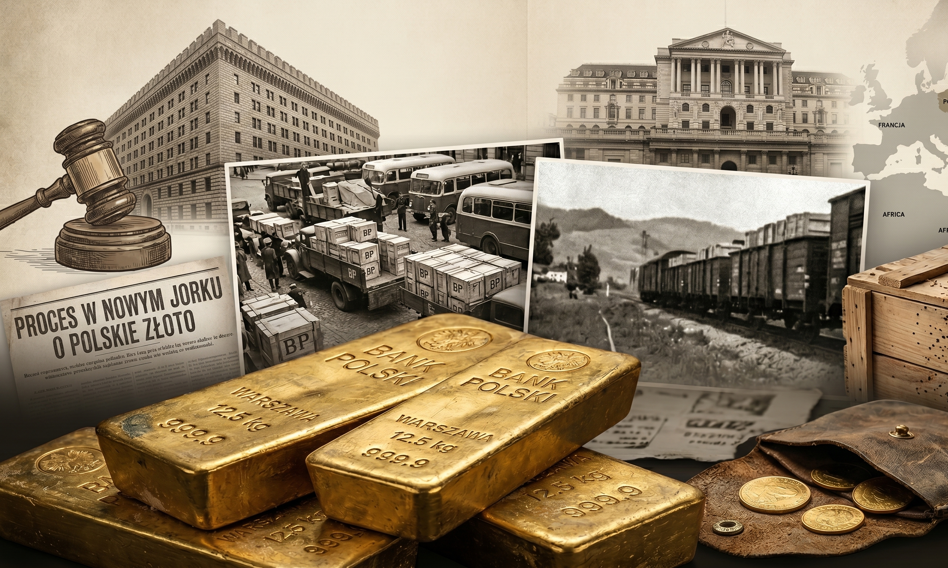
Today's gold reserves of the National Bank of Poland, exceeding 580 tons, arouse well-deserved admiration and create a sense of financial stability of the country. However, in Poland's turbulent history, there was a moment when the entire “national treasure” weighed only 79.5 tons. This relatively small amount of precious metal, accumulated thanks to Władysław Grabski's reforms within the Bank of Poland SA established in 1924, became the hero of one of the most daring logistic operations of World War II.
On the eve of the war, Polish gold resources weighing 79.5 tons were worth nearly PLN 464 million or USD 87 million. The reserves were located in Warsaw, local branches and as deposits abroad. Collected in the interwar period thanks to the reforms of Władysław Grabski within the Bank of Poland established in 1924, it became the hero of one of the most daring logistic operations of World War II.
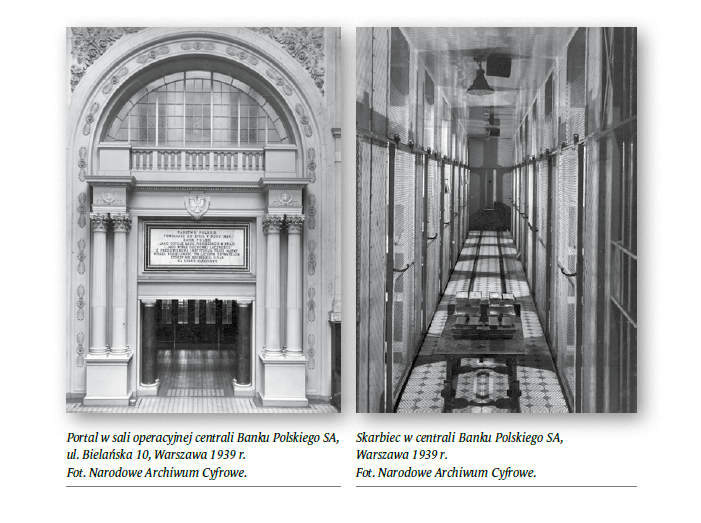
When Germany attacked Poland on September 1, it quickly became clear that the national treasure must be absolutely secured. First, it was transported to the east of the country, but on September 10, a decision was made to take it entirely abroad – to France. Gold, other assets of the Bank of Poland and banknote matrices moved to the collection point in Śniatyń on the border with Romania.
With a gold medal to Romania
An interesting fact is that one of the 40 buses transporting the ore was driven by Halina Konopacka, Olympic champion from Amsterdam (1928). Her husband was Colonel Ignacy Matuszewski, former Minister of Treasury, who supervised the transport of gold from Łuck. Thanks to the support of the authorities in Bucharest, who resisted enormous pressure from the Third Reich, the convoy was able to travel by train through Romanian territory to the port of Constanta.
Understanding gold – a new series of articles
We continue a series of publications presenting the role, history and mechanisms governing the royal bullion market. We look at gold from many perspectives, from investment decisions, through global resources, the history of gold, to purchases of the precious metal by central banks.
>> All texts can be found at this link
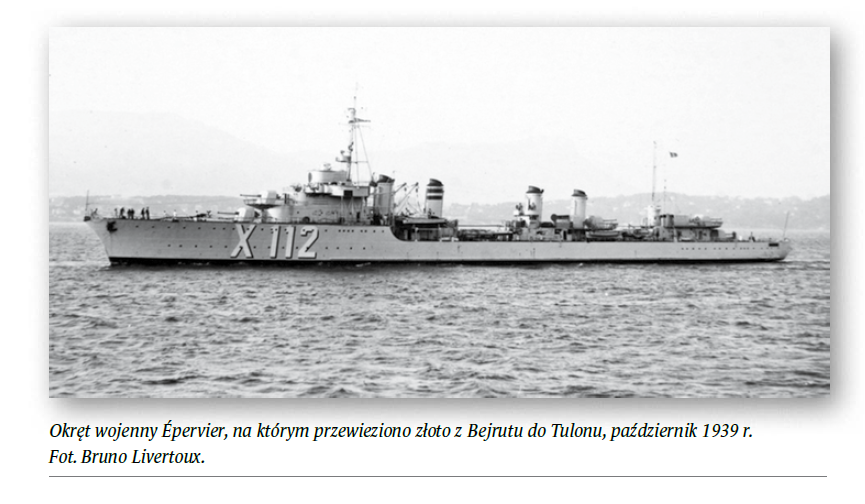
From there, on board the small tanker Eocene, the ore sailed to Turkey. But that was just the beginning. The route continued through Istanbul to Beirut, which was then under French administration. The authorities in Paris agreed to accept Polish gold. At the turn of September and October 1939, the bullion was loaded onto French warships and transported to the port of Toulon, and finally safely (for the time being) located in the basement of the Bank of France in Nevers.
Poles are losing control over gold
Security in France quickly turned out to be illusory. In the spring of 1940, in the face of German aggression and the threat of capitulation, the Polish government pressed hard for the gold to be transported to the United States. The French, clearly playing for time, sent Polish gold to Dakar in Africa instead of to America, from where it was transported to Fort Kayes located deep in the French Sahara.
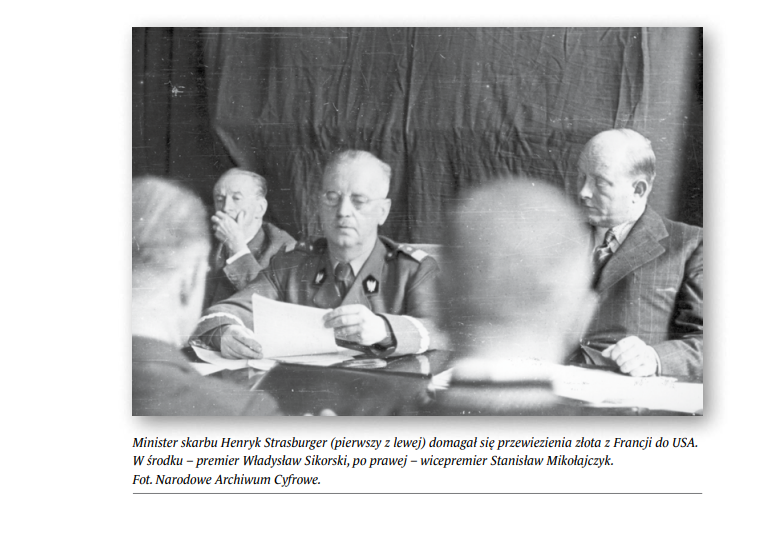
After the fall of France and the establishment of the collaborationist Vichy government in the summer of 1940, Poles lost physical control over their property. To regain it, the Polish government in exile undertook diplomatic and then legal efforts, which only brought results. In 1941, the New York law firm Sullivan and Cromwell hired by the Poles filed a lawsuit against the Bank of France. which led to the imposition of judicial custody on French reserves deposited in New York.
In May 1942, the trial was suspended because due to the war, the lawyers of the Bank of France were unable to represent him, and the court determined the setting of the trial date on this. The Polish side did not want to rush. The main goal of the undertaken procedural actions – imposing arrest – has already been achieved. At the same time, the Polish side tried to communicate with representatives of the Committee of Free France (Gaullists), which resulted in a secret agreement providing for the return of gold to the Poles.
How were Polish gold reserves recovered?
The great breakthrough came after the Allied occupation of North Africa in the fall of 1942 in connection with Operation Torch. It was then decided that one of the directors of the Bank of Poland, Major Stefan Michalski, would go to Africa to see Polish gold. Meanwhile, the French started making problems by claiming that there was no Polish gold in Keyes. However, thanks to the help of the Americans, director Michalski reached Algiers on February 13, 1943 to bring it back. If he wasn't actually there, he was going to find out what had happened to him. Otherwise, he was to negotiate with the French regarding his surrender.
Ultimately, the French admitted that Polish gold was located in West Africa, but they made the release of the gold dependent on the regulation of relations at the state level. At the end of 1943, an appropriate agreement was signed in Algiers. A message was sent to Washington that both sides agreed to end the trial. Under the New York Agreement of January 1944, based on the Algiers Agreement, the central banks of Poland and France ended the dispute. As a result, on March 22, a court in New York issued a decision to discontinue the trial and lift the arrest imposed on the gold of the Bank of France.
At the end of January 1944, two envoys of the Bank of Poland reached Kayes. The anecdotal story is that when they reached the Saharan fort, the wooden boxes in which Polish gold was stored were destroyed by termites. However, after the inspection, they managed to organize the transport of the gold to Dakar, where it was protected by the French military authorities.
The Polish authorities decided to distribute the recovered metal in allied countries. Directly from Dakar, the largest part of the gold went to New York. Subsequent batches, for strategic reasons, were transported by British war destroyers to London and Ottawa, Canada, which lasted until the fall of 1944.
Golden blackheads in Romania
The great evacuation of Polish gold is, above all, an extraordinary page of heroism among ordinary people. The operation took place in general chaos, and bank officials risked their own safety and that of their families. Many of them, after being stuck in France after 1940, became involved in the creation of the famous French-Polish intelligence network Réseau F2.
The astonishing success of this evacuation is the fact that for several years of the war, not a penny of the Polish zloty in the resources of the Bank of Poland was lost. Gold returned to the country in batches. The surviving reserves were ultimately at the disposal of the communist authorities. However, at the beginning, the communists ruling Poland did not know about the batch of gold remaining in… Romania.
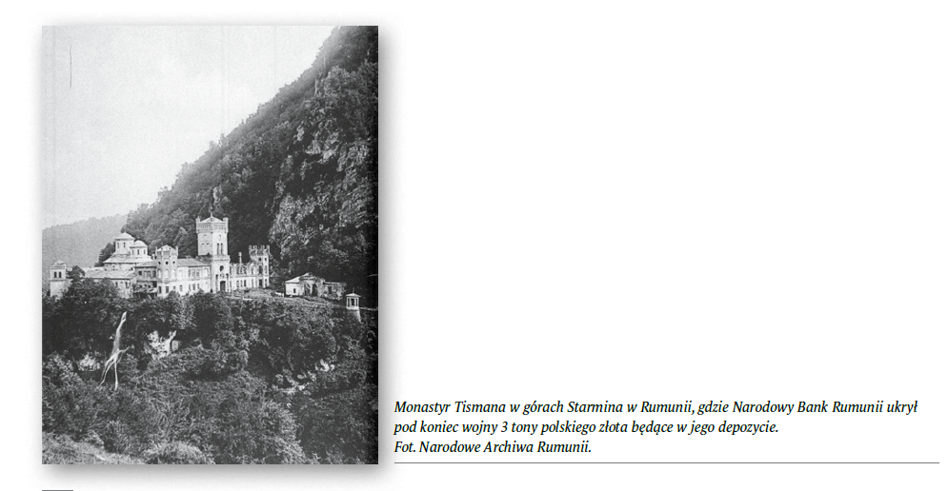
It turned out that in 1939, on the order of the Polish military authorities, 4 tons of gold were separated from the main transport, of which one ton was sold to meet the current needs of the state and help refugees, and three tons were deposited in the National Bank of Romania. These three tones were hidden at the end of the war in the mountain monastery of Tismana. However, they also returned to Warsaw by air in 1947.
Communist idea for gold
Meanwhile, since 1946, gold has been successively sold in global financial centers or used as security for loans. Moreover, the pre-war Bank of Poland, after its assets were absorbed by the state-owned National Bank of Poland and their settlement value was drastic, artificially reduced according to the pre-war parity, was completely liquidated by decision of the authorities in 1952. Until the mid-1990s, the NBP reserves contained only about 15 tons of gold.
The gold of the Second Polish Republic, saved thanks to the heroism of officials and the support of allies, became the foundation for the reconstruction of the destroyed country. Today, this story reminds us that the real treasure of the state, next to the precious metal, are the people ready to protect it in the most dramatic moments.