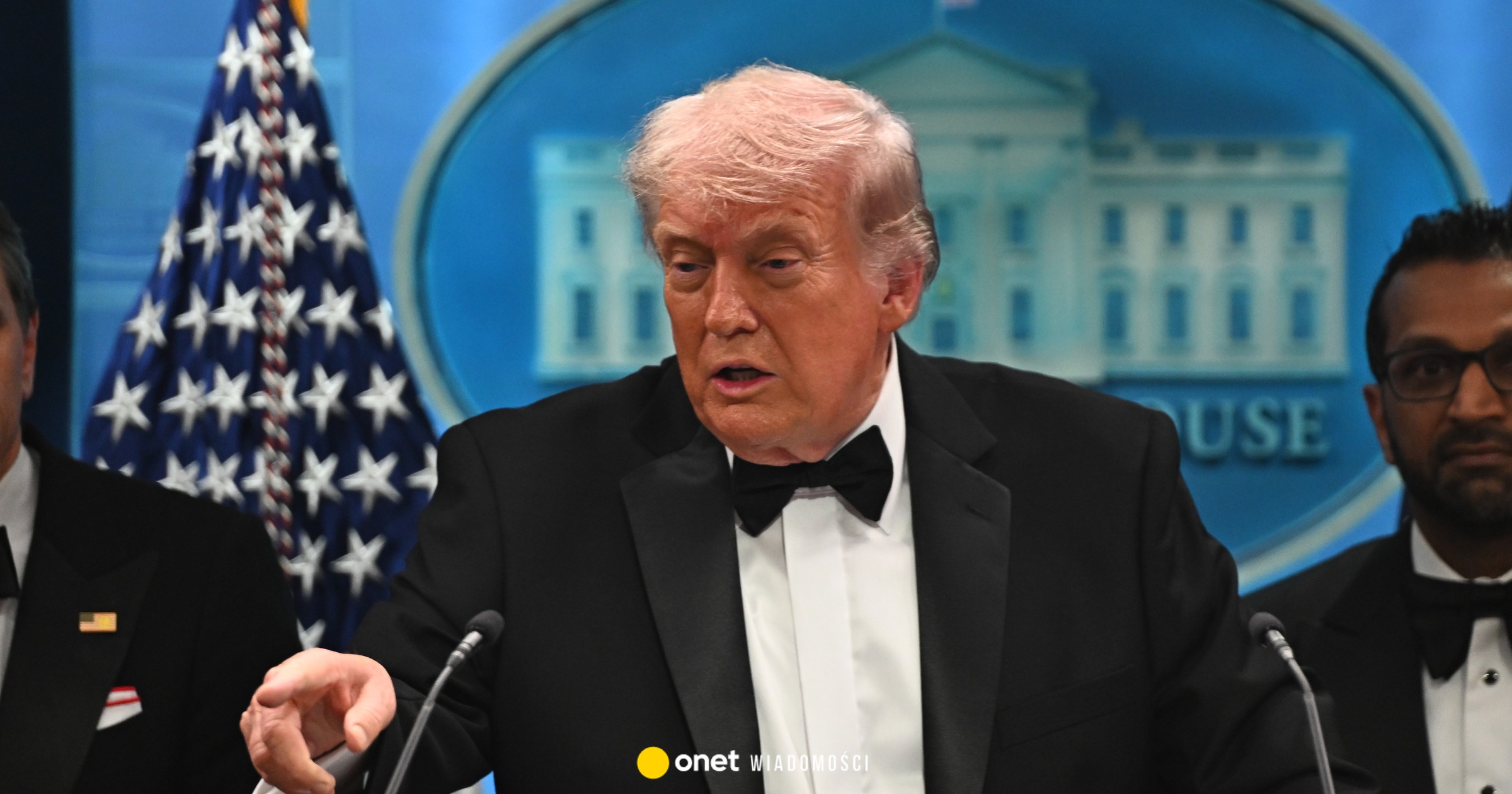
Donald Trump has a talent for making grand declarations. On Thursday, for example, he told members of Congress that the war in Iran was over. The problem is that nothing has actually ended. There is a fragile ceasefire in place – nothing more. The Strait of Hormuz remains blocked. This phrase – that the war is over – was not used by accident. It may have a decisive meaning in US domestic policy.
There's a clock ticking in the background – or more precisely: the War Powers Resolution from 1973. It obliges the president to either engage Congress or end the operation after 60 days of a military operation. This deadline has just expired. Or maybe not?
What seems obvious suddenly becomes a matter of interpretation in Washington. Some members of Congress believe that the 60-day deadline for conducting military operations in Iran has already passed, counting from March 2, when Trump announced the start of the attacks. Others believe that days without hostilities – and therefore the entire ceasefire period – should not be included. Still others point to a possible 30-day extension of this deadline.
The result is one – maximum confusion. This is politically convenient for the White House. While Democrats and Republicans argue over legal formalities, Congress is absent for now. The vote on the extension of hostilities was postponed. Parliamentary control? Suspended.
As unpopular as the Vietnam War
Meanwhile, pressure is mounting on Trump and Defense Secretary Pete Hegseth. War has long become a political issue in American society. In a survey conducted by the Washington Post, as many as 61 percent American respondents considered the US intervention against Iran a mistake. Similarly high levels of opposition were previously reported in the Vietnam (1955-1975) and Iraq (2003-2011) wars.
Even more telling is the fact that the vast majority of respondents admitted that they wanted their country to withdraw from the conflict. About 70 percent Americans want an agreement with Tehran as soon as possible.
This is a delicate matter for Trump. The war is affecting Americans directly – through rising energy prices, fears of inflation and the growing fear of terrorist attacks. This is “political poison” – especially in the context of the upcoming US by-elections, which will take place in November.
Iranian time management game
This is where Trump's maneuver begins. By declaring that the war is over, he tries to change the initial situation. If there are no longer official hostilities, the 60-day rule no longer applies, or so the Pentagon argues.
The US president is trying to bypass a potentially sensitive congressional vote in which he would not be sure how it would end. Even among Republicans, skepticism about military action in Iran is growing. Some senators are openly demanding a clear strategy — or an end to military action.
The article continues below the video
While Washington argues over deadlines, Tehran is pursuing a clear strategy – playing for time.
Iranian authorities are delaying negotiations, making new proposals, backing down — and apparently hoping that domestic pressure in the U.S. will continue to mount. Tehran's calculation is simple – the longer the conflict lasts, the greater the dissatisfaction among the American public. And it will be even more difficult for Trump to maintain a tough course.
At the same time, however, the military threat still persists – there are rumors of new attacks by the US and Israel. The truce could break down at any moment. So a classic stalemate has occurred: both sides are waiting and hoping that the opponent will bow first or make a mistake.
Struggle for power
In the USA, however, a more serious problem is emerging. It's about poweror more specifically, the balance between the president and Congress.
The U.S. Constitution essentially gives Congress the power to decide war and peace. However, the reality has been different for years. Presidents are expanding their powers, often citing national security. Barack Obama led a military campaign in Libya that lasted over seven months in 2011, which also sparked discussions about compliance with the War Powers Resolution. The conflict with Iran shows how flexible these borders have become.
If a president can start a war and then simply end it to bypass the law, a fundamental question arises: Does effective congressional control still exist in the United States?
Trump's claim to end the war with Iran is primarily one thing: a political construct. It reflects not so much reality as the power relations in Washington. And this is the crux of the matter.
If words determine when a war begins and when it ends, it is ultimately no longer Congress that decides. Only the president decides. Trump's 60-day ploy is mainly intended to strengthen his power.
I’m Ashley Davis as an editor, I’m committed to upholding the highest standards of integrity and accuracy in every piece we publish. My work is driven by curiosity, a passion for truth, and a belief that journalism plays a crucial role in shaping public discourse. I strive to tell stories that not only inform but also inspire action and conversation.