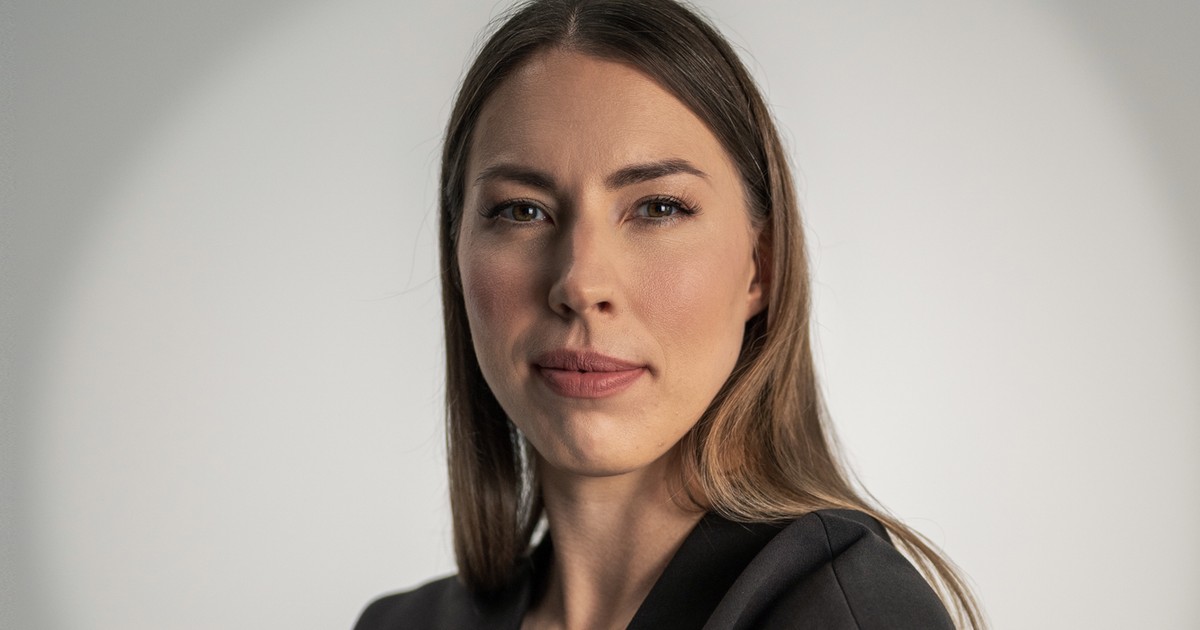
Mateusz Madejski, Business Insider Polska: The geopolitical situation is still extremely unstable. Does this have a major impact on your business?
Aleksandra Popławska, vice-president of Popławska Group: We are certainly observing a significant increase in transport costs. This was already visible before the escalation of the situation in the Middle East – suppliers protected themselves by raising prices. There is also an increase in packaging costs. There is no denying that this translates into product prices. Fortunately, the scale of these changes is not large yet, but the trend is noticeable.
Interestingly, the prices of disposable gloves, for example, have increased significantly. They are imported from Malaysia and their consumption in offices is very high. However, when it comes to semi-finished products for cosmetics, we produce a large part ourselves and a large part we import from Europe, so we do not observe any major problems in this area.
What about consumer sentiment?
I have the impression that the cosmetics industry is a form of support for consumers in difficult times. Our clients – most often female clients – treat treatments and cosmetics as “treatment” for themselves, also in periods of increased stress. There is no denying, however, that in crisis situations we often observe a decline in the number of visits to beauty salons.
The history of the company dates back to the 1990s and you still remain a family business.
Yes, we are a family business, I run it together with my mother. My mother started running it shortly after I was born. At the beginning, it simply sold cosmetics of other brands, mainly to beauty salons. Previously, she also managed a cosmetics store in Wrocław, which was rather unusual at that time.
At some point she decided that she no longer wanted to be a distributor of other brands and decided to create her own. This is how Clarena was created. Initially, cosmetics were produced in external factories, but over time it gradually launched its own production. Today we produce virtually everything: creams, ampoules, loose products, dietary supplements and animal care products.
The development took place in stages, using the small steps method. We expanded the plant gradually, machine by machine, until we finally started production for external customers. But we don't stop. For example, we recently launched the production of… paper glue.
What is more important: production for Clarena or production for external entities?
As for the production volume itself, it is about 40%. we produce for ourselves, the rest for external companies. The situation is a bit different when it comes to profits – because we sell our own products with a higher margin.
See also: This purple ingredient is a hit, but supplies are quickly dwindling
Doctors want to have their own preparations
Which companies commission your production?
There is huge diversity here – from large companies to sole proprietorships. These are, for example, doctors who have developed their own preparations and want to sell them in their offices. It also happens that smaller beauty salons commission us with the production. On the other hand, we also cooperate with large global clients whose products are sold to large sales networks.
Which countries dominate?
Most of our clients come from Poland, but a large part are also from Germany. The German customer still appreciates the price and quality ratio provided by Polish plants.
However, costs are rising in Poland. So we are not becoming less attractive in the eyes of our neighbors?
No, not yet. I would say that production here for German companies is still very profitable, much more profitable than in Germany. In addition, large customers often appreciate the situation in which production is spread over several different countries, because it provides greater security and stability of supplies.
Are there also orders from influencers?
Yes, there is actually more and more interest here.
So anyone can commission the production of their own preparation?
Yes, but the minimum order with us is 1,000. pieces. It would be difficult to launch production at lower volumes, taking into account the costs of tests or the preparation itself. The customer must also be able to, for example, purchase appropriate packaging. However, such activity may be profitable for people who are able to develop their niche and reach a wider audience with their product.
Is the market for influencers promising?
Yes, there are definitely some increases here. However, we also see that many investors do not necessarily want to invest their own funds to start producing original cosmetics. They would rather license their image than do business on their own. It's a pity, because I think that going deeper into the business, and not just “giving face” is a great career development model for an influencer. This offers enormous possibilities. Of course, there are people who decide to do it and sometimes they do really well.
Cosmetics in the era of virality
What does the cosmetics business look like in the age of social media? More and more often, new fashions suddenly appear and you have to adapt to them.
Marketing is definitely changing. The fact is that viral products appear and products can quickly enter the market and suddenly become popular. At the same time, these trends often rotate. For example, vitamin C has been on the market for decades, but every few years it comes back into fashion. It's similar with retinol.
It's a bit like that, trends for certain products appear with generational changes. Some preparations are simply discovered by new generations when they reach a certain age.
There are also more advanced trends involving more expensive products that are unlikely to become viral on social media. It also happens that some fashion trends are supported by large corporations that have appropriate budgets to promote them effectively.
What is the hottest trend in the industry right now?
I would say that the so-called longevity, although this is a trend not only in our industry, but rather in the style of many industries. It's about intelligent self-care and striving for natural longevity. So from our perspective, this means increased interest in natural cosmetics that, for example, help reduce skin aging.
See also: “Care” of clothes and materials from the laboratory. The director of H&M tells us about the future of fashion