The US Army wants to use blood powder. Deadline: 2029

DARPA has developed a blood substitute in the form of a powder and is currently looking for partners to continue testing it, the program director told Business Insider.
Officials are trying to determine whether the solution can move beyond the testing stage and overcome regulatory and manufacturing barriers. to become a useful tool on the battlefield by 2029.
The blood supply becomes a key issue as the Pentagon changes how the U.S. military prepares for future wars. The challenge remains, among others: economy.
Read also in BUSINESS INSIDER
Two decades of the global war on terrorism meant that American troops often operated with air superiority, which allowed them to quickly evacuate the wounded – often in so-called golden hour – to facilities with advanced trauma care.
A multi-year war of attrition in Ukraine, where helicopters are at risk and combat drones hunt both the wounded and rescuers, as well as the prospect of conflict on remote Pacific islands with no medical infrastructure, have meant access to fresh blood has become an urgent problem for military commanders and medical staff.
“Breakthrough technology”
Powdered blood may be the answer.
DARPA's effort in this area, known as FSHARP, could provide soldiers with a shelf-stable, powdered blood substitute that can be quickly prepared and taken to the battlefield. The program is entering a key phase: moving from laboratory successes to practical application – says Lieutenant Commander Robert Murray, a Navy doctor supervising the project for DARPA (Defense Advanced Research Projects Agency).
— We've achieved success in a petri dish. Now we have achieved success in animals, he says, calling the project “a truly groundbreaking technology.” — “I don't think we expected this level of success,” he adds.
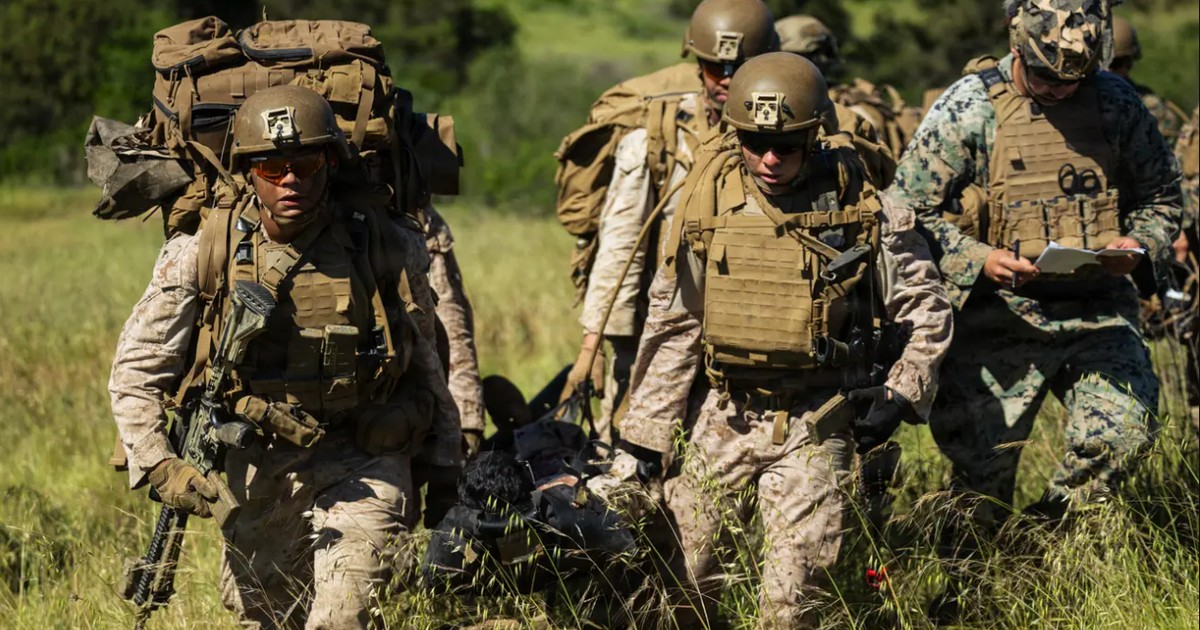
An American sailor assigned to the amphibious transport ship USS Portland provides aid to a simulated casualty during medical training in the Pacific Ocean
|
US Marine Corps photo by Lance Cpl. Luke Rodriguez
Hemorrhaging patients require large amounts of blood within minutes of being injured, Murray emphasized, and it is often not readily available on the battlefield.
As he explained, the powder is stored in two-chamber blood bags, separated from the sterile water with which it is mixed just before use.
Such bags are durable and difficult to damage, so soldiers can carry them in their equipment. Just activate the bag, mix the powder with water – and the solution is ready.
Whole blood, such as that with FSHARP technology, is better than mixed blood components later, Murray added, explaining that separating and then combining plasma and red and white blood cells is too time-consuming and cumbersome in battlefield conditions.
See also: The Americans “fired rockets like rifles.” Poland may have a problem
Going outside the lab
Outside of major conflicts, blood transfusions are not particularly common in the U.S. military, Murray noted. However, in the event of a large-scale war, the situation can change dramatically.
— We are actively trapped in the peacetime effect said retired Air Force Col. Jeremy W. Cannon, professor of surgery at the University of Pennsylvania, during last year's congressional hearing on military medical readiness.
He estimates that in a high-intensity conflict in the Pacific, as many as 1,000 American soldiers a day could be killed or wounded for months. Many of them will suffer survivable injuries, “yet one in four will die because of an unprepared system,” he told lawmakers.
For DARPA the next step is to submit the powdered blood to the US Food and Drug Administration (FDA) on an expedited basis – announces Murray.
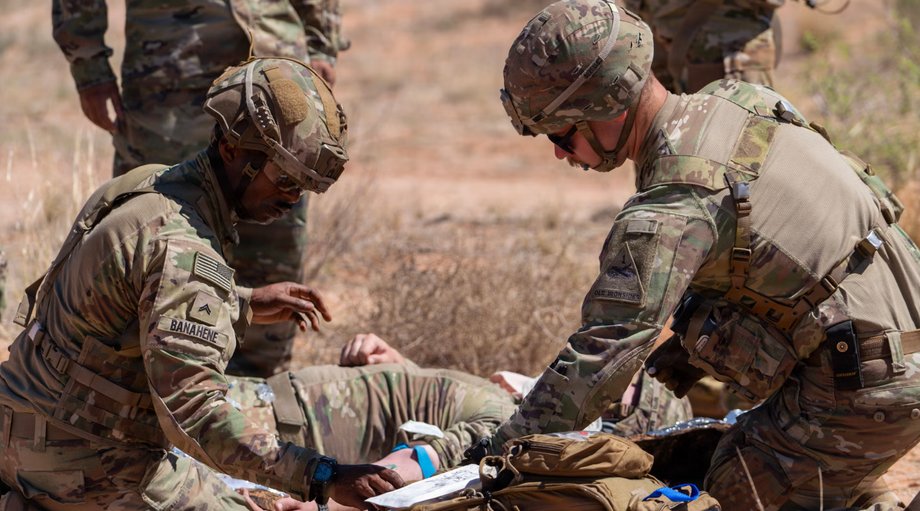
US soldiers place intravenous access on a simulated victim in preparation for air evacuation during a training exercise at Fort Bliss, Texas
|
US Army photo by Sgt. 1st Class Charles Nash
However, before FDA testing takes place, including human trials, DARPA wants to create conditions that will avoid economic problems often derailing advanced technological projects – ensuring that synthetic blood will be financially viable or at least not generate losses for companies and hospitals.
He compared it to developing groundbreaking stealth technology without providing the funds to build next-generation aircraft. – We're speeding up this train. Now we're making sure that we can speed it up and that nothing will derail at the end of the process, the source explains to Business Insider.
Currently, it is difficult to make money from synthetic blood admits Murray. Hospitals are already struggling with the costs of blood supplies, especially smaller facilities. Unlike other medical services, transfusions are usually poorly reimbursed, making them unprofitable despite their importance.
“We need to make sure that the right scientific investments are in place so that commercialization stakeholders can buy into this,” he explains. — We are at the climax. What will we do with this technology and what will it take to bring it to fruition? – he continues.
In the meantime, more and more military units are learning the so-called walking blood banks and emergency transfusions of fresh whole blood, where one person immediately gives blood to an injured comrade. These are important and helpful trainings, Murray points out, but they are only a temporary solution.
– Let there be no more than one injured person in such situations – he emphasizes.
The above text is a translation from American edition of Business Insider