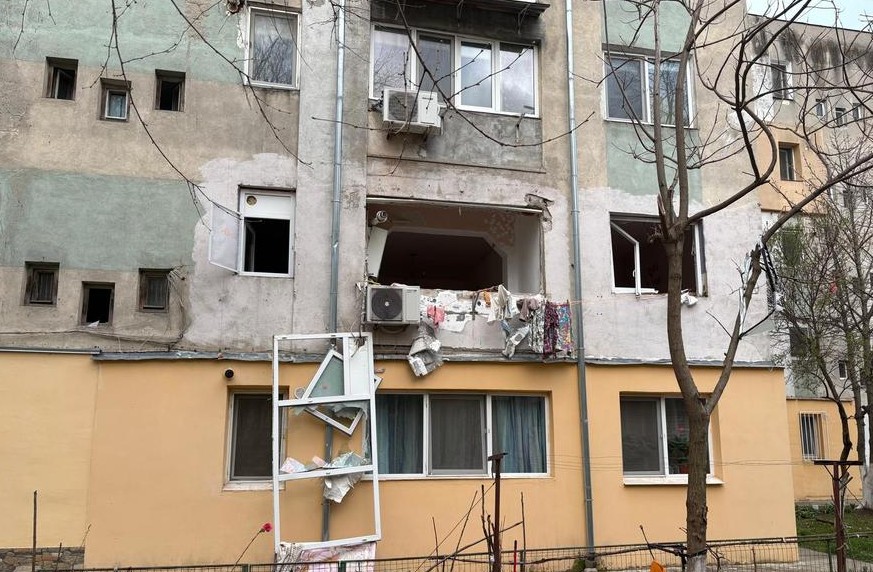
The new “hot spot” of the Ukrainian front. How the Kiev army is waiting for the new offensive planned by Moscow

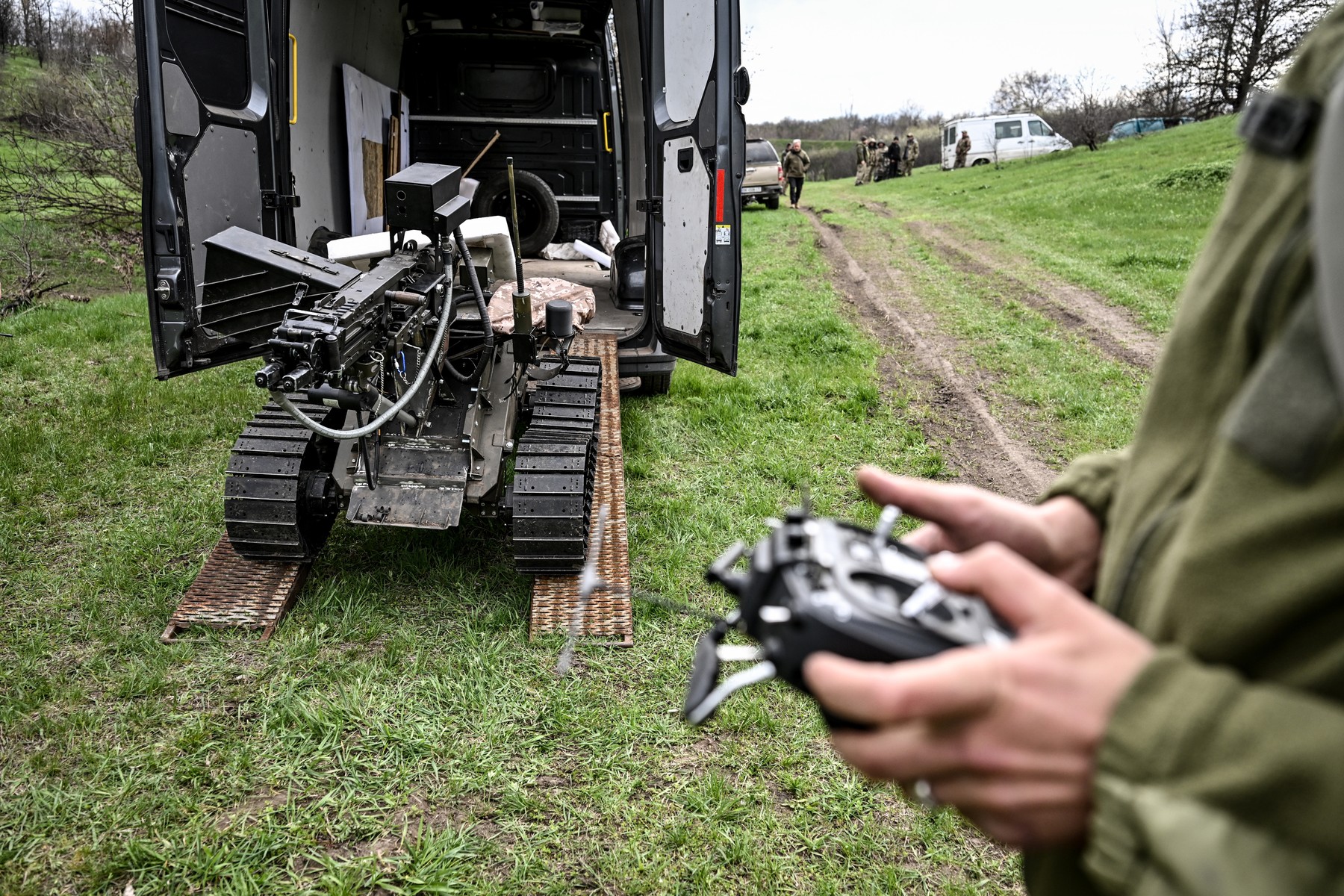
Both Ukraine and Russia talk of intensifying fighting on numerous sectors of the front. Military experts explain to Novaia Gazeta Europa where the most intense battles are taking place today and how the offensive of the Russian forces could evolve in the summer campaign.
The Ministry of Defense in Moscow constantly reports new victories and announces, for example, the capture by the Russian military of two towns of the same name as Novodmitrovka, in the Sumy and Donetsk regions of Ukraine.
Oleksandr Sîrski, the commander-in-chief of the Ukrainian army, recently wrote on his Telegram channel that the Russians have intensified offensive actions practically along the entire front line. His statements are confirmed by servicemen of the Armed Forces of Ukraine.
“The Russians practically did not stop attacking in our direction, but now they have organized a continuous assault,” a Ukrainian officer who goes by the callsign “Kozyr” told Novaya Gazeta. He is fighting near Konstantinovka, in the Donetsk region.
“Zelenka (no – vegetation and leaves on trees) appeared, and they immediately pushed through the forest strips towards the city. They try, under the cover of vegetation, to sneak through the killing zones and gather in the urban area. We record the infiltration of dozens of small groups a day. The overwhelming majority we manage to detect and destroy. They manage to successfully enter the city no more than a tenth among those from the assault troops. We liquidate the others with drones”, the Ukrainian soldier also reported.
“Crazy losses” for the Russians
Experts interviewed by Novaia Gazeta journalists say that, despite the significant increase in the intensity of attacks, Russian forces have major difficulties in advancing.
“In January, the Russian army occupied 231 square kilometers of Ukrainian territory. In the following two months, it was about 138 and 155 square kilometers, respectively. In April, the Russians advanced only 120 square kilometers. And it is mostly about capturing forest strips, fields and ruins of small villages of 10-15 houses, destroyed even a year ago. No regional center, logistics hub or another important objective was not abandoned by the Armed Forces of Ukraine,” says Ukrainian analyst Oleksandr Kovalenko.
“The intensification of offensive activity means that the Russians have started to move more intensively, go on raids and try to infiltrate Ukrainian cities,” explains another military expert, Ukrainian reserve colonel Roman Svitsan.
“This is primarily related to the fact that the “zelenka” appeared (…) and the forest strips began to better protect the soldiers from drones. It became possible to covertly bring the troops to the contact line, passing through the killing zones. However, in reality, the Russians are advancing tens or hundreds of meters a day, suffering crazy losses. They do not yet have enough forces to conquer any big city,” he claims.
The so-called “kill zones” are the front-line contact sections where Russian and Ukrainian drones operate, almost immediately hitting advancing troops.
The new “hot spot” of the Ukrainian front
Pavlo Lakîiciuc, another expert, says that the Russians began in mid-April to implement a strategic offensive operation by gradually increasing efforts, with the calculation that the necessary resources will be brought during its deployment. Such a strategy is “a risky step”, according to him.
Kovalenko emphasizes that, along the entire contact line, with a length of more than 1,200 kilometers, the most dangerous direction for Ukraine today is the one towards Kosteantînivka, which is part of the Slaviansk-Kramatorsk agglomeration.
General Valeri Gherasimov, Russia's chief of staff and supreme commander of the invasion forces, had hinted on April 21 that the battle for the city of 67,000 had begun before the start of the war in February 2022.
Kovalenko believes that this very sector will become the most contested during the spring-summer offensive campaign of the Russian invasion forces. The Russians do not currently control any administrative buildings in the city.
They will try to infiltrate residential areas, gather in basements and ruins and fix themselves in the city, where they currently have no serious positions, according to the military expert. He believes, however, that the high command in Moscow probably abandoned the plans to completely capture the city of Ceasov Yar, which would have allowed the attack on Kostantinovka from the east.
The retired colonel Svitan says, for his part, that for the Ukrainian forces the most difficult sector of the front is the one near Kosteantînivka. The Russian army is trying to close the town in a semicircle, entering from the south and southeast. But during the entire duration of the spring campaign, the Russians advanced here at most one kilometer.
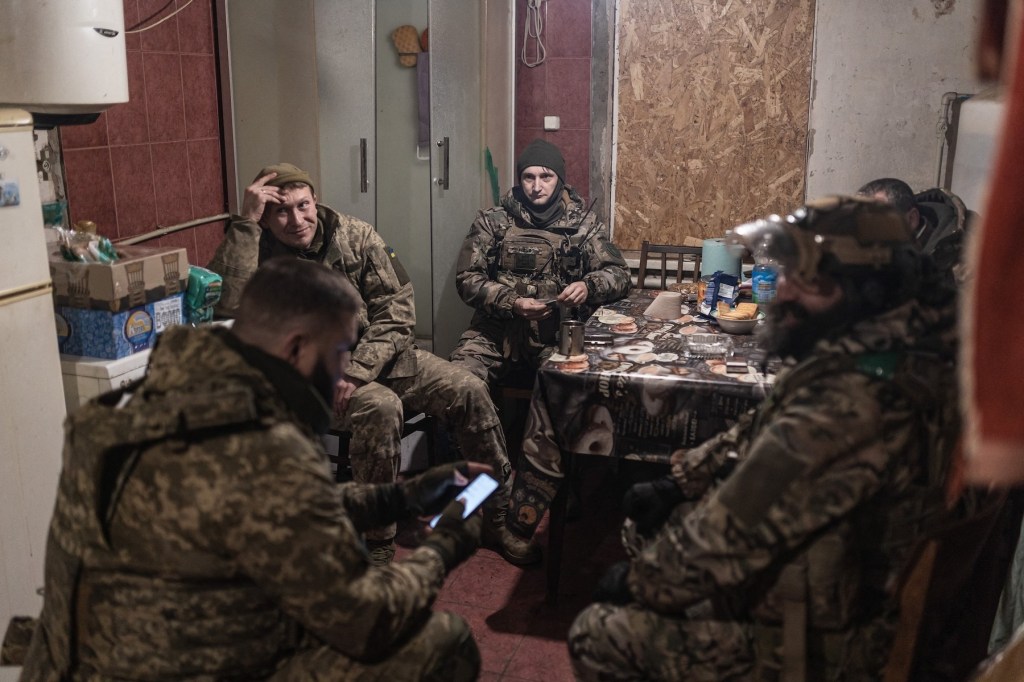
What could the Russian army's summer campaign in Ukraine look like?
“I believe that the Russians will press the Armed Forces of Ukraine on the entire front until the beginning of the summer offensive planned by the command of the Armed Forces of the Russian Federation,” says Svitsan.
According to him, the Russian generals are currently gathering forces in the rearguard area, both in terms of the number of troops and military equipment. “They can be used in two directions: for the attempt to capture the entire territory of the Donetsk region and in Zaporozhye, for the expansion of the land corridor to Crimea,” says the former Ukrainian commander.
Ukrainian Defense Minister Mihailo Fyodorov outlined for the armed forces the goal of destroying up to 50 thousand “occupiers” per month. According to the plan drawn up by Kyiv, reaching this target will paralyze Russian forces.
Experts emphasize that in order to deprive the Russian troops of the numerical advantage, it is necessary to reach indicators that exceed their ability to restore and form reserves.
General Oleksandr Sîrski says this is already happening.
“The fact that, in the conditions of the intensification of the fighting, there are no visible changes on the front line shows that both sides anticipate the opponent's actions, there are no unexpected decisions”, believes analyst Pavlo Lakîiciuc.
“In such conditions, everything is determined by resistance, by the stability of the defense in battle. Or by the surprising nature of strikes and counterattacks, which can suddenly change the situation on one sector or another of the front. And by resources – who will have it for longer,” he emphasizes.