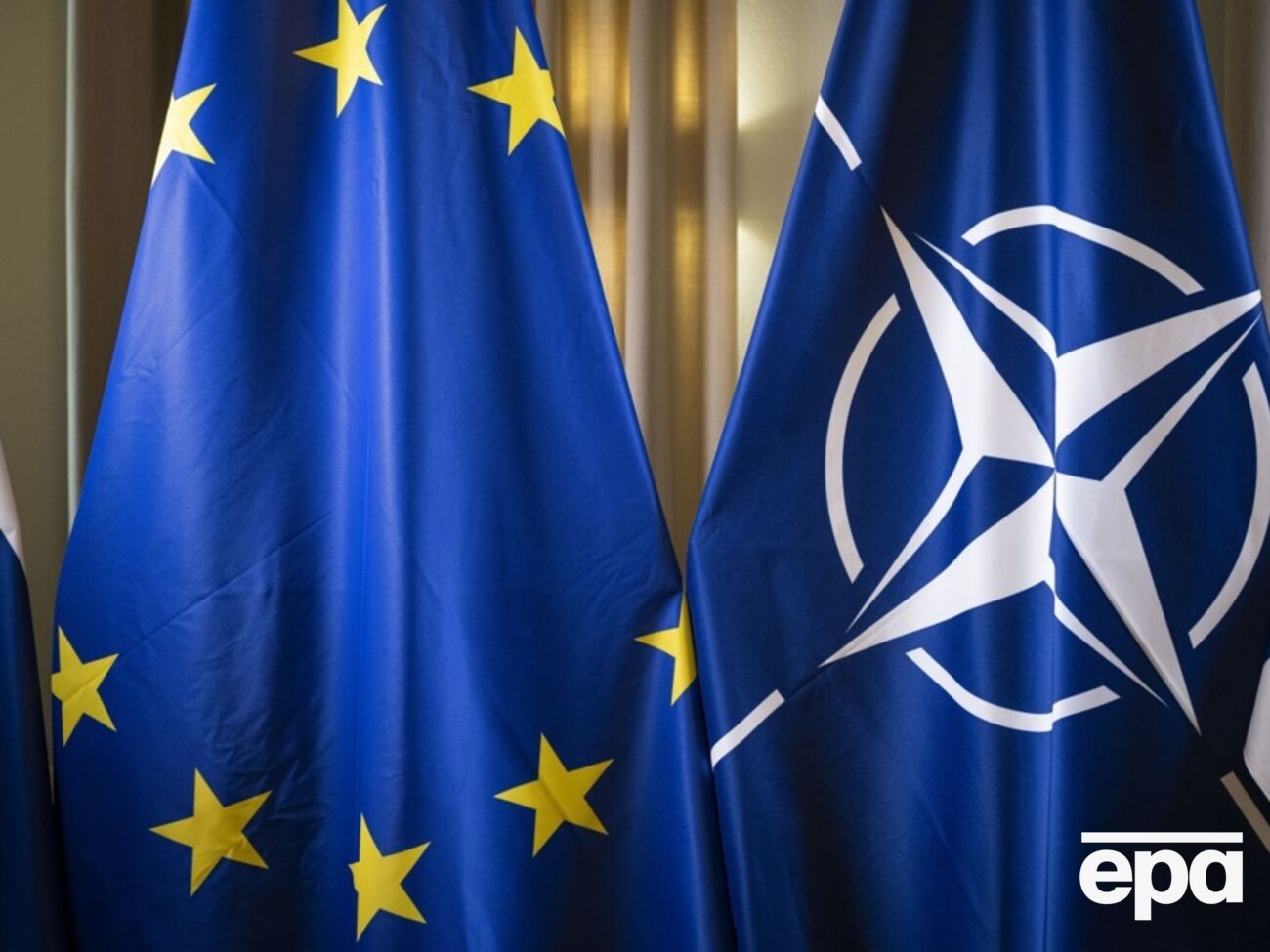
Although the North Atlantic Alliance was not involved in any way in the US-Israel war against Iran, this conflict showed that NATO – at least for now – is not prepared for a potential armed conflict with Russia. Politico, based on conversations with diplomats, former and current NATO officials and defense experts, describes the Alliance's five main problems. “GORDON” briefly recounts what “cracks in the defense” we are talking about.
1. Ammunition
Because of the war with Iran, the problem with NATO ammunition reserves has sharply worsened.
According to the publication, the United States has used about half of its total stockpile of critical Patriot air defense missiles, and French officials have warned that stocks of the Aster (an anti-aircraft missile produced by the European consortium EBDA) and Mica (a French air-to-air missile) would run out in the first two weeks of the war. Defense firms such as Rheinmetall and MBDA are also seeing growing demand and potential shortages of the rounds.
British expert Justin Bronk from the Royal United Services Institute noted that given that the Russian Federation produces “6,000 to 7,000” kamikaze drones per month, NATO will be left without expensive air defense missiles for several weeks.
The problem with the shortage of ammunition, writes Politico, will be actively discussed at the July Alliance summit.
2. Air supremacy
Despite the complete US dominance of Iran's skies, the ayatollah's regime is still able to attack Gulf states with missiles and drones – showing “clear limits to the expectation that a country can be subdued by bombing”, said Peter Weseman, a senior fellow at the Stockholm International Peace Research Institute.
The publication emphasizes that NATO “must rethink air dominance and look for creative solutions to contain Russia.” Among such decisions are strikes deep in the rear of the Russian Federation, where weapons capable of hitting targets in Europe are produced.
3. Insufficiently powerful fleet
“Since 2022, we've been focusing much more on land forces… and now all of a sudden we've noticed that the state of navies across NATO is really quite bad,” said former NATO official Ed Arnold.
In any conflict with Moscow, naval forces will be essential to hunting submarines near the northern Kola Peninsula and neutralizing ships equipped with Kalibr cruise missiles, said Sidharth Kaushal, a maritime security expert at RUSI.
NATO must also improve joint ship maintenance capabilities, as well as address personnel shortages and invest in vessels that can be adapted for different missions, taking the example of the Netherlands' multi-role support vessel program, he said.
4. The chasm within NATO
Due to US President Donald Trump's discontent and attacks on NATO allies, European countries fear that the United States will refuse to come to the aid of Europe in the event of a conflict or that American assistance will be severely limited.
Former NATO Secretary General Anders Fogh Rasmussen believes that Europe should act symmetrically: for example, tie NATO support to unblocking the Strait of Hormuz and demand that Washington prove its commitment to the Alliance. “Time for flattery [Дональду Трампу] it's over,” Rasmussen said.
5. Ukraine – security service provider
Within days of the start of the war in Iran, Ukraine sent its drone experts to counter Iranian drones and assist countries in the Middle East. This led to the signing of several ten-year defense partnerships with Gulf countries.
NATO has rapidly expanded its institutional ties with Ukraine, from a joint training and research center in Poland to military visits to Kyiv and a new industrial program to acquire innovative technologies, and should now work to create an anti-drone defense “belt” along Russia's borders as a first line of defense.
The alliance could also do more to strengthen industrial ties with Ukraine.
“Ukraine acts as a provider of security services. The war in Iran has proven this,” an anonymous source told Politico.