“The king would have helped us with Iran,” says Trump in a new critical allusion to Prime Minister Starmer. However, the US leader makes a protocol blunder

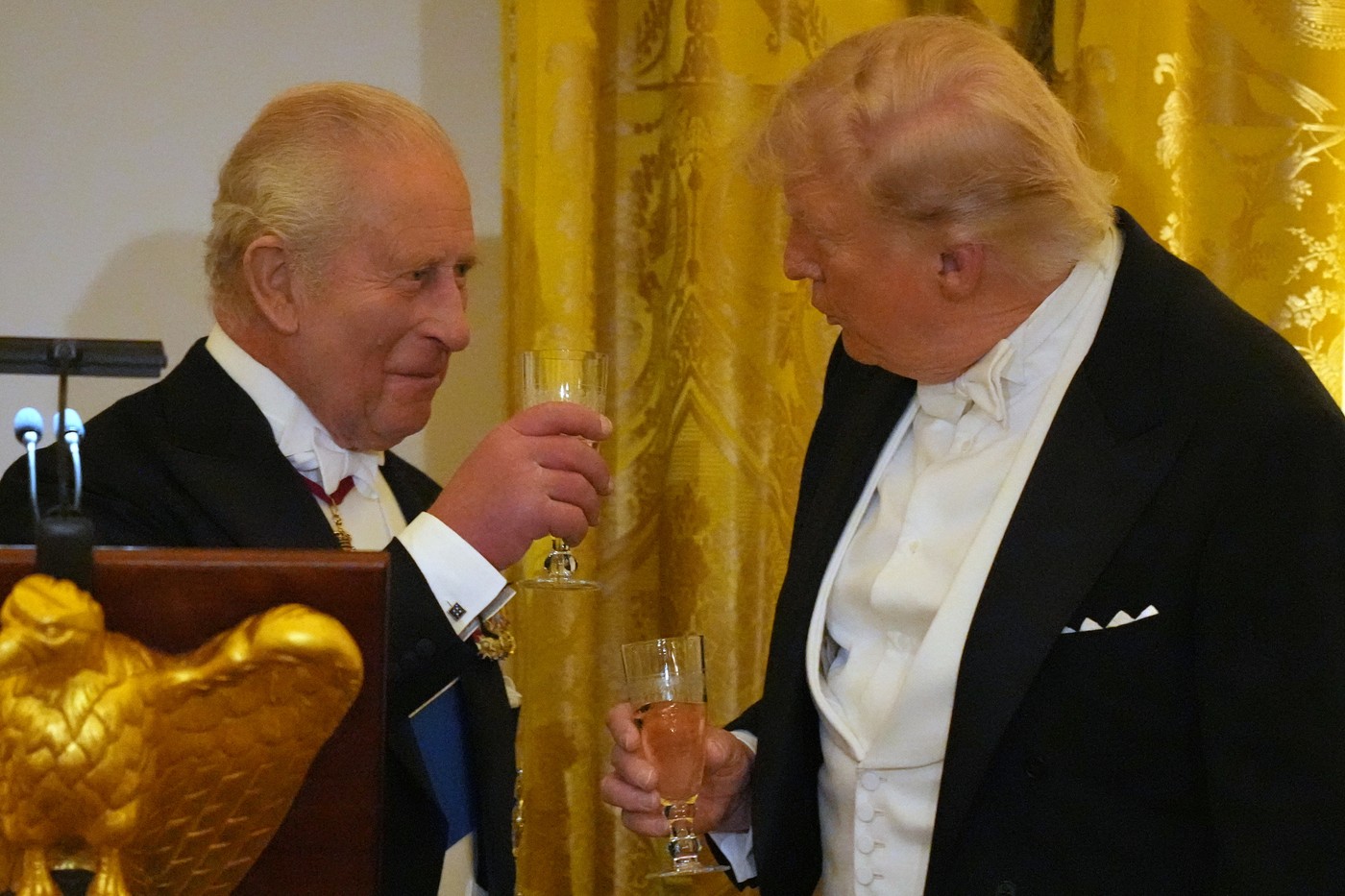
On Wednesday, Donald Trump once again implicated King Charles in the politics of the war with Iran, claiming that he “probably helped” the US in the military operation, reports the British channel Sky News, quoted by News.ro.
Just a day after Donald Trump declared that Britain's king agrees with him on Iran, the US president has spoken out again on what he says is the monarch's position. This time, he claimed that King Charles “probably would have helped” the Americans in the war, a critical allusion to British Prime Minister Keir Starmer, who has been reluctant to do so.
During a statement in the Oval Office about the royal state visit, the US president was asked about King Charles' speech to Congress on Tuesday, which contained some not-so-subtle allusions to the US and a warning about executive power.
Trump repeated that he was “very disappointed” with NATO after the US “asked them to take action on Ukraine and Iran”. He continued: “The king is fantastic. We spent a lot of time together. We talked a lot. We talked about this as well. He loves his country and he's a wonderful king. And he's a wonderful friend. I think if he had done that, if he depended on him, he probably would have helped us with Iran,” Trump said, given that talks with the king – who does not get involved in politics – are usually kept private, notes Sky News.
During a speech at the White House state dinner on Tuesday night, Trump said Charles “agrees with me, even more than I do” that Iran should never have a nuclear weapon.
A Buckingham Palace spokesman said of the matter: “The King is naturally aware of his government's long-standing and well-known position on preventing nuclear proliferation.”
An “interesting” blunder
It could have been a disastrous time for King Charles to pay a visit to the White House, for a number of reasons. Donald Trump is not satisfied with the fact that Britain, in his view, did not fulfill its duties as an ally and did not allow the United States to attack Iran from British bases. The king's brother was recently arrested on suspicion of crimes related to the Epstein files, which Trump is desperate to pretend don't include him. Then there was the extremely recent assassination attempt on the person the king was going to meet. But the king still went to America and, overall, nothing notable happened, comments the publication Slate.
Charles and his wife Camilla had afternoon tea with the Trump family, and Trump gave a speech outside the White House about how great Britain is and what a “precious” friendship the two nations share. Charles gave his own speech to Congress, which seems to have been well received, with self-deprecating jokes about not being there to rehash the American Revolution and all that. He said nothing controversial, in the established style of monarchical speeches.
The media is hailing the visit as a success, a well-executed diplomatic move by the monarch that could help ease tensions after recent interactions between Trump and Prime Minister Keir Starmer have been strained at best. Trump likes pageantry and seems to be fascinated by members of the royal family every time he gets the chance to meet them.
Trump, however, committed an interesting blunder that raised eyebrows, notes Slate. Organizers of this week's visit clearly wanted to keep much of the time Trump and the king spent together away from microphones and the eyes of the world. All the meetings between the two took place outside the cameras. The president has a talent for improvisation. He could have said a lot of embarrassing things that would have put the king in an unfit position for a monarch. So, Trump held mostly private talks with Charles during the king's visit, explains Slate.
But there is a convention according to which private conversations with the monarch must not be repeated elsewhere. However, at the state dinner on Tuesday night, Trump reported that, during a private meeting earlier that day, the king had said that Iran should not develop nuclear weapons. “Charles agrees with me, even more than I do myself,” he said. “We will never let that adversary have a nuclear weapon,” Trump continued.
The tradition that what the king says in private should not be revealed is an essential part of maintaining the monarch's neutrality. The king should not get involved in politics, because it is none of his business.
This mistake caused some outrage, but the general opinion in the media is that it could have been much worse. The actual content of what Charles allegedly said is not in itself controversial. It is also the official position of the British government that Iran should be prevented from developing nuclear weapons. “But if I were Charles, I'd wonder if Trump would be willing to declare that 'the king agrees with me' on other, more sensitive issues as his desperation to win the war in the Middle East grows,” concludes the author of the Slate commentary.