Who wins the electorate from the scandal generated by the distribution of the country's money

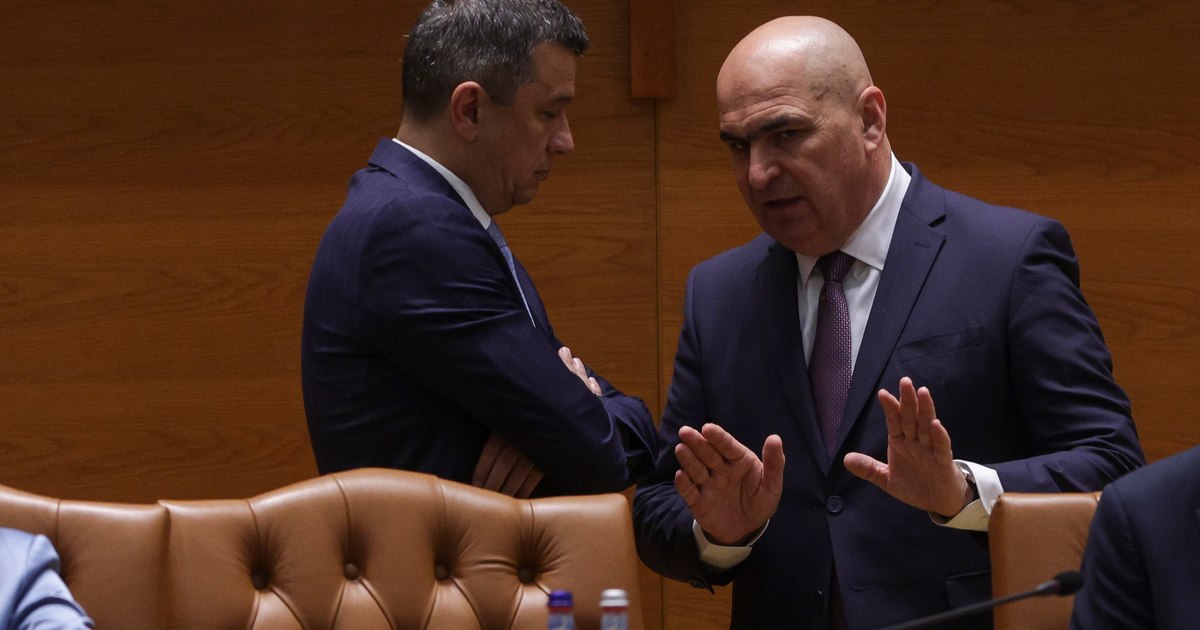
The adoption of the state budget generated one of the most tense periods for the coalition and exposed the deep fractures between the governing parties, on the one hand between PSD and PNL, on the other between PSD and USR. However, none of the Power actors stand to gain in the long term, analysts indicate.
The decisions of the governing parties indicate different directions PHOTO Inquam Photos / Octav Ganea
Both PNL and USR took a firm decision following the tensions generated by the adoption of the State Budget Law in Parliament. The National Political Bureau of the PNL met on Monday, March 23, in a marathon five-hour meeting, ending with a resolution in which the liberals pledge to support Prime Minister Ilie Bolojan and refuse any future alliance with the PSD should the social democrats force his replacement. A decision in the same key came from the USR, which warned that if the PSD chooses to vote a censure motion alongside the AUR and cause political and economic instability, the union will no longer support a restoration of the majority alongside the social democrats.
The right wing alliance
PNL Vice President Alexandru Muraru announced that discussions are already underway for a coagulation of right-wing forces around PNL, with the prospect of a major political project for the 2028 elections, similar to the “Justice and Truth Alliance”.
“It is a matter that the PSD is extremely disturbed by, namely discussions regarding a political project aimed at the parliamentary elections, first of all, and general, local and parliamentary elections in 2028, namely the consolidation of the right, the reunification either through mergers or alliances, of the type of a DA Alliance, which will primarily include the PNL, so around the PNL, it could also include the USR and other political formations. This scenario for the PSD represents a major risk, because it could lead at a significant political pole”indicates Alexandru Muraru at RFI.
Meanwhile, the party led by Sorin Grindeanu is moving forward with the internal analysis regarding participation in government. The formation decided to schedule an internal referendum with 5,000 members for April 20, which would also indicate the pulse in the party towards the continuation of the government alongside the colleagues from the USR or with Prime Minister Ilie Bolojan at the head.
Bolojan, the short-term winner
“It was predictable that the adoption of the budget would give rise to such discussions in the coalition, due to the fact that the PSD has positioned itself for a long time as a kind of opposition within the government. The timing of the budget was a very appropriate one, it is the culmination of the Parliament's manifestation”indicates political science professor Radu Carp.
It estimates that “probably it is the last attempt to dethrone, let's say, the prime minister, in the context in which from 2027 it will be rotating anyway and he will be replaced. Probably. But I don't rule out scenarios in which such tensions may arise.”
Political analyst Radu Delicote points out that, within the current government circle, Prime Minister Ilie Bolojan emerges victorious, but only in the short term: “He can buy some more time if he still wants to implement a series of measures. Let's say he's buying more time, he's not necessarily winning, but he has a window of time depending on the political negotiations.”
The big winner: the opposition
The winner of the internal battle of the coalition is outside the government's arch, explains Radu Delicote: “The main winner at the moment is the opposition, which collects all the hemorrhaging of votes. The opposition, obviously AUR, to which voters, citizens, the disappointed electorate of the other parties somewhat naturally migrate. And in this case the big parties are now losing voters strongly to AUR, i.e. PSD and PNL. Less USR, because USR has a much tougher electorate, which has stabilized at around 11-12%. It is not so much to be affected in figures such as PSD or PNL”.
The migration of the electorate is not explained by a preference for the AUR, but by a deep disappointment with the traditional parties.
PSD, a losing strategy
Mainly, PSD is losing ground regardless of the choice it makes, a context in which AUR continues to reap the benefits, Radu Delicote explains: “The PSD is trying to communicate as an opposition party, because it sees the numbers in the opinion polls. It's a crisis communication strategy. It's a strategy by which it tries to heal this hemorrhage, it tries to patch up this hemorrhage of a disappointed electorate. I don't think it will win, especially in the complicated context we are in, with a lot of crises that are manifesting on all levels. I don't think it will win, even if it stays in government and communicates as a opposition party, even if it leaves the government and continues the rhetoric it has now”.
“I think that if they want to win, any of these parties, including the prime minister, should look carefully at the real needs in society, what are the expectations from the Romanians, and manage to implement a series of successful measures. No matter how it looks”, indicates the political analyst.