
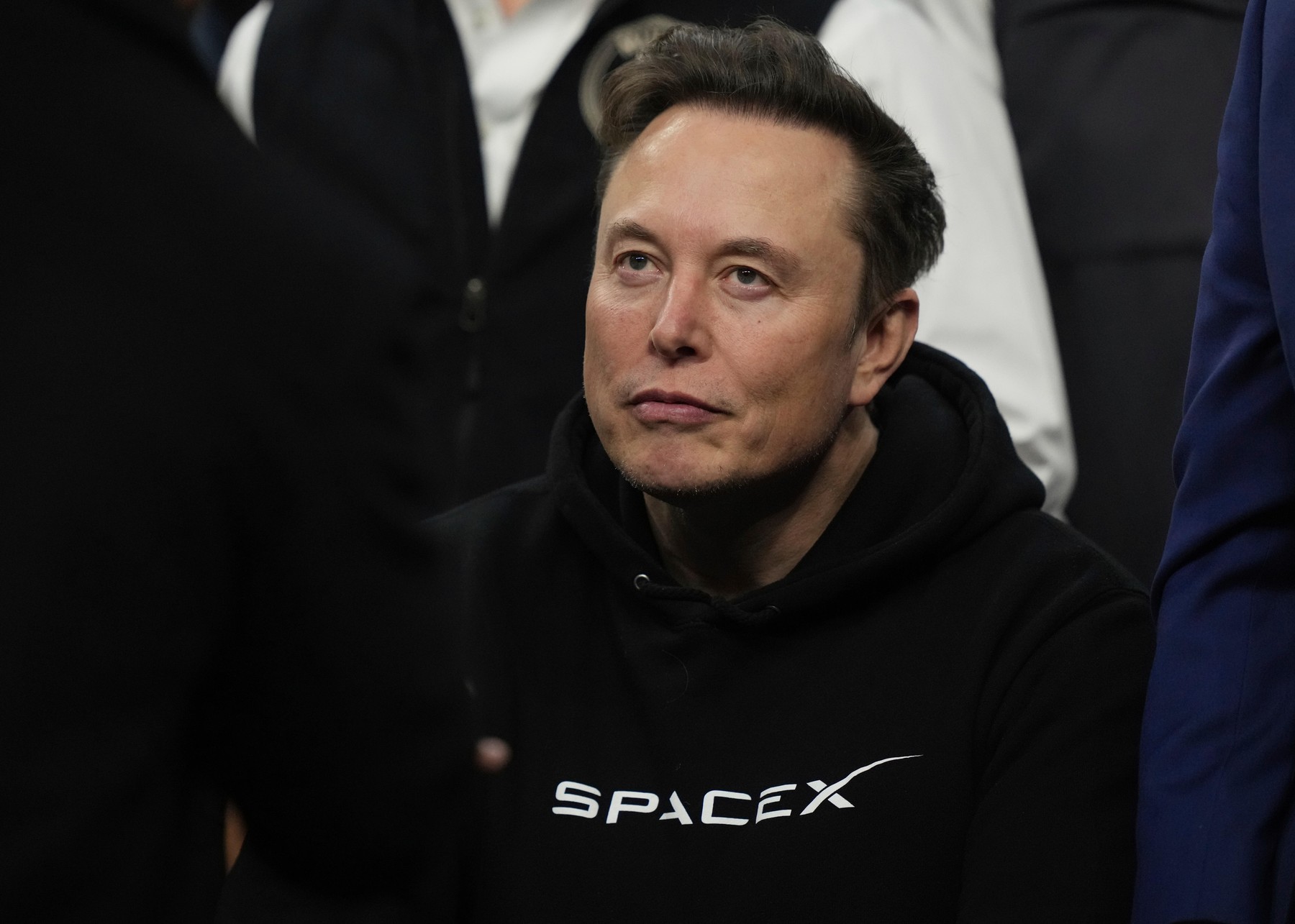
In the days after PayPal went public in 2002, Elon Musk and company executives gathered at a Las Vegas casino to celebrate. But while others were socializing by the pool, Musk was hunched over an old Soviet rocket manual and already planning his next venture: SpaceX, Reuters reports.
“He had just come off what was unequivocally a victory, he was one of the largest shareholders, and yet he was focused on the next thing,” Kevin Hartz, an early investor in PayPal who attended the party, told Reuters. “It's a multi-trillion dollar business now,” he pointed out, referring to SpaceX.
In the two decades since Musk took the helm at SpaceX, the company has become the world's largest space business, launching thousands of Starlink internet satellites and developing reusable rockets, transforming the space economy in a way that Musk likens to inventing an airplane that no longer needs to be destroyed after each flight.
Elon Musk is preparing for a massive IPO
Musk's years of defying accepted convention by taking bold risks in space will be crowned with new success when SpaceX goes public this year at a possible $1.75 trillion valuation. Analysts believe it will be the largest listing in history and could put Musk on track to become the world's first trillionaire.
But what comes next could be an even bigger challenge than building reusable rockets or the first mass electric vehicle, according to a Reuters analysis of more than 100 pages of excerpts from SpaceX's pre-listing roadmap, which provides the most detailed look at the company's finances and future plans since Musk took over.
“I always thought he was crazy,” said American journalist and author Walter Isaacson, who spent two years following Musk while writing a biography of the billionaire. “But the risk of betting against him is that he ends up being crazy in a good way and gets things done,” he added in comments to Reuters.
SpaceX is aiming for the Moon and Mars
As if ripped from the pages of one of Musk's favorite books, The Hitchhiker's Guide to the Galaxy, SpaceX's confidential IPO document redefines the company. According to him, SpaceX sees itself in the future less as a maker of rockets and satellites and more as a future powerhouse in the field of artificial intelligence, with data centers in space and even more challenging ideas, such as industries on the Moon and Mars.
The document promises to harness almost unlimited solar energy to power the “age of artificial intelligence” and says it will make life “multiplanetary”, “to understand the true nature of the universe and to extend the light of consciousness to the stars”.
“You want to wake up in the morning and think the future is going to be amazing,” reads an introductory quote from Musk at the top of the document known inside the company as the S-1. “And that means being a civilization capable of space travel,” the billionaire emphasizes.
Such out-of-this-world claims raise questions among market watchers and skeptics. But some of the world's biggest institutional investors and Musk's staunch backers — Fidelity Investments, Founders Fund and Valor Equity Partners — have stuck with SpaceX even as the aerospace firm has endured years of rocket failures, lost revenue, lawsuits against the United States government, labor accidents and geopolitical issues.
Investors are betting on Musk's ability to strike again
Musk's credibility with investors rests on SpaceX's ability to turn once-skeptical ideas into viable businesses, particularly through the reusable Falcon 9 rocket and the Starlink broadband internet network that its launches have made possible.
“25 years ago, people thought we were crazy, including me,” said Jim Cantrell, one of SpaceX's first employees who later left to start his own company.
Now, “the idea of having products made on Mars and sold on Earth doesn't seem so crazy anymore,” he claims.
But the document also shows that SpaceX posted losses last year, spends far less on AI development than major tech rivals, and warns investors that projects such as settlements on the moon and Mars or orbital data centers are based on unproven technologies that may not be commercially viable.
Those more cautious numbers have led some commentators to view Musk's vision as a promotional ploy to inflate SpaceX's valuation in anticipation of an IPO. Unlike early reusable rocket technology or electric vehicles, artificial intelligence is not uncharted territory, and SpaceX will be competing with some of the world's biggest companies, including OpenAI, Microsoft and Alphabet, Google's parent company.
The aerospace company dreams of a market larger than the GDP of the United States
Among the most extravagant claims in the document is an estimate that SpaceX is targeting a total market of $28.5 trillion, larger than the entire annual Gross Domestic Product of the United States.
Eric Talley, a professor at Columbia University Law School, told Reuters that figure was extremely ambitious. But the professor specializing in corporate governance says that “Musk's brand is to aim extremely high and hope for gains.”
Ross Gerber, head of investment firm Gerber Kawasaki which owns shares of SpaceX and Tesla, told Reuters that investors were “willing to suspend fundamental analysis in order not to miss the opportunity.” By “fundamental analysis” he means the company's financial results.
“There's a perception that Elon did it once with Tesla and built a trillion-dollar company, and he's going to be able to do it again and again,” says Gerberg.
SpaceX's dependence on Elon Musk
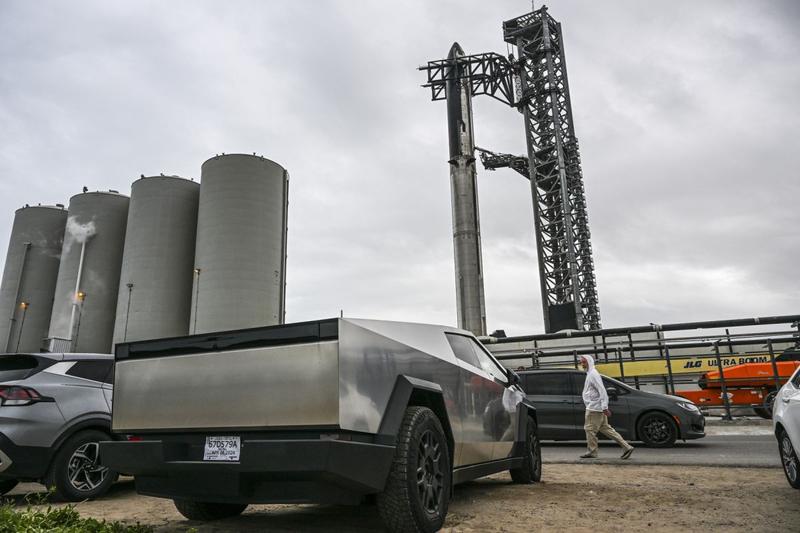
Musk's space predictions have not always come true. The timeline for Starship, the fully reusable rocket that SpaceX is betting its future on for now, has been pushed back repeatedly amid spectacularly failed tests, permitting delays and engineering difficulties.
That's important because Starship is at the heart of many of Musk's promises to investors, from expanding Starlink into new markets to placing artificial intelligence infrastructure in orbit and carrying astronauts for NASA missions beyond Earth. The risks are presented directly in the document preparing the stock exchange listing.
“Any failure or delay in the full-scale development of Starship (…) would delay or limit our ability to execute our growth strategy,” the S-1 filing said.
One of the most obvious risks flagged up in the pre-listing document is the reliance on Musk himself. He holds four positions, controls the board of directors and has an unusually structured compensation package tied to valuation targets of up to $7.5 trillion and goals such as putting a million people on Mars.
The document describes Musk as “one of the great visionaries of our generation” and warns that a future without him could pose an existential challenge to the company, adding that choosing a successor may not happen “in a timely manner or at all.”
“He's the only person who consistently manages to put satellites into orbit and bring astronauts back from the space station,” Isaacson, Musk's biographer, told Reuters.
“He managed to turn science fiction into science,” he added.


