China has recruited one of the world's top researchers for its “supersoldier” program. First revelations

A prominent American researcher who was convicted of lying to US authorities about payments he received from China while working at Harvard University has rebuilt his research lab in Shenzhen to develop a technology the Chinese government has identified as a national priority. It is about integrating electronics into the human brain, Reuters reveals.
Charles Lieber, 67, is among the world's leading researchers in the field of brain-computer interfaces. The technology has shown potential in treating conditions such as amyotrophic lateral sclerosis (ALS) and restoring mobility to paralyzed patients.
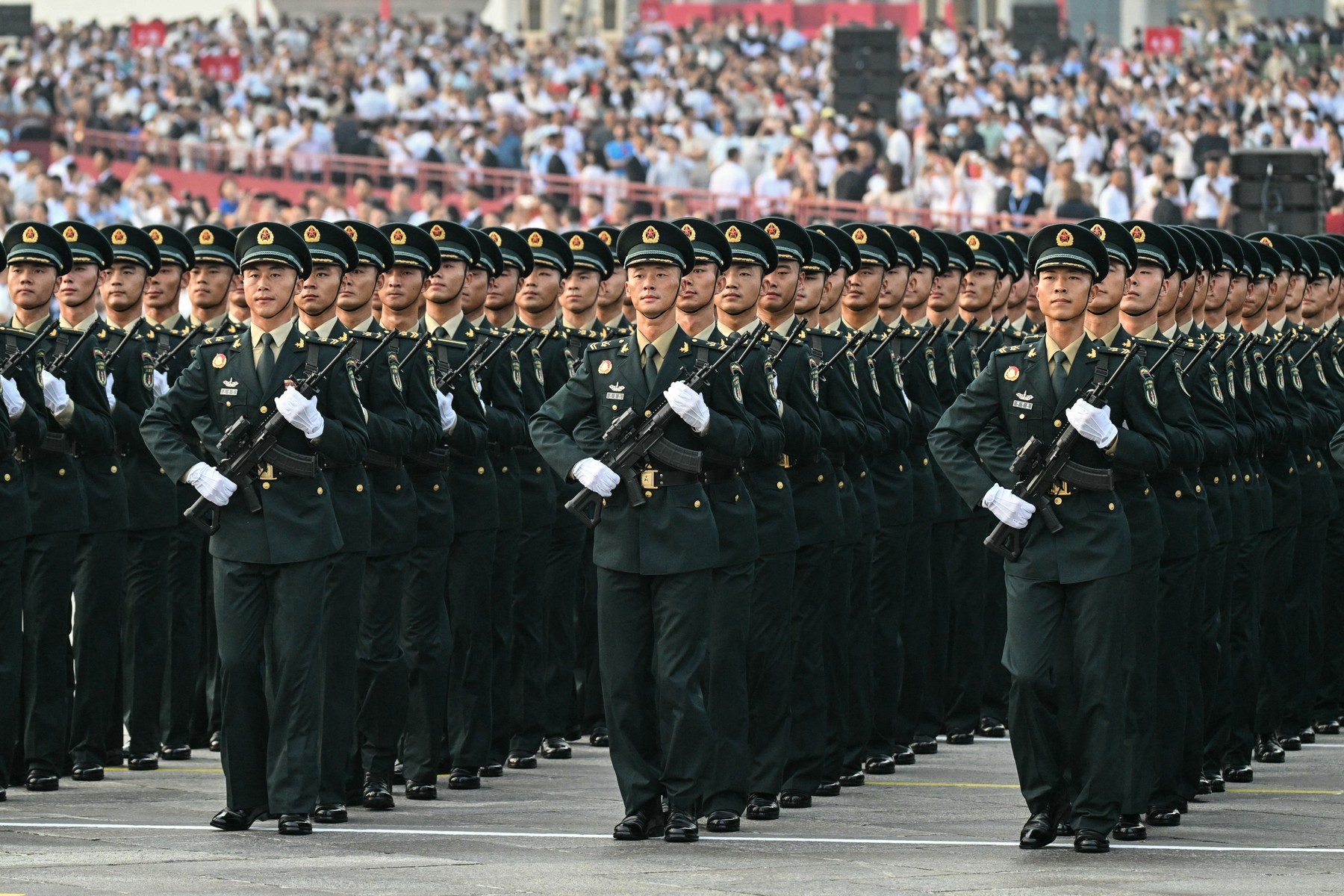
But it also has military applications. The US Department of Defense says scientists in the People's Liberation Army of China have looked into brain interfaces as a way to create “super soldiers” by increasing mental agility and situational awareness.
Lieber was found guilty by a jury and convicted in December 2021 of making false statements to federal investigators about his ties to a Chinese state program to recruit foreign talent, as well as tax crimes related to payments he received from a Chinese university.
He served two days in jail and six months of house arrest and was fined $50,000 and ordered to pay $33,600 in restitution to the Internal Revenue Service.
During the trial, his defense argued that he was suffering from incurable lymphoma, in remission, and that he was fighting for his life.
The researcher received a management position in China
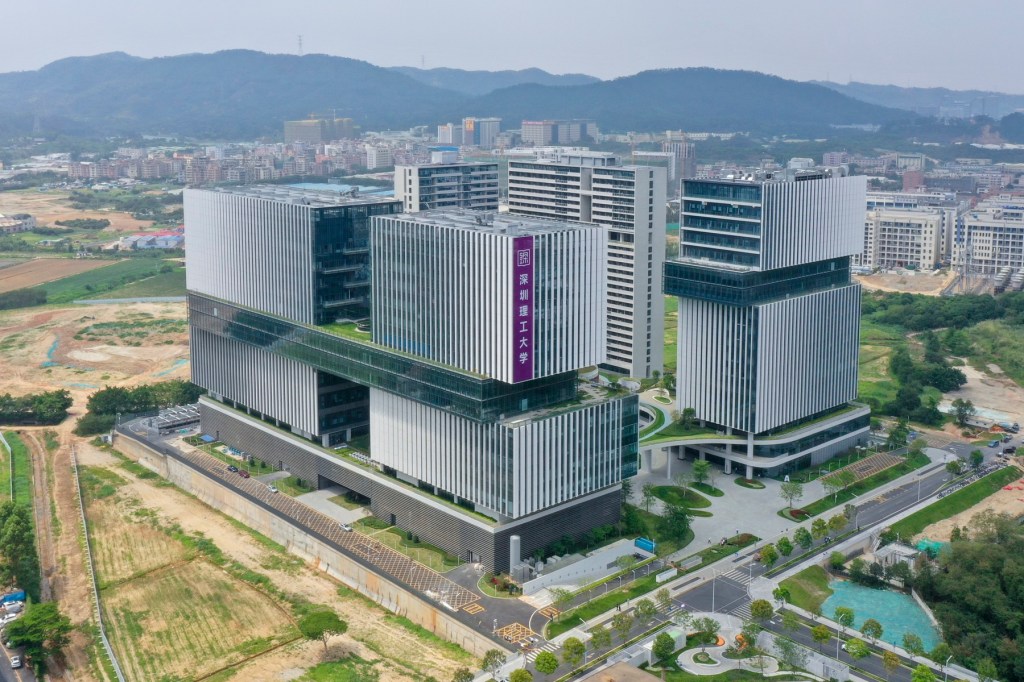
Three years after his conviction, Reuters has learned that Lieber now directs the Chinese state-funded i-BRAIN, or Institute for Brain Research, Advanced Interfaces and Neurotechnologies. He has access to dedicated nanofabrication equipment and infrastructure for primate research unavailable to him at Harvard. The laboratory is part of the Shenzhen Academy of Medical Research and Translational Medicine (SMART).
“I arrived on April 28, 2025 with a dream and not much else, maybe a few suitcases of clothes,” Lieber said of his move to China at a government conference in Shenzhen in December.
“Personally, my goal is to make Shenzhen a world leader,” he added.
Lieber declined an interview request from Reuters, citing “current commitments” through an aide. He also did not respond to written questions sent by Reuters.
Last year, SMART appointed Lieber as a researcher, according to a post on the i-BRAIN website on May 1, 2025. The information was reported by some publications in China.
On the same day, i-BRAIN announced that Lieber had also been named a founding director – an announcement that was not reported at the time.
Charles Lieber was named “Chemist of the Decade”
Reuters has now revealed for the first time that his lab has access to dedicated primate research facilities and chip-making equipment, and is part of a vast ecosystem of state-backed, multibillion-dollar institutions and is embedded in an institution that attracts top researchers from the United States.
In 2011, Lieber was named the most important chemist of the previous decade in a scientific ranking published by Thomson Reuters, the parent company of the Reuters news agency.
Some analysts say Lieber's ability to rebuild his lab after a federal criminal conviction for making false statements about his ties to China shows that U.S. safeguards for technologies with military potential have not kept pace with the Chinese government's efforts to obtain them. This concern is amplified by Beijing's strategy of civil-military fusion, whereby civilian scientific resources are shared with the military.
“China has turned our own openness and our own innovation efforts against us,” Glenn Gerstell, an adviser at the Center for Strategic and International Studies and former general legal counsel of the US National Security Agency from 2015 to 2020, told Reuters. “They've turned that against us and are taking advantage of it,” he points out.
Impressed resources allocated by China to research
Lieber's new position appears to provide him with more substantial resources than he had in the United States.
In Shenzhen, i-BRAIN installed an ultraviolet lithography system made by semiconductor equipment giant ASML in February, according to the lab's website. The Dutch company's machines print the tiny circuits essential to next-generation chips.
At Harvard, Lieber used shared lithography equipment from a university center that serves more than 1,600 users annually, according to its website.
ASML told Reuters it does not comment publicly on its clients.
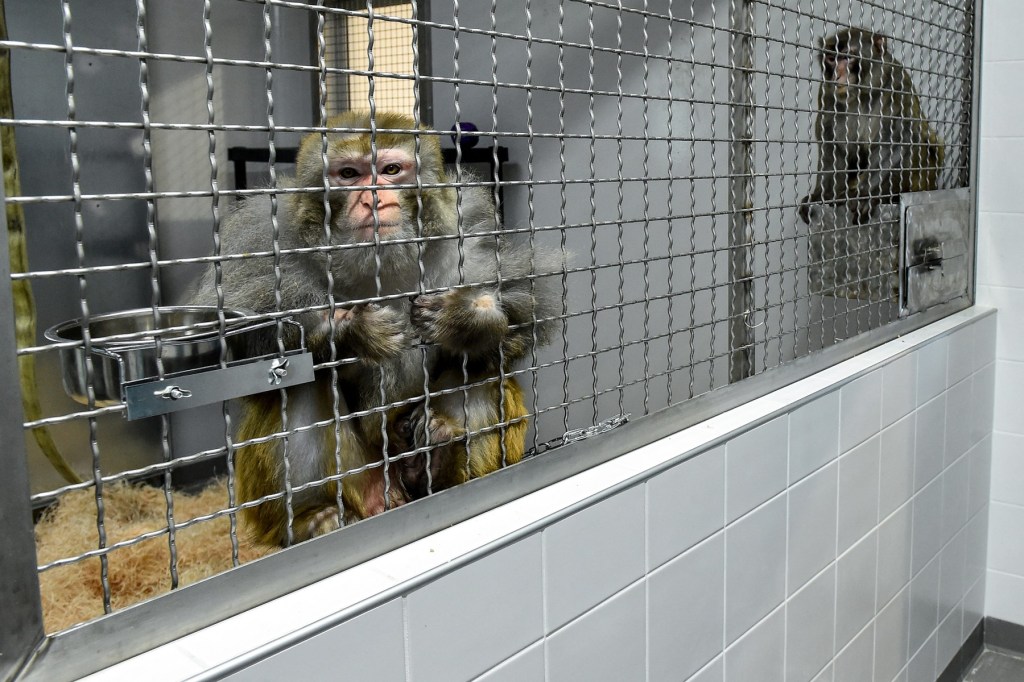
At the same campus in China, Lieber also has access to Brain Science Infrastructure (BSI) Shenzhen, a research lab with 2,000 primate cages and spaces dedicated to i-BRAIN work, according to the latter's website.
Many researchers in the field consider primate studies a necessary preliminary step before human trials for invasive brain interfaces. The BSI facility is part of the Chinese Academy of Sciences and is funded by the Shenzhen government. None of these institutions responded to questions about brain-computer interface technology and the role of primate research in its development.
Researchers at home and abroad are being recruited by i-BRAIN for studies on rhesus macaques, used as a model for brain-computer interfaces in humans, according to a message posted in September 2025 on the institution's website, which invites applicants to contact Lieber.
There is no indication that Lieber conducted primate research at Harvard. The elite University of Massachusetts closed its New England Primate Research Center in 2015 under constant pressure over animal welfare and funding difficulties.
Lieber is not the only researcher attracted to China in the West
Jung Min Lee, a researcher who co-authored nanofabrication work with Lieber at Harvard, has joined him at i-BRAIN as a research associate professor, according to the institution's website. Lee, who could not be reached for comment, is an expert in integrating flexible electronics into brain tissue.
Harvard did not respond to Reuters' questions about Lieber and Lee.
John Donoghue, a Brown University professor and neuroscientist who created BrainGate, a pioneering brain-computer interface system, said primate studies are “absolutely critical” to applying neural interface technology to humans, but faces regulatory and funding hurdles in the United States.
“With so many difficulties here with non-human primate research, the fact that someone gives you all this support, access to technology, a focused centre, a national initiative – all of that is extremely attractive,” he told Reuters.
SMART's 2026 budget, fully funded by the Shenzhen government, has increased by nearly 18 percent to about $153 million. The academy's budget documents do not indicate the proportion of this funding allocated to i-BRAIN.
SMART was established in 2023 under the leadership of founding president Nieng Yan, a structural biologist. Her return to China a year earlier, after five years at Princeton University, was heralded in the domestic press as the homecoming of a “goddess of science”.
Yan and Princeton did not respond to Reuters questions about his role in Shenzhen and the recruitment of Lieber.
Working alongside SMART is the Shenzhen Bay Laboratory, a separate legal entity but closely operationally linked, launched in 2019 with a five-year budget of approximately $2 billion from the Shenzhen government. Both are located in Guangming Science City, a national science hub landscaped with dedicated parks. The two institutions have the same management and offices, and will also occupy a dedicated 750,000-square-foot campus under construction at an estimated cost of $1.25 billion. Shenzhen Bay Laboratory did not respond to a request for comment.
The signs guiding visitors to the SMART headquarters bear the slogan: “Innovate with the Party”.
Lieber joined at least six others who moved to SMART from US institutions. However, the rest were researchers of Chinese origin who returned to the country.
In the running for the Nobel Prize
Lieber's conviction in 2021 was one of the few successes of the US Justice Department's initiative, launched during the first Trump administration, to combat Chinese economic espionage and intellectual property theft. The initiative was scrapped under President Joe Biden after a series of setbacks and criticism of racial profiling.
While still under judicial supervision, Lieber won court approval for at least three trips to China in 2024, including one authorized by federal judge Denise Casper for “professional communication,” according to court documents. The judge did not respond to a request for comment.
Lieber's defense team said in a 2023 pre-sentence memo that the scientist suffered from lymphoma and was largely confined to his home, leaving only for medical appointments, short walks and occasional visits to a local farm.

During his 30-year career at Harvard, ek spent more than 80 hours a week in the lab, and outside of work he occupied his time “coaching wrestling and growing giant pumpkins in the backyard,” according to the defense.
His lawyer told the court in 2021 that Lieber admitted he was “young and naive” when he got involved in China's “Thousand Talents” program, the state-backed initiative to recruit experts from abroad.
At the time of his arrest in 2020, Lieber told FBI agents that he “wanted to win a Nobel Prize” and be recognized for his work, according to prosecutors.
“If you look at it as a technology acquisition vector against US interests, we've identified it, we've punished it, and that's done nothing to stop the overall trend,” said Emily de La Bruyère, co-founder of the consulting firm Horizon Advisory and a research fellow at the Foundation for Defense of Democracies, a Washington nonprofit think tank known for its hardline foreign policy positions.
Gerstell, the former US official, described Lieber as “Example A” of how the US's legal tools are insufficient.
“This is a man convicted of exactly what we want him to be convicted of in this context, and yet as soon as he was released from house arrest, he went to China,” he said.