German Chancellor Friedrich Merz launched a harsh signal of “realpolitik” on the European stage. In a statement that risks sending shockwaves in Kiev, the Berlin leader suggested that Ukraine may have to give up some of its territory to achieve peace with the Russian Federation, in exchange for its “entry ticket” to the European Union.
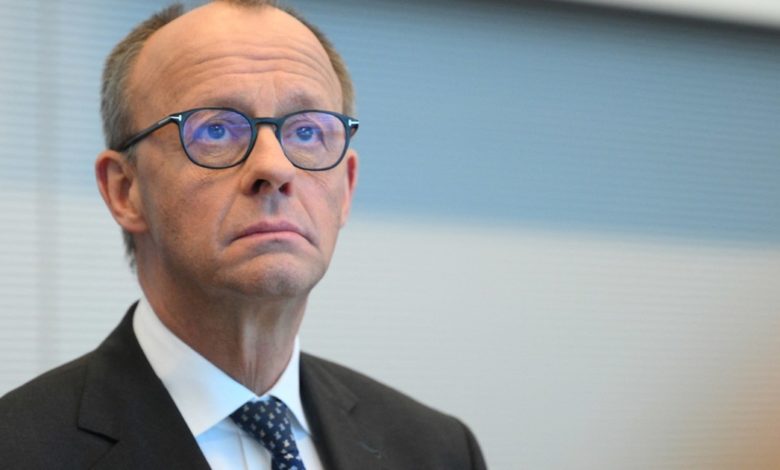
Friedrich Merz, Chancellor of Germany PHOTO: AFP
During a discussion with students in the German city of Marsberg, Chancellor Friedrich Merz tackled head-on the most sensitive dilemma of the conflict on NATO's eastern borders. Merz acknowledged the possibility of a scenario in which the map of Ukraine will be permanently redrawn following a future peace treaty.
The hard compromise: Territories against European integration
“Let's hope that in the end there will be a peace treaty with Russia. Then it is possible that part of the territory of Ukraine will no longer be Ukrainian”Merz stated, stressing that such a step would require massive support from the Ukrainian population.
According to the German chancellor's vision, President Volodymyr Zelenskiy would need a majority in a possible referendum to validate such a historic decision. To get this vote, Merz believes that the ultimate argument of the leader in Kiev should be the firm promise of the European future: “We have opened the way to Europe.”
Russia currently occupies about 20 percent of Ukrainian territory and continues to press for additional areas in the Donetsk region as a prelude to any ceasefire. On the other hand, Kiev has consistently rejected territorial cessions, campaigning for the freezing of hostilities on the current front lines.
Kiev's reaction: “Russia will not stop here”
President Zelenskiy's answer was not long in coming. In a video message broadcast on his Telegram channel, the Ukrainian leader warned foreign partners that the Kremlin's imperial ambitions are not only aimed at Ukraine.
“Russia wants our territory so that it can seize the territories of others. If it succeeds with one state, with one neighbor, then it will do the same with others”Zelensky pointed out, emphasizing that Ukraine is fighting for the entire security of the continent.
While he supports offering a “clear and credible” European perspective to Kiev in order not to leave the country under Moscow's influence, Friedrich Merz tempered enthusiasm about the accession timetable. The chancellor described as “unrealistic” the scenarios that predict Ukraine's entry into the EU bloc by 2027 or 2028.
Accession talks received a new boost in Brussels after the electoral defeat of Viktor Orbán, who had previously blocked the negotiations. However, the pressure remains on Kiev, which demands a concrete accession date and refuses any form of “partial membership” of the European club.