In the year leading up to its spectacular capture by US forces in the Indian Ocean, the tanker known as the MT Tifani made several runs between Iran and a maritime area off Malaysia, located about 100 kilometers from the Singapore skyscraper.
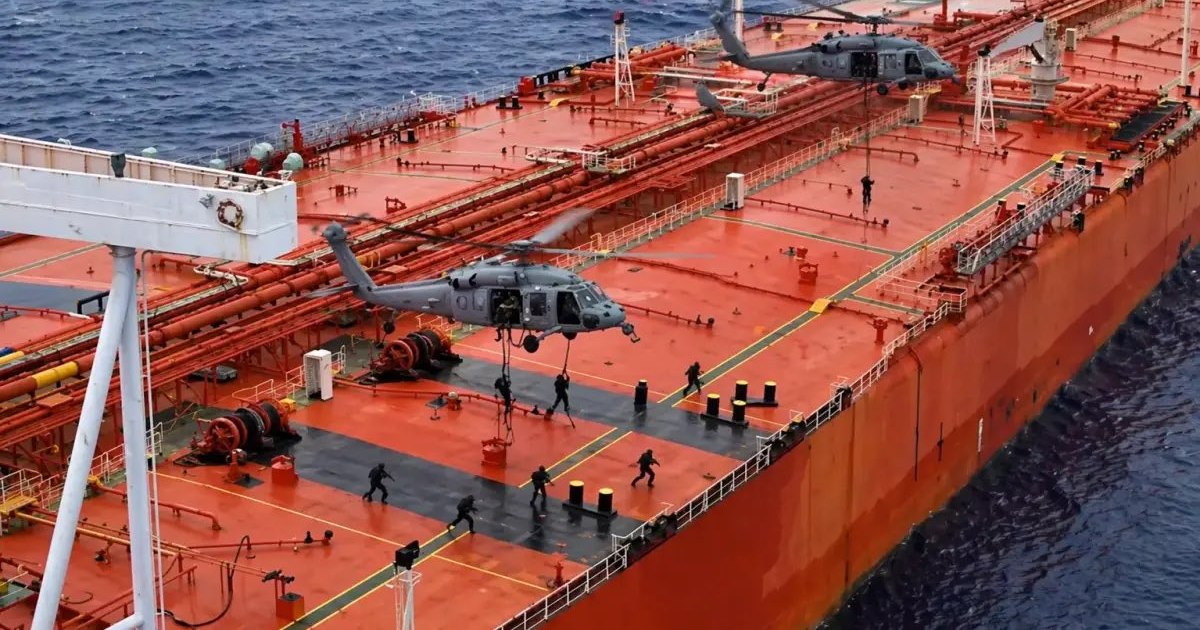
The oil tanker MT Tifani captured by the USA PHOTO: X
During these movements, the vessel frequently stayed within a restricted perimeter, anchored and deactivated its automatic identification system (AIS), according to the data analyzed. After a variable interval — from a few hours to a few days — it reappeared in the system.
The capture of the tanker — which US authorities say was carrying 1.9 million barrels of Iranian oil — extended the standoff with Iran into the waters of the Indo-Pacific, thousands of kilometers from the Persian Gulf.
The event also brought attention to this maritime area off Malaysia, roughly half the size of the US state of Rhode Island. Expert analysis indicates that it functions as a veritable “floating station” for Iran, where its clandestine fleet trades and stores oil, generating essential revenue for the regime, CNN reports.
In one episode last August, the tanker was seen transferring cargo to another vessel, the Macho Queen, according to satellite images. After the operation, it temporarily turned on the AIS system and headed for China, before turning it off again in the context of US sanctions.
A second tanker, the MT Majestic X, later captured by the US, followed a similar route between the Middle East and the Singapore Strait.
The region — known as the East of Peninsular Malaysia Offshore Loading Point (EOPL) — is a strategic point for Iran's “shadow” fleet due to its location and lax enforcement of regulations by local authorities.
Satellite data shows an accelerated increase in ship-to-ship transfers: 679 operations in 2025, up from 471 in 2024 and 280 in 2023. Actual numbers could be higher, due to monitoring limitations.
Malaysian authorities have promised to tighten controls, acknowledging the problem as a persistent one. The new regulations provide for the detention of vessels involved in unauthorized transfers.
Airstrikes and Oil Spills: Critical Situation in “Iran's Maldives”
Iran remains one of the world's top oil producers, exporting an average of 1.69 million barrels per day in 2025, most of it to China. Under sanctions, Tehran relies on an aging and opaque fleet to transport its resources.
Most of these vessels are large capacity oil tankers capable of carrying up to 2 million barrels. Oil is sold at a discount, but in the context of rising global prices, each transfer generates tens of millions of dollars in revenue.
Activity in the area continued even after the escalation of the conflict with Iran, maintaining the flow of exports and financially supporting the regime.
How “washing” loads works
Ship-to-ship transfers are a common practice in shipping, but are strictly regulated. However, the clandestine fleet uses them to hide the origin of the oil.
Operations often take place at night, with identification systems turned off or tampered with. Generally, the process involves two types of ships: some carry the oil from Iran to nearby Malaysia, and others pick it up and take it to China, where it ends up in independent refineries.
The origin of the oil is often disguised, being declared as coming from other countries. Ships use forged documents, change flags and even visual identity to avoid detection.
The maritime industry considers these practices an open secret. Most transfers from the area are estimated to involve sanctioned oil originating from Iran or Russia.
A strategic reserve near China
The area also functions as a maritime depot for Iran, allowing oil to be stored close to markets and reducing the risks associated with shipping through sensitive points such as the Strait of Hormuz.
At the start of the year, Iran had about 191 million barrels stored at sea, most of it in East Asia. This reserve allowed exports to be maintained even during the intensification of the conflict.
The data indicates that MT Tifani was probably heading towards this area at the time of capture. After a period near the Persian Gulf, the ship reappeared on radar in the Gulf of Oman, heading southeast.
On April 21, after passing Sri Lanka, the tanker suddenly changed direction, making two 90-degree turns. Soon after, the American authorities announced his capture.
Images released by the Pentagon show US forces on board the ship, while helicopters fly over the area.
Since then, the tanker has remained nearby in a region that reveals the unseen dimension of the global oil trade.