Ukraine's commander-in-chief said Russia is running out of air defense missiles to fend off drone attacks, suggesting Moscow shares some of the West's concerns about stockpiles as the air war evolves.
See also: “It's something new.” The Russian military has not been in such trouble in fighting with Ukraine since 2023.
The problem is not only in Russia
Oleksandr Syrski, the head of the Ukrainian army, made these comments during a meeting with the Canadian Defense Minister in Kiev on Sunday.
“I noticed that systematic attacks on Russian production plants further weaken the enemy's air defense capabilitieswhich already suffer from a shortage of missiles to combat Ukrainian unmanned systems and strike assets,” Syrski wrote in a statement.
Syrski's comment comes at a time when militaries around the world are looking for new ways to respond to the growing use of long-range strike droneswhich are cheap, disposable and constitute a difficult target for more expensive, traditional bullets.
His assessment indicates that Ukraine's intensifying strike campaign is forcing Moscow to face the same dilemma.
Ukraine regularly reports dozens of long-range strikes per month on Russian territoryusing drones and missiles to destroy energy and military infrastructure abroad.
Recently, Ukraine's security services reported that on Sunday they attacked the naval base of the Russian Black Sea Fleet in Sevastopol and the Belbek airport in Crimea.
See also: Europe must start waking up? Here are the 24 countries with the longest compulsory military service
Ukraine is picking up the pace
The Washington think tank Institute for the Study of War (ISW) wrote in Sunday's analysis that Ukraine is systematically increasing the pace of its strikes on Russian territory and “will likely continue to exploit the large area of targets deep in the Russian hinterland and the overloaded Russian air defenses.”
The think tank noted at least 10 Ukrainian reports of long-range strikes against Russian infrastructure in the past two weeks.
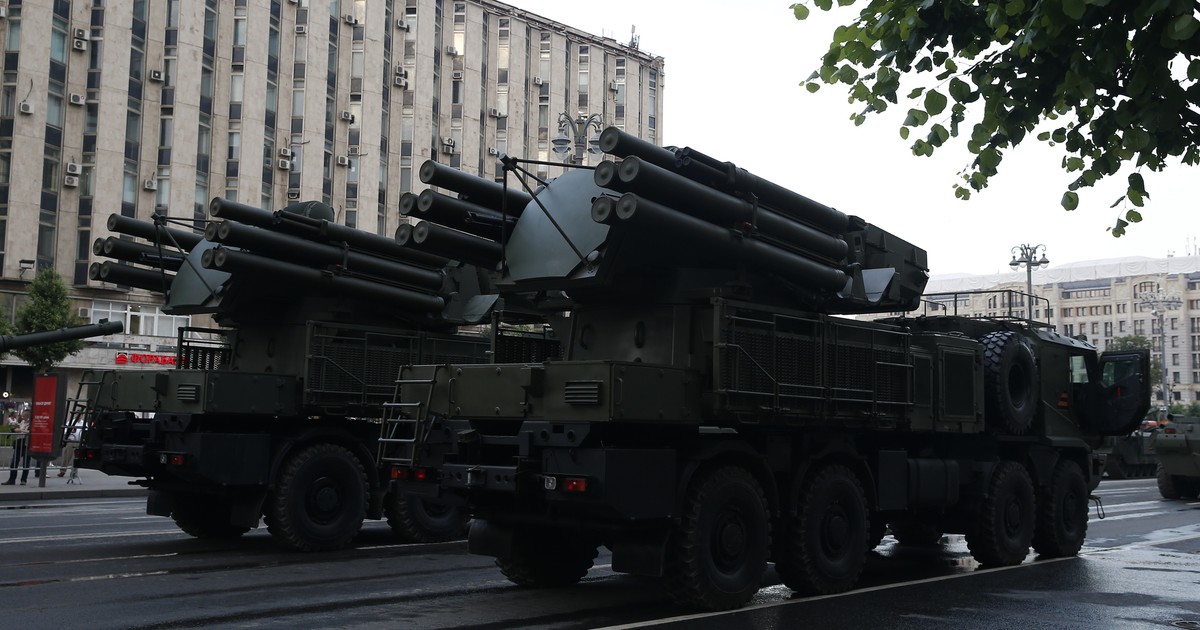
It is known that Russia mainly uses short-range Pantsir missile systems for point defense against drones, but their interceptor missiles are produced much slower than the drones themselves.
Ukraine also said in February that it had destroyed at least half of Russia's Pantsir systems.
Russian military bloggers are sounding the alarm
In early April, one of Russia's most prominent military blogging groups, Rybar, expressed concerns that Ukraine was conducting a “prolonged campaign to defeat Russian air defenses” until the summer of 2026.
“It is simply physically impossible to produce tens of thousands of missiles for Pantsir systems from the air,” wrote a popular comment website, adding that Russian air defense forces are “being pushed to their limits and consuming ammunition at an accelerated rate.”
Rybar suggested that Russia adopt a counter-drone strategy similar to Ukraine's, including: greater emphasis on mobile fire teams and interceptor drone crews.
Analysts from the London-based Royal United Services Institute also wrote in a December report that Russia is using up interceptors faster than it can produce them and is intensively trying to increase their production.
The shortage was “overwhelmingly concentrated in older or obsolete platforms such as 9K33 Osa and SHORAD systems, especially Pantsir,” the analysts added.
The United States has used up a significant portion of its air defense interceptors during the war with Iran — 11,300 rounds of ammunition were used in just 16 days of fighting, according to RUSI analysts.
The most serious concerns concern the stockpile of more advanced interceptors such as Patriot missiles, Terminal High Altitude Area Defense systems and ship-based Standard Missiles.
The above text is a translation from American edition of Business Insider