Donald Trump's entryOnet
We are currently dealing with one of the most serious crises of the 21st century. Since the end of February 2026, after the US and Israel attacked Iran, Tehran responded by blockading the strait, a series of attacks on ships and placing naval mines along the route.
The trail has been de facto closed since March 2. On April 17, Tehran announced the reopening of the strait. Dozens of units then moved towards Hormuz, trying to escape. However, a day later, the Islamic Revolutionary Guard Corps changed its position and announced its closure. This caused most of the ships to quickly turn back and remain trapped in the Persian Gulf.
The United States has since begun to enforce its own presence in the region, including: by seizing an Iranian-flagged cargo ship on April 19.
How many mines has Iran laid?
The scale of mining of the strait is still not precisely known. American intelligence already signaled in early March that Iran had begun the process of deploying mines, and President Donald Trump responded by warning that if confirmed, “the military consequences will be at a level never seen before.”
In the following weeks, the reports were confirmed. According to American media findings, Iran has placed at least several dozen mines in the strait – both anchored under the surface and bottom mines, which can be laid even from small boats.
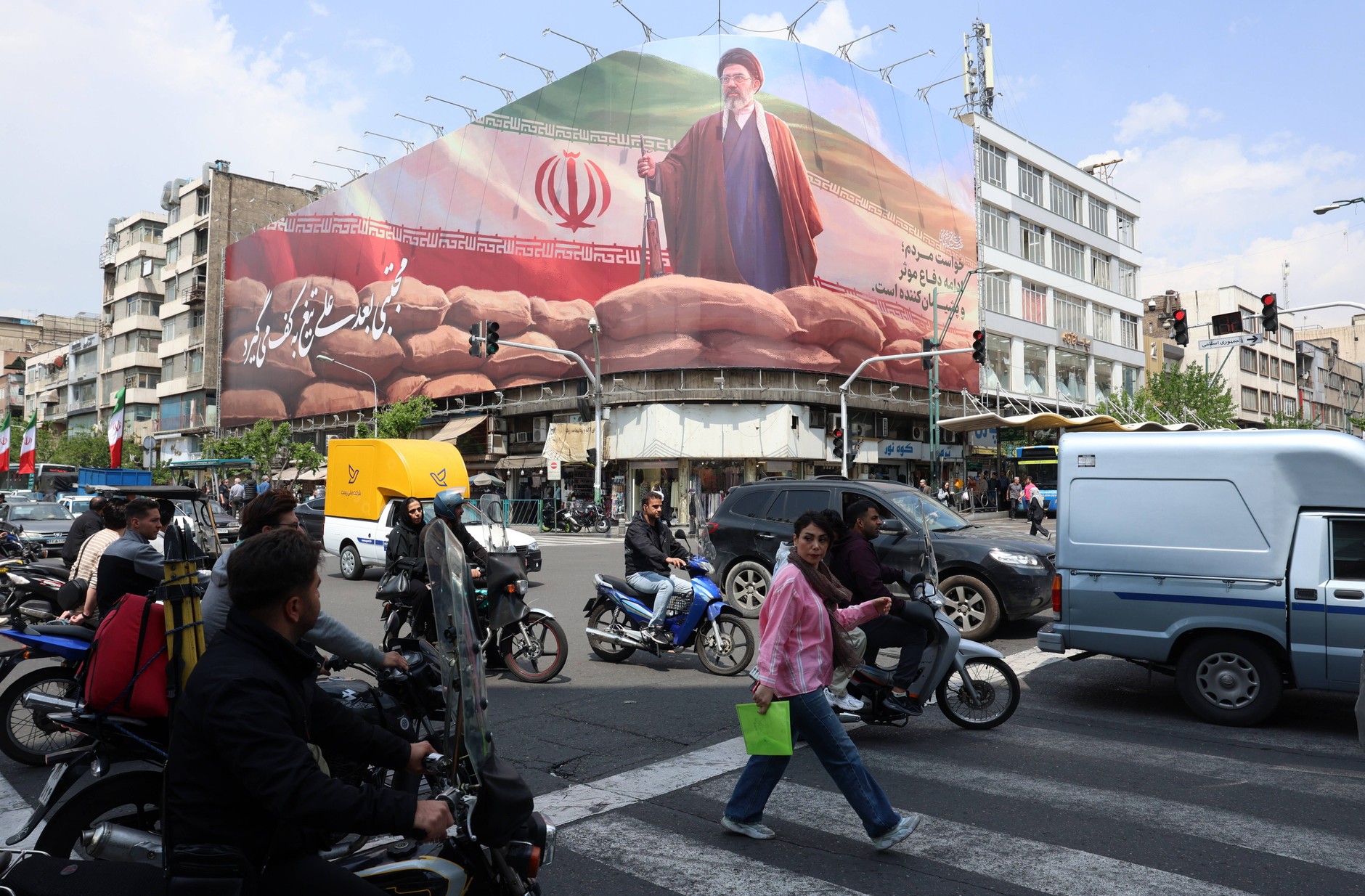
Iranians drive past a large billboard with the image of Iran's Supreme Leader Ayatollah Mojtaba Khamenei on a street in Tehran (April 20, 2026)Abedin Taherkenareh / PAP
At the same time, a problem emerged that shows the scale of the chaos. As reported by the New York Times, citing representatives of the US administration, Iran itself is unable to locate all the mines it has deployed, which makes it difficult to quickly unblock the strait.
According to the Washington Post, citing its Pentagon sources, it may take up to six months to fully clear the strait.
“Bottleneck”
Let's look at why the Strait of Hormuz is so important.
The Strait of Hormuz, through which an average of about 20 million barrels of oil and petroleum products flowed per day in 2025, is one of the most important bottlenecks (at its narrowest point it is only 54 km wide) for global oil transport. About 25 percent global maritime trade in this raw material passes through here, and the possibilities of bypassing this route are limited.
While Saudi Arabia and the United Arab Emirates have some alternative oil export routes that bypass the Strait of Hormuz, other countries — including Iran, Iraq, Kuwait, Qatar and Bahrain — are overwhelmingly dependent on this route.
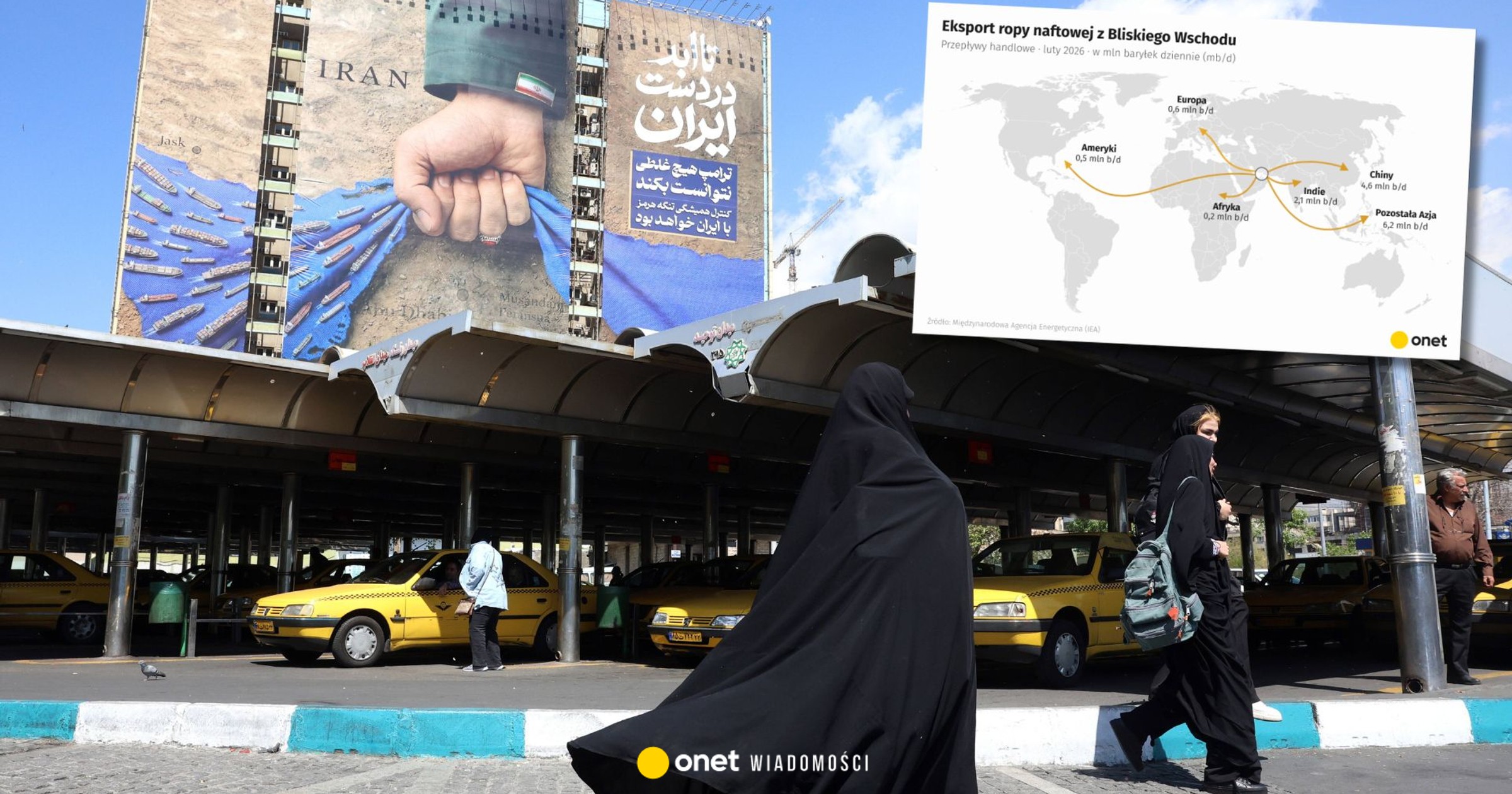
In 2025, almost 15 million barrels per day of crude oil flowed through this route, which constituted approximately 34%. global trade in this raw material. Most of this volume was directed to Asia – China and India alone accounted for a combined 44%. export. Only about 600,000 went to Europe. barrels per day, or only 4%. supplies from the region.
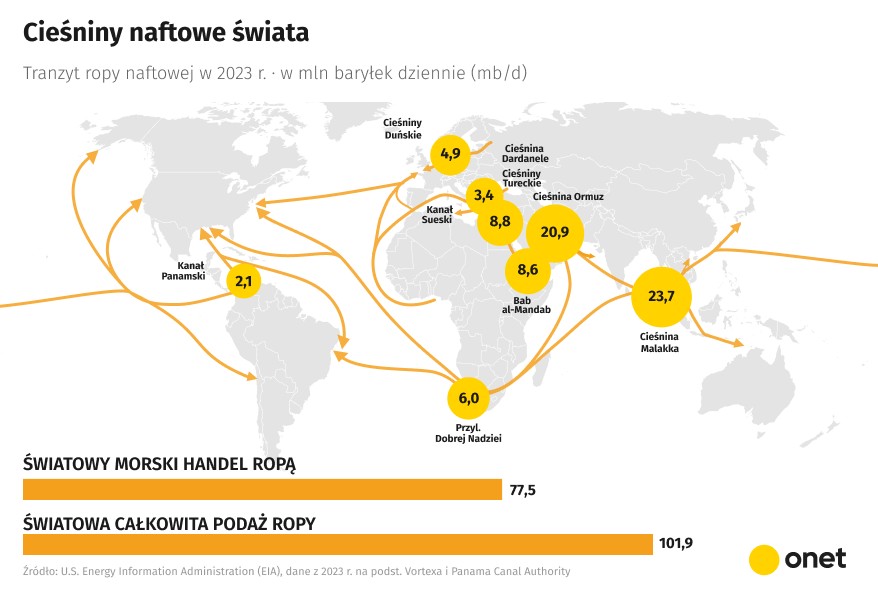
Oil straits of the worldOnet
“Blue Fuel”
Virtually all liquefied natural gas (LNG) exports from Qatar and the United Arab Emirates (UAE) pass through the Strait of Hormuz. In 2025, Qatar was the second largest LNG exporter in the world – it shipped over 112 billion cubic meters. gas, while the UAE's exports amounted to approximately 7 billion cubic meters. The total volume of LNG flowing through Hormuz exceeded 112 billion cubic meters, which corresponds to almost 20 percent. global LNG trade.
There are no viable alternative routes for exporting gas from Qatar and the UAE to the global market other than transporting LNG by sea.
Asia remains the main recipient of LNG from the region. In 2025, approximately 90 percent gas transported through this strait went to Asian markets, while just over 10% was sent to Europe. At the same time, LNG supplies passing through Hormuz accounted for approximately 27 percent. total LNG imports in Asia and approximately 7%. LNG imports in Europe.
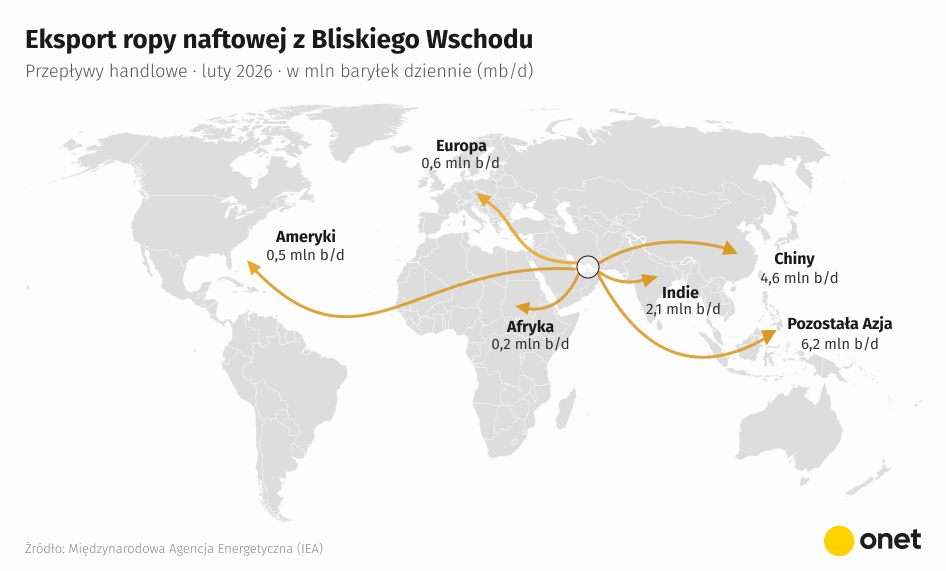
Oil exports from the Middle EastOnet
Oil prices are going crazy
The protracted conflict between the United States, Israel and Iran has severely disrupted global oil and gas trade. Prices reacted immediately: Brent crude oil exceeded the psychological barrier of $100. per barrel, and at peak moments it reached approximately USD 107. At the same time, European gas prices rose to over EUR 60 per MWh, reaching some of the highest levels in months.
Even if an agreement is reached to resume exports through the strait, the effects of the crisis may be felt for a long time. Energy market analysts emphasize that the return to normality will not happen automatically. According to analysts of the American investment company Loomis Sayles even after the situation stabilizes, it will take “weeks or months” to rebuild raw material flowsand oil prices will remain above pre-conflict levels. According to S&P Global and GasBuddy prices are unlikely to return to pre-crisis levels in 2026even with the rapid unblocking of the strait.

Vehicles line up at a gas station in Addis Ababa (April 23)EPA/STRINGER / PAP
US allies in trouble
The situation in the strait has caused concern among the US's Asian allies. Japan imports as much as 93 percent. oil consumed via this route, and South Korea – 70 percent. oil and about 20 percent natural gas.
“Sea lanes are absolutely crucial for Japan and South Korea because they rely on maritime transport for their trade – both for exports and imports of key raw materials such as energy, materials and food,” said Joseph Kristanto, a maritime security analyst at Singapore's Singapore School of International Studies. S. Rajaratnam.
Meanwhile, the Chinese dragon is not sleeping. A recent Reuters report said China has deployed vessels and installed a series of floating barriers at the entrance to an area of the South China Sea that Beijing disputes over the Philippines. The report emphasizes that China's actions coincide with the US sending all three active aircraft carrier groups to the Middle East, and therefore US troops and military equipment are being withdrawn from the Indo-Pacific region.
“There is clear concern about the weakening of the U.S. presence in Asia, and we can see China taking actions that suggest it is using this window of opportunity to expand its influence and strengthen its position in these contested areas,” William Yang, a Taiwan-based International Crisis Group analyst covering Chinese foreign policy and geopolitics, told Deutsche Welle.
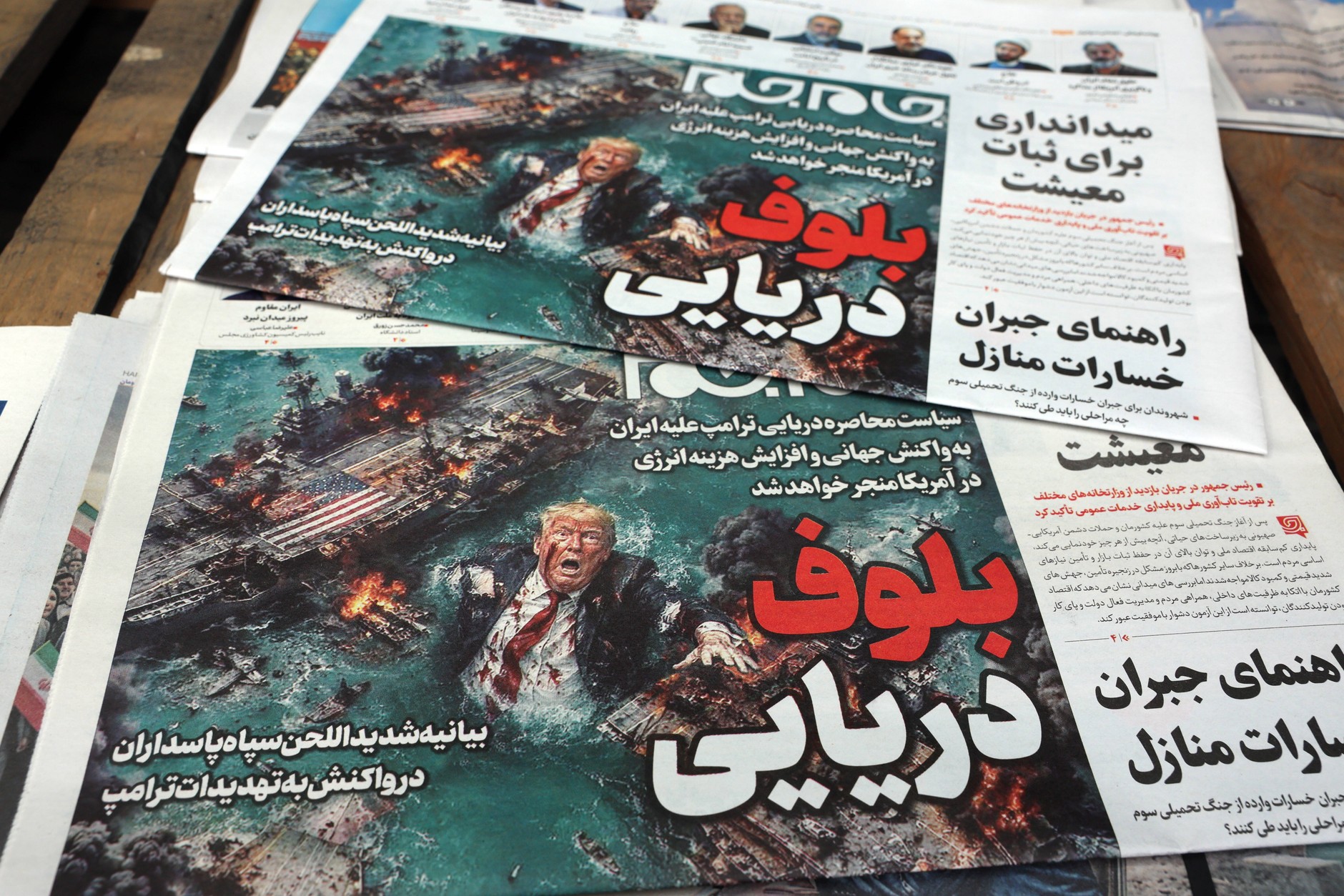
A stack of copies of an Iranian daily with the headline “Bluff of the Sea” displayed in front of a kiosk in Tehran (April 13, 2026)Abedin Taherkenareh / PAP
Consequences for the entire world
What is currently happening in the Strait of Hormuz threatens us with enormous consequences. There is much we are unaware of.
— Conflict in the Middle East could push millions more people toward hunger as its economic impact ripples across the world, World Bank Chief Economist Indermit Gill warned in an interview with AFP.
— About 300 million people already suffer from acute food insecurity. This number could very quickly increase by around 20% as the domino effects intensify Indermit Gill said.
The blockage of this shipping route, which is little talked about, is seriously disrupting fertilizer supplies, particularly affecting African countries that are heavily dependent on them.
According to the Canadian agency Agence Science-Presse, almost half of the world's urea fertilizer supplies pass through Hormuz, more than 30 percent. ammonia and about 20 percent diammonium phosphate – key fertilizer ingredients.
European countries reacted to rising oil prices. Slovenia was the first in the EU to introduce restrictions on fuel sales – a maximum of 50 liters per refueling for private drivers. Other countries are either lowering taxes and limiting margins on fuels, or introducing subsidies for drivers and transport companies.