On Saturday, information about the death of Andrzej Olechowski circulated in the media. The politician was 78 years old. The information about his death was confirmed by the deputy head of the Ministry of Foreign Affairs, Marcin Bosacki.
Prime Minister Donald Tusk also said goodbye to him on the X platform.
In recent years, Olechowski has played mainly the role of a political commentator, but previously he was a member of several governments after the fall of communism, a presidential candidate, co-founder of one of the most important parties on the political scene, and after leaving politics, he devoted himself to business activities.
Read also: Piotr Maria Śliwicki calls for Local Content 2.0
Andrzej Olechowski and the political transformation. This is how he entered Polish politics
Andrzej Olechowski was born on September 9, 1947 in Kraków. He graduated in economics from the Warsaw School of Planning and Statistics, currently the Warsaw School of Economics.
In 1979, he obtained a PhD in economics. He also educated in Geneva, where he came into contact with the international community of economic experts.
In his youth, however, his professional path was not only related to economics – he also worked at Polish Radio and was involved in the music industry as the artistic director of the band Trzy Korony.
In the 1970s and 1980s, he gained experience in international institutions. He cooperated with the United Nations Conference on Trade and Development (UNCTAD) in Geneva, and then with the World Bank in Washington.
Read also: Conflict around nature reserves. Poland 2050 and PSL on a collision course
After returning to Poland, he got involved with National Bank of Poland, where he served as an advisor and then first deputy president of the NBP in 1989–1991. He was also a participant in the political changes at the turn of the 1980s and 1990s took part in the Round Table talks.
In 1991, he took up the position of Secretary of State in the Ministry of Foreign Economic Cooperation, and a year later he became Minister of Finance in the government of Jan Olszewski. He performed this function during an exceptionally difficult period of economic transformation, when Poland was struggling with high inflation, reconstruction of the financial system and the need to stabilize the market economy.
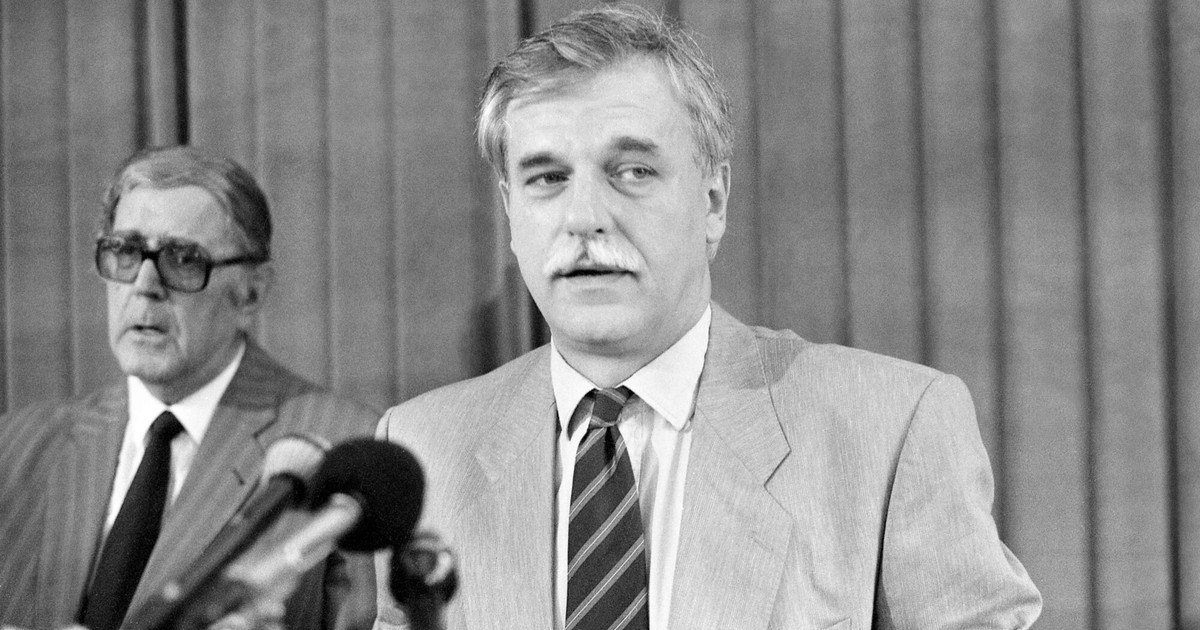
Andrzej Olechowski in 1991
|
Jacek Dominski / East News
Olechowski was a supporter of budget discipline and reforms based on the principles of a liberal economy. Although his term of office was short (he resigned in 1992), it was considered an important stage in building a modern financial policy of the state.
Head of the Ministry of Foreign Affairs and running in the presidential elections
His function brought him even greater recognition Minister of Foreign Affairs, a position he held in the years 1993–1995 in the government of Waldemar Pawlak. As the head of Polish diplomacy, he actively worked to strengthen Poland's position on the international arena and integration with Western structures. His efforts to bring Poland closer to NATO and the European Union were of particular importance.
In 2000 he started as independent candidate in the presidential elections. He obtained over 17.3 percent. votes and took second place behind the incumbent president Aleksander Kwaśniewskiwhich was a great political success.
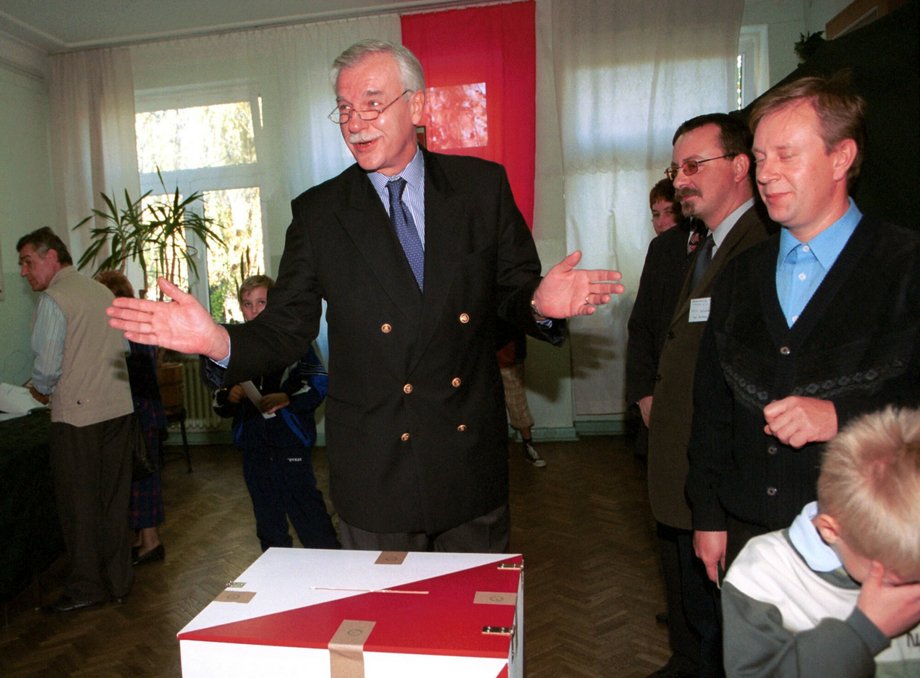
Andrzej Olechowski voting in the 2000 presidential election.
|
Andrzej Iwanczuk / East News
Tusk, Olechowski, Płażyński – three PO tenors
The electoral success became an impetus co-founding the Civic Platform in 2001 together with Donald Tusk and Maciej Płażyński. All three were referred to as the “three tenors” of the new political formation. Olechowski was one of its most important ideological creators, representing the liberal and pro-European trend. In 2002, he ran for president of the capital city on behalf of PO. Warsaw, where he obtained the third result and managed to get almost 13.5 percent. votes.
Read also: Polish or German economy? Experts indicate who is more resistant to the crisis
In later years, however, he gradually moved away from current party politics. In 2009, he left the Civic Platform, and in 2010 he ran for the office of the President of the Republic of Poland again, but this time without much electoral success, obtaining only 1.44 percent. votes.
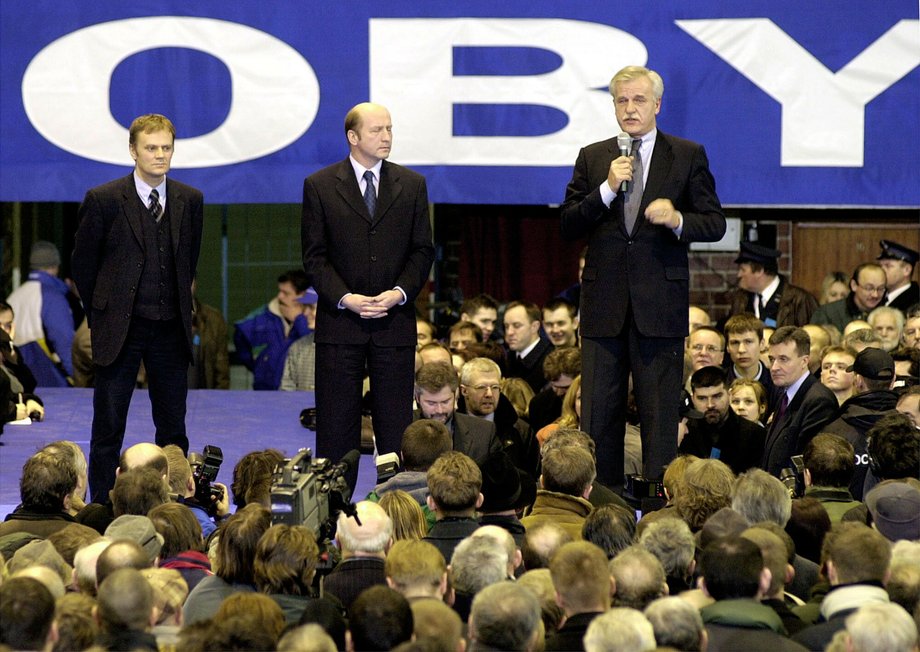
Founding congress of the Civic Platform at Hala Olivii in Gdańsk. On stage (from the left) Donald Tusk, Maciej Płażyński and Andrzej Olechowski as co-founders of the party, the so-called three tenors
|
Witold Rozbicki / East News
Business activities
In parallel to his political career, Olechowski was also active in the financial and corporate sectors. For many years he was associated with Bank Handlowy in Warsaw, where in 1991-1996, 1998-2000 and 2012-2021 he served as the chairman of the supervisory board. He also sat on the supervisory boards of companies such as PKN Orlen, LOT, ABB Polska and Vivendi. He was a member of the board of directors of Euronet and an advisor to many international institutions, including Goldman Sachs, Citigroup Europe, IFC, Creditanstalt and Macquarie European Infrastructure Funds.
Olechowski was also involved in scientific and journalistic activities. He lectured at universities, including: at the Vistula Academy of Finance and Business, Collegium Civitas and other academic centers. He was the author of numerous publications on international trade, foreign policy and economic changes. He regularly commented on the political and economic situation of the country, remaining one of the most opinion-forming experts in public life.