The negotiations end in failure, US President Donald Trump extends the ceasefire and blames Tehran. He claims Iran is “divided” and its leaders “incapable of action.” However, while in Washington there is an impression of chaos, in Tehran a different picture is painted: not a collapse, but a change of power taking place in the shadows, with direct consequences for war and diplomacy. We explain who is really calling the shots in Iran today.
One man is in the spotlight: Ayatollah Mojtaba Khamenei. However, to this day there is no clear sign of life from him. More than six weeks after his appointment, he has not appeared in public. No speeches, no interviews, no verified videos. Instead, selective messages and statements generated by artificial intelligence are circulating in the media.
For a system that has lived for decades thanks to the leader's visible power, this is a break with tradition. His father, Ali Khamenei, was omnipresent. The son, however, remains in the shadows – probably not willingly.
Reports from behind the scenes of the regime paint a dramatic picture.
Khamenei was reportedly seriously injured in (US) airstrikes, can barely speak and is isolated for security reasons. Communication apparently takes place through couriers, decisions are communicated indirectly. This raises a key question: If the supreme leader is not visible, is he still in power at all?
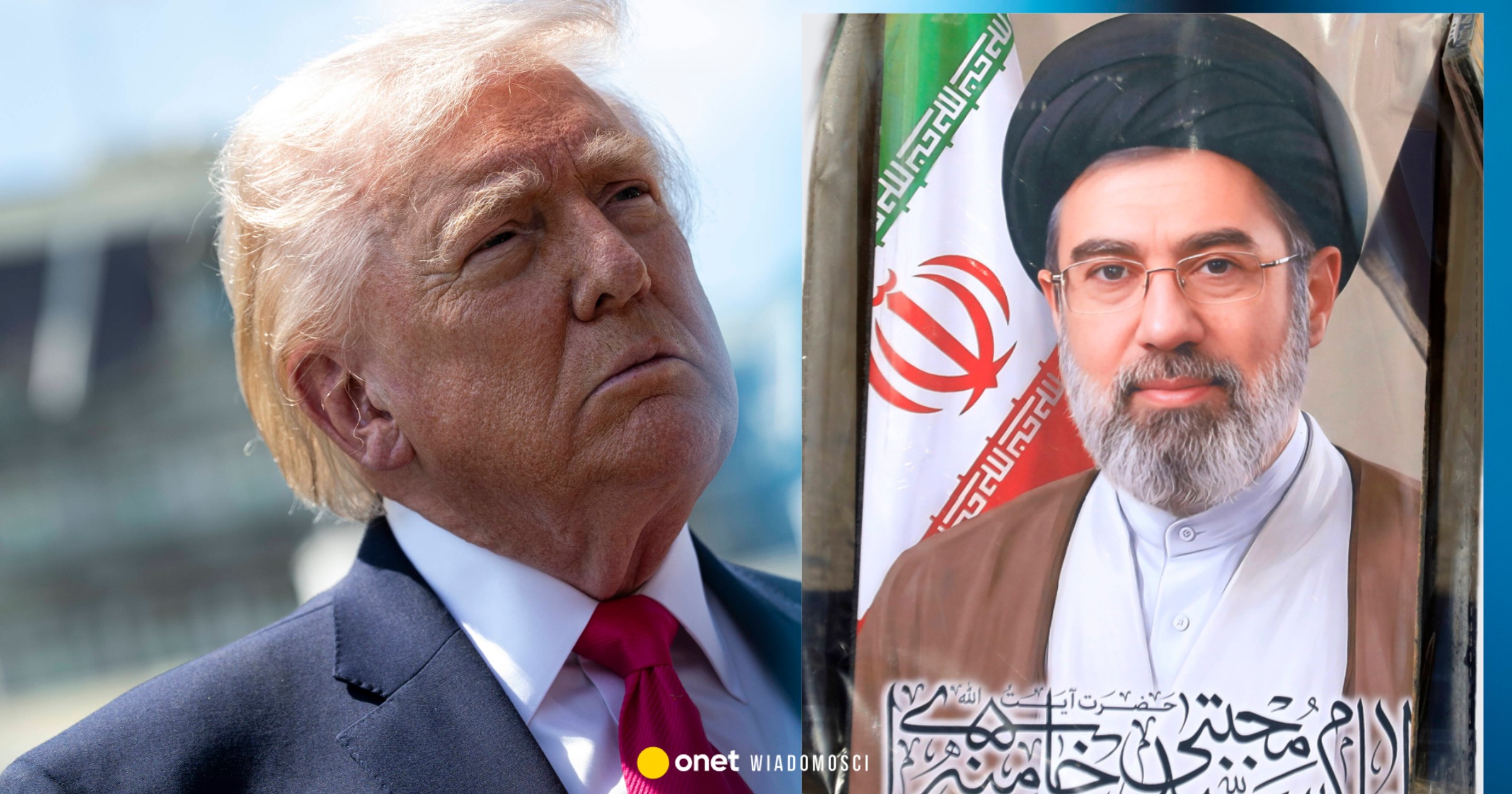
Billboard showing the late Ayatollah Ali Khamenei (L) and his son, current Ayatollah Mojtaba Khamenei, Tehran, Iran, April 23, 2026.Abedin Taherkenareh / PAP
The answer leads directly to Islamic Revolutionary Guard Corps (IRGC), i.e. Pasdaran, which has long ceased to be an ordinary militia. It is a state within a state: military elite, economic network, factor of political power. And now apparently also the actual decision-making center.
The IRGC's power is distributed among several key figures, including commander-in-chief Ahmad Vahidi who directs military strategy, Mohammad Bagir Zolgadr who heads the National Security Council, and veteran Jaja Rahim Safawi who advises the leadership on key issues.
An Iranian insider describes this system as supervisory board: Khamenei is the formal chairman and the generals are the actual decision-makers. “The generals are members of the board,” says a former government adviser in an interview with the New York Times. The new ayatollah apparently only approves the decisions or receives them as ready-made resolutions.
Power without a face
This new power structure has concrete consequences. Civilian politicians are losing importance, the president is primarily concerned with the daily functioning of the country, while strategic issues are resolved by the military.
A particularly clear illustration of this state of affairs is the example of the Strait of Hormuz – its opening was announced by the government and shortly thereafter withdrawn by the IRGC.
This is even more clear during the negotiations: it was the generals who broke off talks with the United States. The voices of civilians who wanted to continue negotiations failed to break through.
For the United States, this is becoming a problem. Diplomacy requires a clear division of competences. Who sits at the table? Who can make promises? Who guarantees their implementation? There are no clear answers to this in today's Iran.
Negotiators appear and represent certain positions, but internally they are constantly being rebalanced or challenged. Decisions may be overturned at any time by other centers of power. This makes conversations unpredictable. And it explains why even agreed steps are suddenly being questioned again.
The article continues below the video
Trump's misjudgment
Trump interprets this dynamic as weakness. In his opinion, Iran is divided and therefore it is easier to put pressure on it. However, many experts see quite the opposite. The system may seem chaotic, but it is extremely flexible. Power did not disappear – it was simply redistributed. And today it rests more firmly than ever in the hands of a military network that is less willing to compromise and more difficult to predict.
Iran is therefore not without leadership. It is simply ruled differently than before: not by an all-powerful ayatollah, but by a collective of generals, the security apparatus and hard-line supporters. A system that's hard to get your head around.
Therefore, the key question is not whether the regime will fall. Rather, the question is whether right now – in the middle of the war – a new center of power is being created: a shadow military state that runs Iran, while the Ayatollah becomes an invisible symbolic figure.
I’m Ashley Davis as an editor, I’m committed to upholding the highest standards of integrity and accuracy in every piece we publish. My work is driven by curiosity, a passion for truth, and a belief that journalism plays a crucial role in shaping public discourse. I strive to tell stories that not only inform but also inspire action and conversation.