It is 13 minutes after midnight on March 29 when Dorena's transponder sends its last position signal. At this moment, the Iranian-flagged tanker is just outside the Strait of Hormuz. According to official data from the International Maritime Organization (IMO), the destination of the trip is the port of Cochin in southern India. However, Dorena never gets there.
On Thursday (April 23) morning, off the coast of India, an oil tanker is intercepted by a US Navy destroyer, just before Iranian crude could be pumped from the ship's tanks for customers in India. At this point, Dorena is already hundreds of nautical miles from the Strait of Hormuz.
This case shows how expensive it is for the US to maintain a blockade of Iranian ship traffic in the Persian Gulf. How long this military struggle, which increasingly threatens the global economy, will last also depends on how long the Islamic Republic can survive economically – and oil exports are its most important source of income. That's why Trump's blockade is a powerful weapon against Iran — in theory. In practice, its implementation is difficult. This is due to, among others, from pure numbers.
The Islamic Republic's official oil tanker fleet numbers approximately 60-70 vessels, with a total capacity likely to be 90-140 million barrels of oil, a multiple of Iran's approximate daily production of just over 3 million barrels. However, in addition to these ships officially flying the Iranian flag, there is a shadow fleet numbering between 400 and 480, and according to the Wall Street Journal, even more than 500 ships. Thanks to them, the actual total capacity of the Iranian tanker fleet may be up to 750 million barrels.
This would be enough to meet all the world's oil demand for a week. It is extremely difficult to track hundreds of ships, let alone stop them. Especially when, like Dorena, they turn off their transponders and become invisible to electronic systems, and can only be detected after weeks of chasing in distant sea areas. It is a battle between U.S. technological superiority and the likely even greater numerical superiority of Iranian tankers.
Speedboats and grenade launchers versus stealth drones and powerful ships
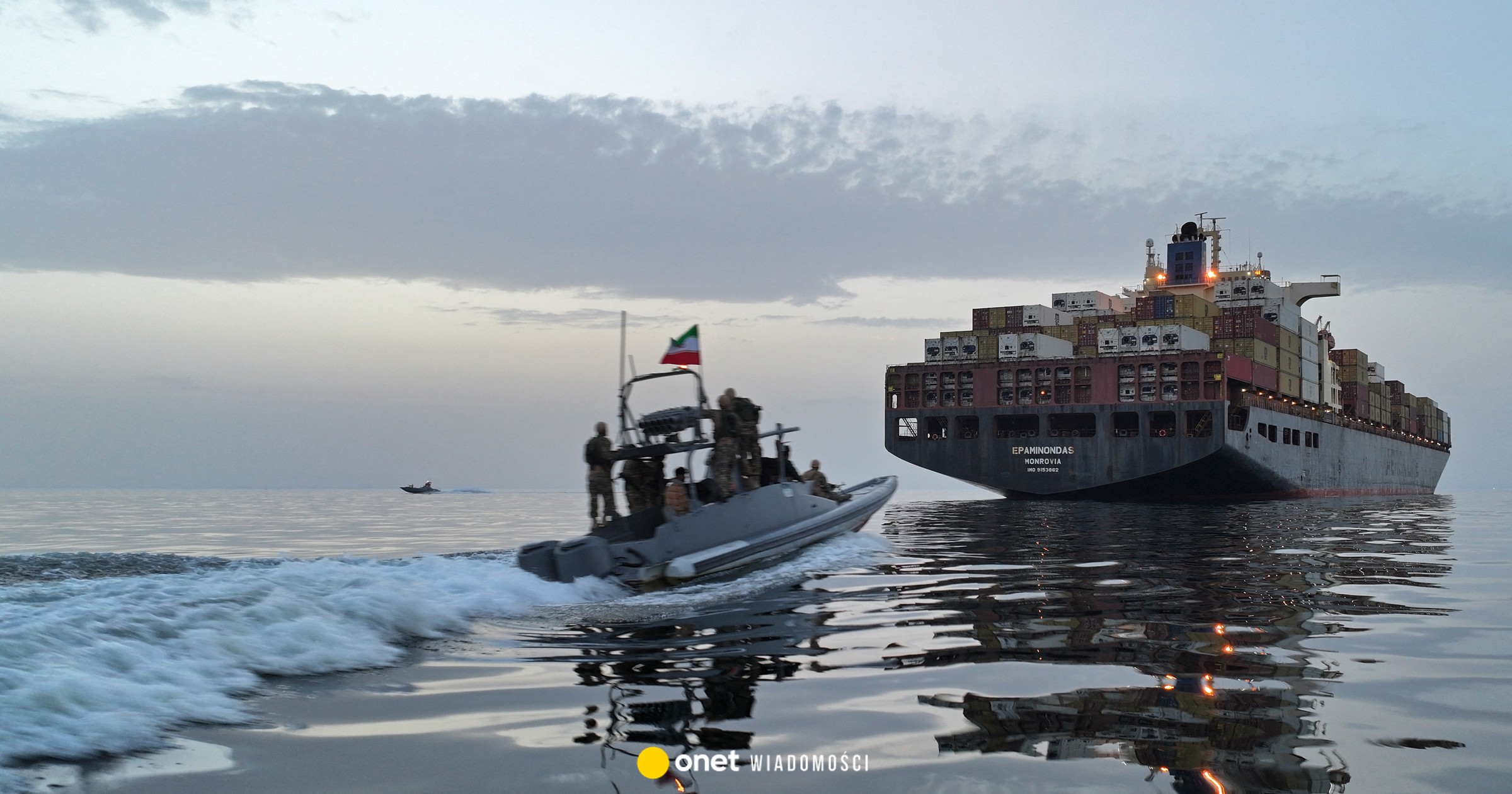
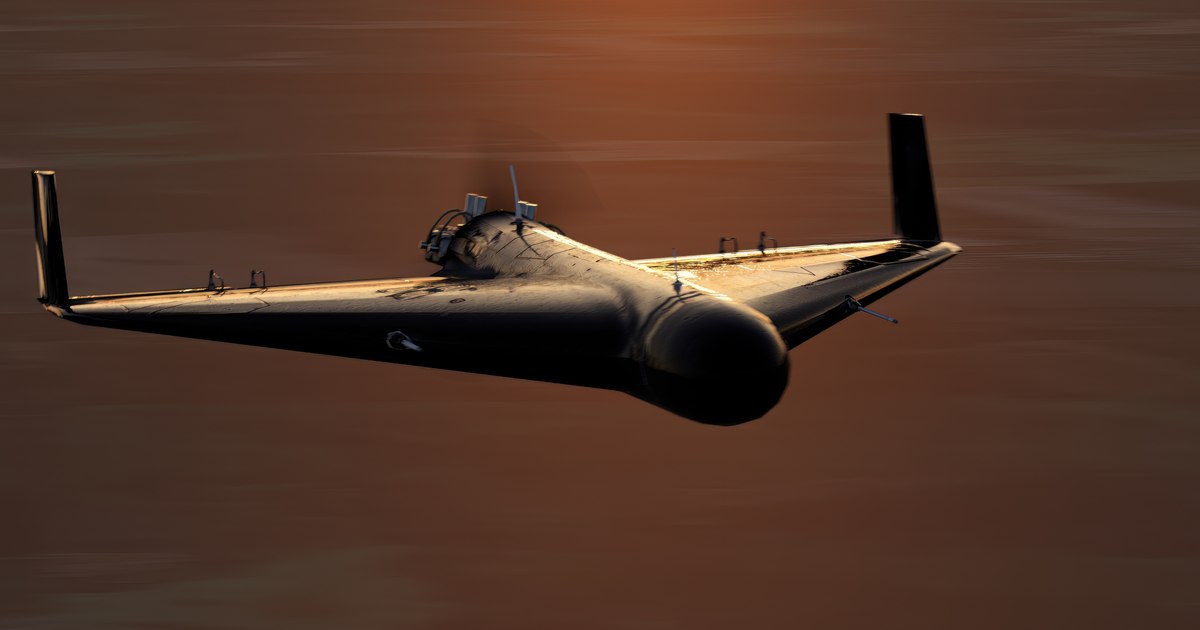
Just hours after Dorena was detained by a U.S. Navy destroyer, Iranian units board a Greek ship and another Panamanian-flagged ship. Members of the Islamic Revolutionary Guard Corps (IRGC) attack not with heavy ships, but small, fast boats, some of them with screw engines. Their weapons are hand grenade launchers and machine guns, not stealth drones as on US Navy ships.
Iran allegedly has hundreds to thousands of such boats, which often wait hidden, well camouflaged in hideouts in tunnels along the Iranian coast. After Iran's heavy naval equipment was largely destroyed, these boats form the backbone of Iran's maritime warfare strategy. They appear suddenly, can strike quickly and disappear just as quickly, faster than any large warship.
Jeremy Binnie, a Middle East expert at the weapons website Janes, told Reuters news agency that Iran's speedboats were incapable of taking on enemy warships: “Even if they tried to overwhelm the ship's defenses by attacking from multiple directions, they would be an easy target for the air support that would then be called in.”
He emphasizes, however, that while on the one hand American guided missiles could easily destroy the boats, on the other hand, pilots of low-flying American planes would also have to fear the hand grenade launchers of Iranian crews. Destroying the speedboats is much more difficult than larger Iranian ships, which were easy targets — easy to find, easy to track and limited in their ability to resist air attacks.
In addition Iran only needs a few successful actions against individual ships to make passing through the Strait of Hormuz seem risky. and caused ship insurers' premiums to skyrocket. With them, energy prices are rising, and potentially also Iran's income. “Rising oil prices increase the value of every barrel Iran can export,” says Bachar El-Halabi, chief energy markets correspondent at British news agency Argus Media.
The article continues below the video
Iran's oil business is reaching its limits
However, Iran's additional revenues depend on whether adequate quantities (of oil) reach the market at all. “The shadow fleet and hidden trade networks allowed Tehran to cushion some of the shock during the sanctions imposed by Trump in his first term,” Halabi says. However, this will not achieve even the volumes that Iran would export under normal conditions. “Barter transactions with Russia are often mentioned as a solution. However, their practical impact is limited, if not negligible,” says the correspondent. After all, there is no direct pipeline infrastructure between the two countries.
“Without pipelines, this transportation would have to be done by rail or truck — and these volumes are minuscule compared to Iran's export capacity through the Strait of Hormuz,” Halabi says. True Iran could benefit locally from rising prices, but this should not result in an overall net gain for the economy. The structural constraints of the blockage outweigh the price effect per barrelsays Halabi. Despite all the tricks, the Islamic Republic will not be able to avoid losses caused by the blockade.
These losses may also intensify the fight over the distribution of wealth among Iran's elite. In the long term, this also threatens the stability of the government apparatus. Ultimately, the question of power in the Persian Gulf comes down to a psychological one: who is less resistant to stress – the large economies of the West or the beleaguered ruling class of the Islamic Republic?
I’m Ashley Davis as an editor, I’m committed to upholding the highest standards of integrity and accuracy in every piece we publish. My work is driven by curiosity, a passion for truth, and a belief that journalism plays a crucial role in shaping public discourse. I strive to tell stories that not only inform but also inspire action and conversation.