The most powerful in Europe in 2026. One Pole among them. “Warsaw speaks with two voices”

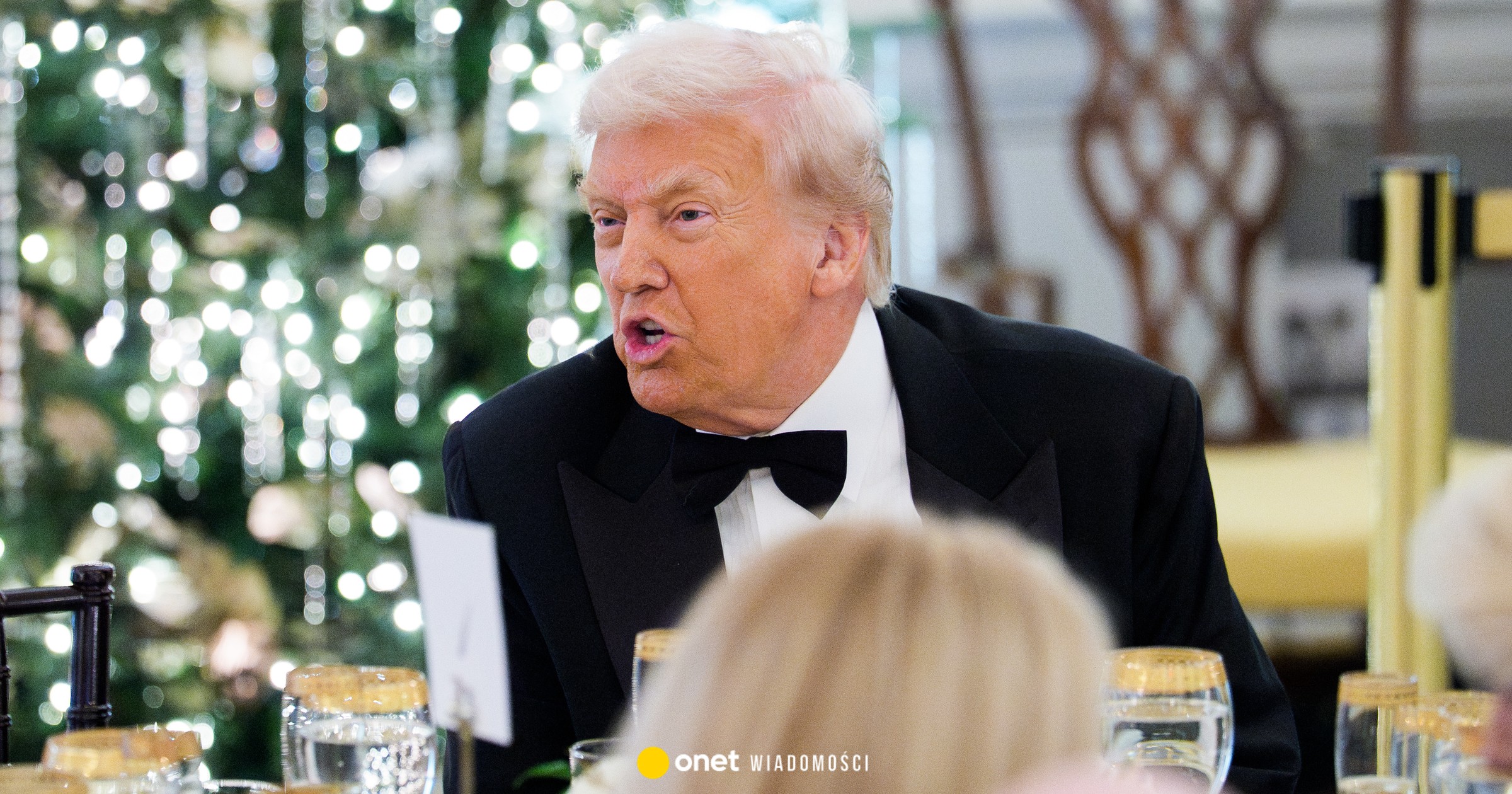
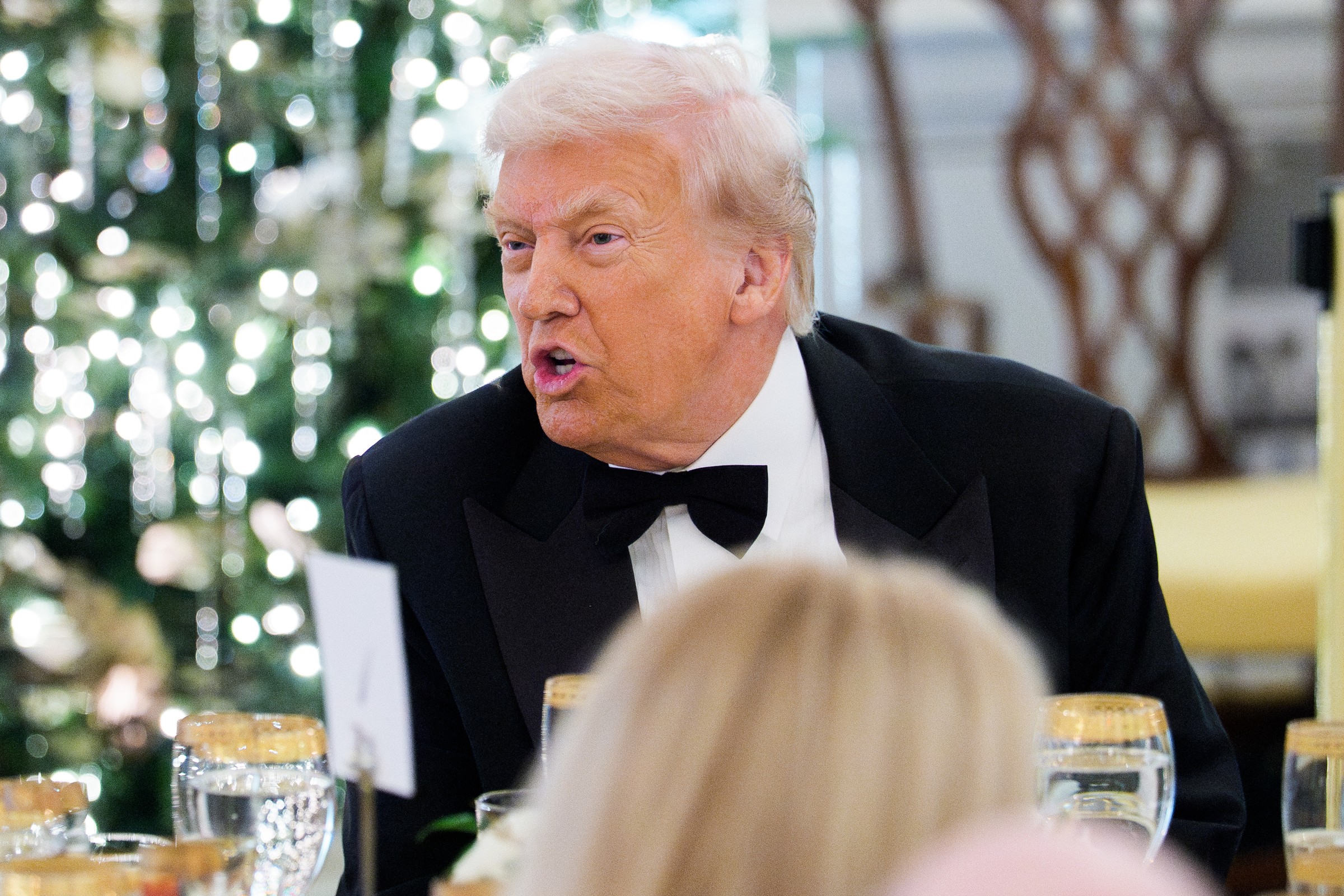
The return of Donald Trump as president of the United States has caused an earthquake-like shock to countries and institutions still struggling with the consequences of a full-scale Russian invasion of Ukraine in 2022. The speed at which Washington has transformed from a trusted ally to a potential adversary has shaken the foundations on which Europe has long rested.
Although traditionally the POLITICO 28 list is limited to Europeans, the website's journalists emphasize that the influence of the President of the United States on European defense, trade and politics could not be ignored. It is also no coincidence that the next two leaders on our list, Mette Frederiksen of Denmark and Friedrich Merz of Germany, are at the top of the ranking. This includes: they play the first fiddle in balancing Trump's influence in Europe.
Polish Prime Minister Donald Tusk hoped that this year would be the moment when he would take full control of the country and decisively bring Poland to the center of European politics. However, Karol Nawrocki made sure that this did not happenwrites POLITICO. “Warsaw speaks with two voices,” we read.
In the June presidential elections, the right-winger narrowly defeated Tusk's preferred candidate, Rafał Trzaskowski, ensuring that the center-right government would have difficulties implementing its program, and 42-year-old Nawrocki has become the new face of the Polish right-wing.
Thanks to his difficult past, including information about his participation in hooligan rackets, as well as his academic career devoted to defending Poland's historical memory, as POLITICO writes, Nawrocki enjoys great support among conservative voters. He has already transformed the presidential palace in the center of Warsaw into an alternative center of power to the prime minister's office.
As a result, a stalemate occurred. Tusk controls the government, but his fragile coalition does not have enough votes to override Nawrocki's vetoes. The president submits draft laws, but the nationalist Law and Justice party supporting him does not have enough seats in parliament to pass them. Both camps have reached a stalemate as both sides maneuver to gain advantage ahead of the next general elections in 2027.
This paralysis comes at a time when the war in neighboring Ukraine has been going on for four years now The European Union is struggling with a lack of strong leadership.
Poland's constitution gives the government priority in foreign policy, but the president retains key prerogatives, causing confusion internationally as Warsaw speaks with two voices.
— writes POLITICO.
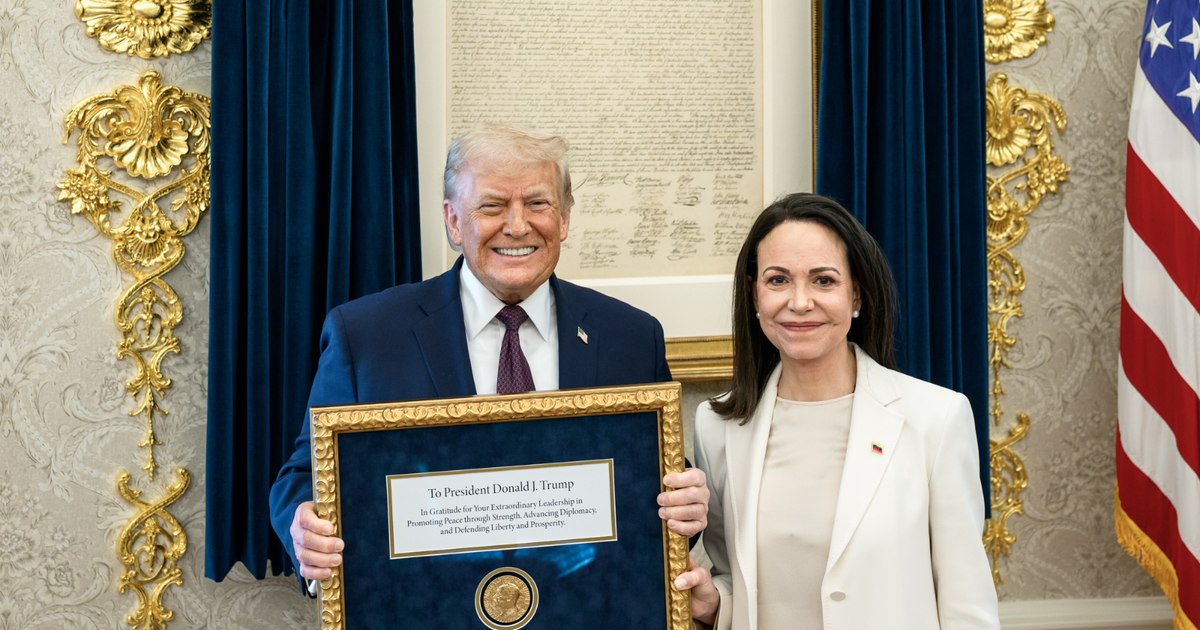
Washington took notice. US President Donald Trump made it clear that he preferred Nawrockiwhose electoral campaign he supported during the elections. Trump assured him that U.S. forces stationed in Poland — the foundation of NATO's eastern defense — will remain in place even if Washington changes the balance of military forces in Europe.
This promise only deepened tensions with Tuskwho considers the Polish-American alliance too important to use it as a weapon in domestic politics.
For Brussels, the impasse is equally troubling: Just as Poland was once again emerging as a pillar of pro-European leadership, its two most powerful men are heading in opposite directions — leaving the EU's eastern flank more divided than ever.
– emphasize the authors of the POLITICO 28 ranking.
Leader Donald Trump
Trying to describe Europe's relationship with Donald Trump has become a full-time diplomatic task. Is it a partner of the Old Continent? Sometimes. A threat? Sometimes. A force that changes the shape of relationships on its own terms? Always. It is clear that Europe is dealing with an unpredictable, dominant partnerwhose impulses can turn a continent upside down overnight.
When compiling POLITICO's annual ranking of the 28 most influential people in European politics and political strategy, one conclusion could not be avoided: No one has had a greater impact on Europe this year than the president of the United States.
This conclusion forced us to break one of our rules. Traditionally, the POLITICO 28 ranking includes only Europeans – people living or working on the continent. But if there was ever a time to make an exception, it's now. Trump's shadow so dominates European capitals that his decisions — or outbursts — have changed everything from defense budgets to trade policy to domestic politics.
Trump offered his theory on why he wields so much influence on the continent in an interview with POLITICO's Dasha Burns. He pointed to immigration as the main cause of the “collapse” of most European countries. — They want to be politically correct, and this weakens them, he added.
Instability
European leaders understand that they are dealing with an unstable partner. They see unpredictability and growing asymmetry. However, they remain tied to Washington, assuming that the continent's security architecture – and much of its prosperity – still rests on the American pillar.
The first months of Trump's second term set the tone for what has become a grueling year for European diplomats. His public flirtation with Russian President Vladimir Putin surprised even seasoned observers. The humiliation of Ukrainian leader Volodymyr Zelensky has heightened fears that Washington has turned from an ally into an antagonist.
Trump's vice president, JD Vance, broke diplomatic conventions in Munich by openly criticizing European governments for their treatment of right-wing parties. This breach of etiquette highlighted how far the US administration was willing to go to shape European policy as it saw fit.
This goal was later reaffirmed in Trump's sensational national security strategy, which declared that Europe was facing “civilizational decline” due to migration and pledged to cultivate “resistance to Europe's current direction in European countries.”
A pattern quickly formed: Trump's destabilizing display of dominance, desperate persuasion from Europe, and then another shock.
In private and public conversations, officials lamented the damage done. But the common conclusion seemed to be that, at least for now, Europe must put up with it. One by one, European leaders flew to Washington, flattering the US president in the hope of calming him down.
The reason was obvious. Since the end of World War II, most of Europe has relied on the United States for protection. Countries like Germany were unable to rebuild a credible army overnight, much less a nuclear deterrent. With war raging across the continent, Europe had no choice but to cling to what was left of the American shield, even if it suddenly seemed fragile.
In June, after many leaders headed to the White House and NATO Secretary General Mark Rutte flattered the U.S. president with flattering text messages, Trump questioned Article 5 — the military alliance's sacred oath of mutual defense. Two months later, the imbalance was exposed in an unequal trade deal in which Brussels agreed to tariffs and made unrealistic investment promises to buy temporary peace.
The relief was real, as was the humiliation.
Calm
Not everyone in Europe accepted the logic of this approach. — Some people would like to think that you can react with moderation and common sense… to somehow calm Moloch down, said former French Prime Minister Dominique de Villepin during an interview with POLITICO in April this year. In his opinion, the real threat was that the continent's leaders ignored “Washington's intentions to subjugate Europe.”
Indeed, on the diplomatic front, the new administration has blurred the line between foreign policy and electoral/political campaigning. Breaking with the tradition of keeping national leaders out of foreign policy involvement, Trump and his allies have taken the plunge — from Vance's intervention in Munich to Elon Musk's support for the far right in Germany and the UK.
European leaders are currently watching the situation with concern, noting that Trump sent French Marine Le Pen words of support after her conviction for embezzling EU funds and deepened his friendship with Hungary's Viktor Orban. As both France and Hungary head into crucial elections, the prospect of American influence on the election outcome has become a continuing concern for many in Brussels.
At times, Europe has tried to use Trump's impulses to its advantage. When the White House threatened to block remaining Russian oil exports to Europe, officials saw a rare opportunity to put pressure on Orbán, who has resisted being cut off from Moscow. However, the victory disappeared as quickly as it appeared – a few days later, Trump withdrew his announcements.
The rise of the US president has transformed both Europe's economy and its diplomacy. His “America First” energy policies and brash promotion of American oil and gas have strengthened opposition to the Green Deal, strengthening the argument that Europe is prioritizing climate action over competitiveness and jobs.
Meanwhile Washington's push for deregulation has undermined Europe's identity as a global regulatory power. From digital privacy to artificial intelligence, Brussels' old model of cautious, moralistic lawmaking suddenly seems out of step with the new global mood.
Alternative
Still, some in Europe are trying to free the continent from Trump's influence. Like a partner who quietly saves money in preparation for a breakup, the bloc is investing in its defense and strategic autonomy. Berlin and Copenhagen are turning to European suppliers to supplement their growing arsenals — and are quietly adopting Paris' long-held view that the transatlantic alliance should be respected but not overly relied upon.
In a landmark foreign policy speech in September, German Chancellor Friedrich Merz, once a staunch Atlanticist, doubled down on the need for Europe to build a healthy distance. “We must come to terms with the fact that our relations with the United States are changing,” he said. “We are ready for close coordination and cooperation. However, it is becoming obvious that this partnership will no longer be so obvious.”
American strategists are also beginning to see the danger. Kori Schake, a former adviser to then US President George W. Bush, warned that by intimidating her allies, Washington risks undermining the foundations of its power.
One of the most important strategic flaws of the Trump administration is its inability to understand that American power is based on the voluntary cooperation of other countries. Trump seems to believe that you can treat your friends worse than your enemies
– says Schake, currently associated with the conservative think tank American Enterprise Institute.
Her warning resonated in October, when top U.S. intelligence officials rushed to Brussels to reassure their European partners after the Netherlands restricted intelligence sharing with Washington over high-profile security breaches.
“They don't appreciate that if we continue this way, these countries have other options,” Schake explains. — We do not worry enough about the emergence of an international order that marginalizes American influence and seeks to isolate us from American power.
In other words, Washington's dominance may be unrivaled in recent history, but it may also be at its peak. Europe is not ready to give up its alliance with the US, but quiet work on building an alternative has already begun.