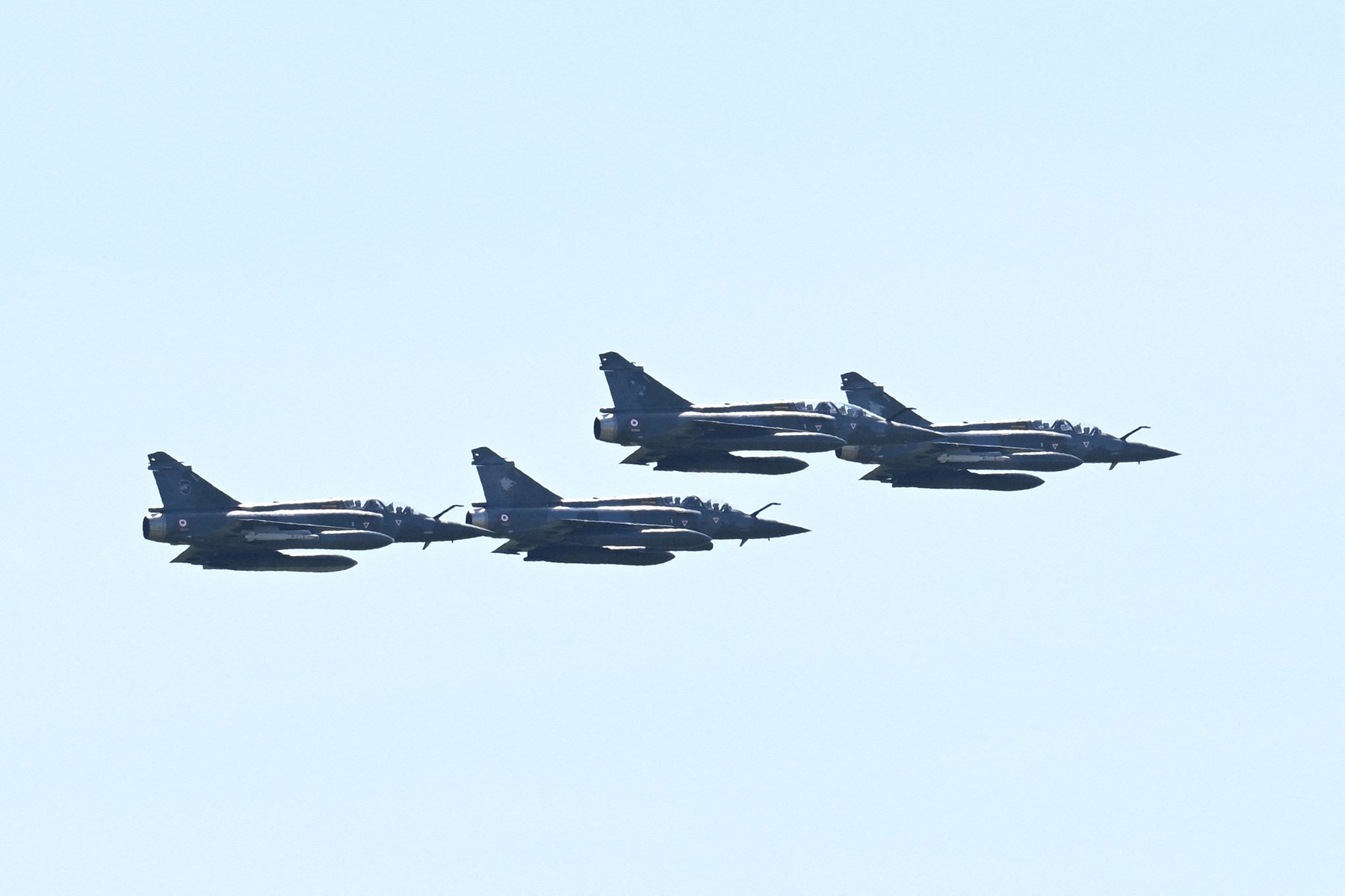
Moscow warned on Thursday that any European country that accepts the deployment of French nuclear-capable strategic bombers will become a target for attacks by Russian forces in the event of a conflict, reports Reuters.
French President Emmanuel Macron in March announced plans to expand the country's nuclear arsenal and said France could allow its European partners to temporarily host its nuclear-armed aircraft.
Russian Deputy Foreign Minister Aleksandr Grushko said in an interview published on Thursday that it was part of an “uncontrolled build-up” of NATO's nuclear potential, which poses a strategic threat to Russia.
He highlighted Moscow's concern about potential deployments of French nuclear-capable aircraft to other European countries. Macron said Paris was discussing such arrangements with Britain, Germany, Poland, the Netherlands, Belgium, Greece, Sweden and Denmark.
“Obviously, our military will be forced to pay special attention to this issue in the context of updating the list of priority targets in the event of a major conflict,” Grusko told Russia Today.
“Therefore, instead of France's declared strengthening of the defense of its allies, to whom, by the way, it does not offer firm guarantees, the security of these countries is, in fact, weakened,” he also said, according to Agerpres.
Macron's initiative is part of an effort by European NATO member states to take more responsibility for their own defense after frequent criticism of the North Atlantic Alliance by US President Donald Trump and in light of his threats to seize control of Greenland, an autonomous territory of NATO member Denmark.
Grusko said any future dialogue on nuclear weapons would have to take into account NATO's combined capabilities, including the French and British arsenals as well as the US.
NATO this week criticized Russia and China for their nuclear weapons policies and urged both countries to work with the US to establish greater stability and transparency at a conference opening next week at the UN in New York to review the operation of the nuclear non-proliferation treaty.