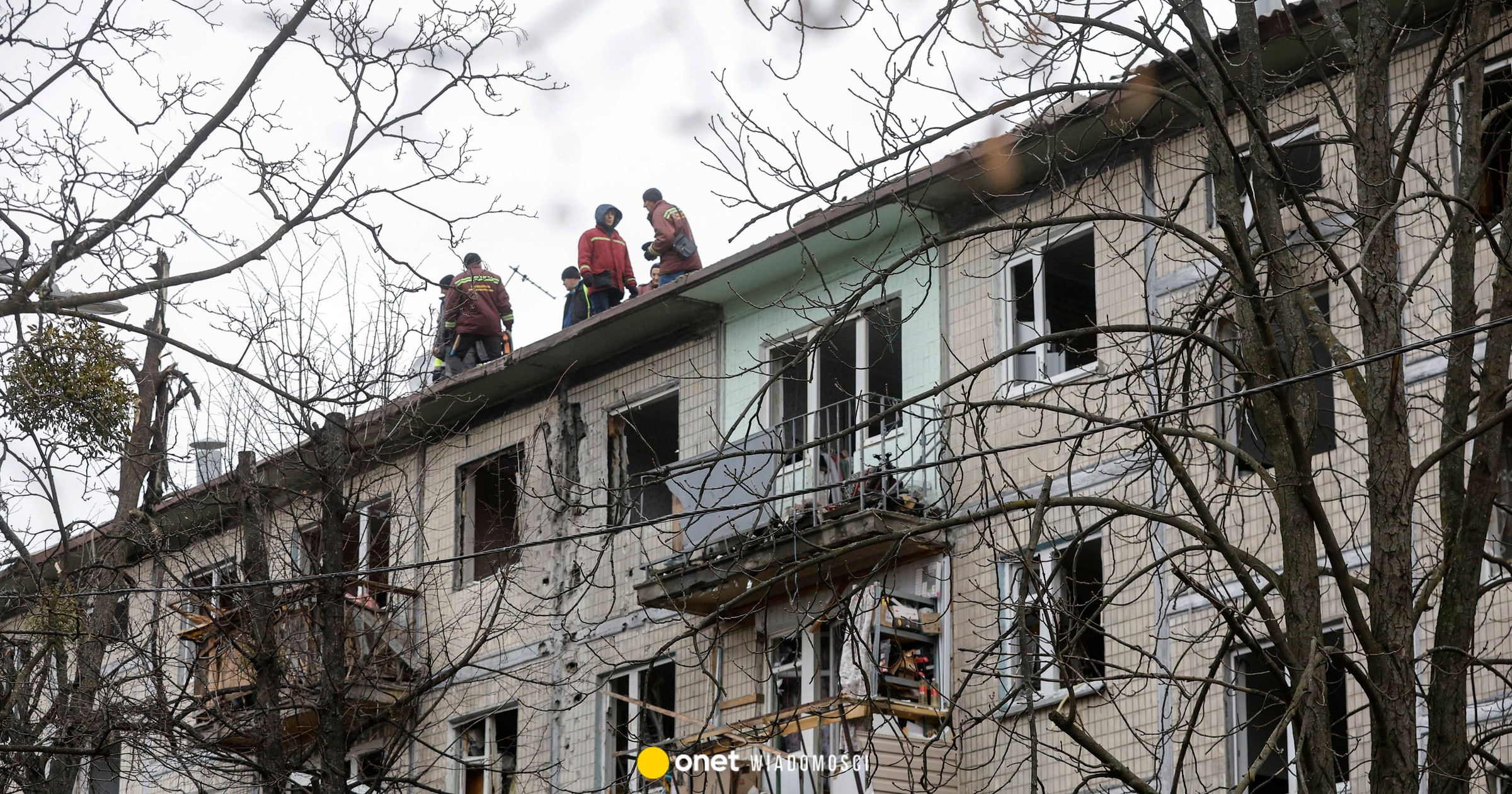
From “pilots” to criminals. A dangerous phenomenon at airports in Europe

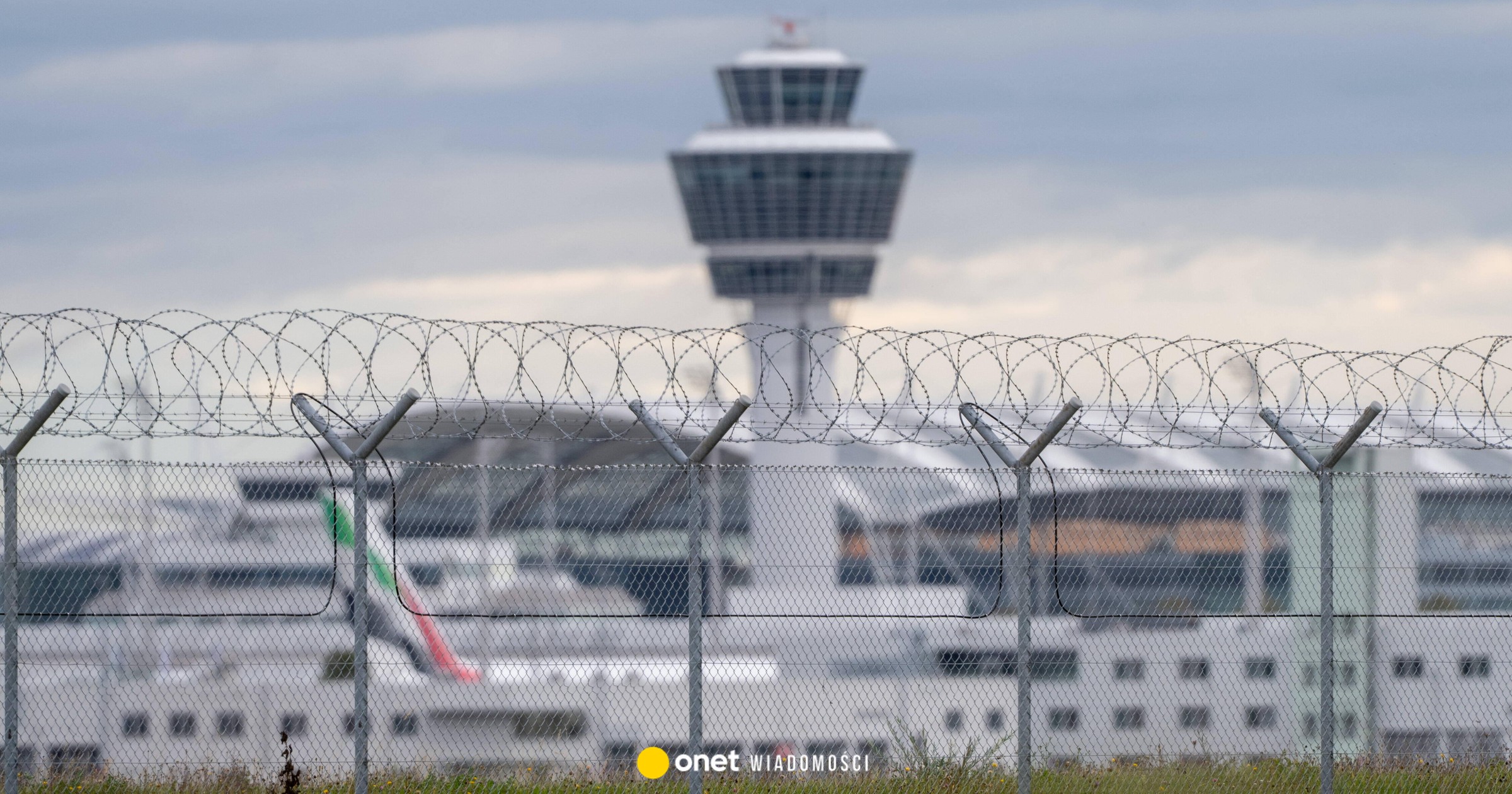
This week, Parliament is preparing a resolution sounding the alarm about “Russian agents” using drones to disrupt air traffic.
However, airport authorities say that drones are nothing new and the number of incidents has been increasing for years. Although Russia is suspected to be behind many of these events, it is very difficult to prove this. In some cases – such as the flight of Russian combat drones over Poland and Romania – the Kremlin's traces are easy to detect. However, many recent incidents are much less obvious. So who could be behind them?
The head of a defense company producing missiles in Belgium has reported a disturbing increase in the number of drone sightings. Unmanned aircraft of unknown origin caused the closure of airports in Denmark, Norway and Germany.
— One incident may be a coincidence. Two – coincidence. But three, five, ten? This is a deliberate and targeted gray zone campaign against Europe. Europe must respond to this, said Von der Leyen.

President of the European Commission Ursula von der Leyen (W) speaking during the debate on “A united response to Russia's violations of EU airspace and infrastructure” at the European Parliament in Strasbourg, France, 8 October 2025.PAP/EPA/CHRISTOPHE PETIT TESSON / PAP
Nothing new
Drone incursions over airports are not uncommon.
— Clashes with drones have been taking place for several years and have become more frequent in the EU [Europejskiej]when imports of smaller consumer drones surged around 2010 – says Sander Starreveld, director of the consulting company SIG Aviation.
According to data published by the European Aviation Safety Agency (EASA) in 2021, the number of incidents involving drones in European aviation increased from around 500 per year in 2015 to almost 2,000 in 2019. EASA was unable to provide more up-to-date data.
Collecting information is not easy.
“Air traffic control systems are typically unable to detect small drones because traditional radars are optimized for large aircraft with large reflective surfaces, rather than lightweight carbon fiber devices,” explains Frederic Deleau, vice president for Europe of the International Federation of Air Traffic Controllers Associations. – As a result small unmanned aerial vehicles are often not detected by radar or are confused with birds or other objects.
“To fill this gap, several airports have deployed specialized drone detection technologies, including radars, radio frequency scanners, electro-optical cameras and acoustic sensors,” adds Deleau.
However, this may not be enough to identify all drones. “No technology yet provides complete and reliable detection,” he said.
From “pilots” to criminals
Not all drones have ties to Moscow — although in some cases they may.
In the past, these were often people using drones for recreational purposes.
“Until recently, the main problem was that the average drone operator often did not know where drones could be flown and where they could not,” says Starreveld.
— All you have to do is buy a drone and the average user suddenly calls himself a “pilot” among friends and family,” he adds. — Curiosity and carelessness [nieraz] have led to interactions between drones and commercial aircraft.
As the threat became obvious, European regulators established new requirements and awareness campaigns to prevent unauthorized drone flights near runways and critical infrastructure. Manufacturers have also introduced software restrictions to prevent drones from flying near airports.
With these precautions, the drone problem should decrease, which is why Starreveld is very concerned about the recent increase in sightings [UAV] near airports.
“What's new about the recent incidents is that drones are apparently being used intentionally to disrupt air traffic,” he says. — For airline pilots, that thought alone puts recent drone encounters into an entirely different and deeply disturbing category: criminally intent.
When drones hit planes
Drones pose a serious security problem.
JACDEC, a commercial aviation safety analysis firm, has recorded 25 incidents of aircraft-drone collisions around the world over the past decade – none of which resulted in fatalities.
— Drone activity in civilian airspace is dangerous. Regardless of whether it was an intentional action or not – says Jan-Arwed Richter, CEO of JACDEC.
— Airplanes are designed to withstand collisions with smaller objects such as seagulls, pigeons or hail. However, modern professional drones can be much larger, heavier and contain a lot of heavy metals, for example in their batteries, he adds.
In the event of a collision, “these objects could cause engine failure or punch a hole in the wing due to the high impact force resulting from the high speed at which the commercial aircraft flies.”
The article continues below the video
Impact on air transport
The mere presence of drones is enough to impact air transport as airports will restrict flights for safety reasons.
“Drone incidents, wherever and whenever they occur, undoubtedly impact both airports and airlines, disrupting the passenger experience and imposing unforeseen costs on the sector,” says Ourania Georgoutsakou, managing director of the Airlines for Europe lobby.
Because drones are small and difficult to detect, some of these incidents are very difficult to verify. This was the case in December 2018, when London's Gatwick Airport experienced a 33-hour disruption caused by numerous drone sightings that were never confirmed or photographed.
Between July and September 2024 alone, SkeyDrone, which monitors Brussels airport's airspace, detected 180 unauthorized drones near the runways and 84 in the more sensitive “red zone.” However, none of these incidents caused any disruption to air traffic.
Munich Airport had to close on the night of October 2 after several drones were spotted, causing 17 cancellations and 15 flight diversions. German air traffic control company DFS told POLITICO that there were eight other incidents of drone incursions at the airport in the first nine months of 2025.
— Not every appearance of a drone automatically poses a serious security threat, says Jan-Christoph Oetjen, a German MEP from Renew Europe. — This topic has been discussed for some time and has gained importance due to geopolitical tensions, he adds.