“Keep cash at home, in small banknotes,” recommends the European Central Bank. How much cash should each family have in the event of a crisis situation


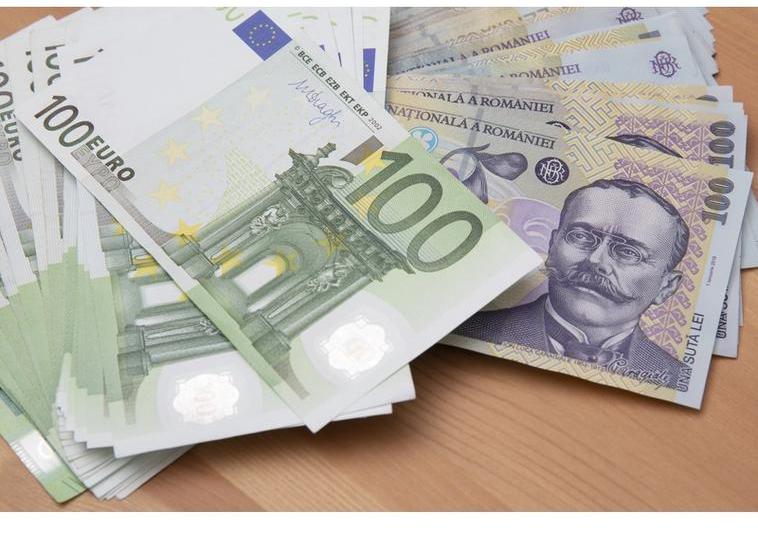
Euro-le-Bani, photo: Dreamstime
A new study by the European Central Bank, which analyzed four major events that disturbed Europe, including Russia's pandemic and invasion in Ukraine in 2022, shows that people should keep cash at home to deal with crisis situations.
The demand for banknotes has grown in Europe for each of these crises, it is shown in the document entitled “Keep Calry and Carry Cash” (“Keep your calm and hold cash in you”), where it is also stated that physical currency has “a distinct psychological and practical utility,” according to CNN.
The findings support the increasing recognition among the authorities that the cash is “an essential component of the national training for crisis situations,” the researchers write.
Between 70 and 100 euros per person or enough for a week of essential expenses
For example, the authorities in the Netherlands, Austria and Finland recommend households to keep at home between about 70 and 100 euros per person, sufficient to cover the basic needs of about 72 hours.
In Sweden, the recommendation is for each household to keep enough cash to cover expenses such as food, medicines and fuel for at least a week. “Calculate the total cost of these products for a week for your family. Keep cash, in small banknotes, to make payments if digital payment methods do not work,” the official recommendations shows.
The study of the European Central Bank shows that, in times of acute stress, the population perceives the liquid money as a safe way to keep the value and a resistant means of payment. Such an episode took place in April, when a massive current wedge affected Spain and Portugal, blocking the payment terminals and forcing many stores to accept only cash.
“The cash offers an essential redundancy – a 'spare wheel' – for the payment system,” the study authors write. “This redundancy is vital to any system, because no system is infallible.”
The unprecedented pandemic of Covid-19 has led to the accumulation of cash by Europeans for long periods, determined by persistent uncertainty, including related to their future income, notes researchers.
Meanwhile, the widespread invasion of Ukraine by Russia has triggered an increase in cash demand, concentrated in countries that are bordering either with Ukraine or with Russia. This suggests that “people have reacted to the increased proximity to potential disturbances by accumulating portable liquidity,” the researchers write.
Ensuring that Europeans are prepared for possible crises, such as war, has been a priority for authorities in recent years.
In March, the European Commission issued a set of recommendations asking the citizens of the European Union to make food reserves and other essentials sufficient to survive at least 72 hours in case of crisis. The 18 -page document shows that Europe is facing a new, darker reality, invoking the Ukraine war, the sabotage of critical infrastructure and the electronic war as the main factors.
And last year, Sweden and Finland updated the guides for citizens on survival in case of war. The brochures distributed to the citizens also included instructions on how to prepare for communications, power feathers and extreme weather phenomena. The recommendations varied from storing bottled water and hygiene products, to the cultivation of edible foods at home.
Photo: Dreamstime.com