China Passes Trump Tariffs, But Effects of Iran Conflict Appear: 'Please Help Us, We're Working Nonstop'

China has weathered the pressure of trade tariffs imposed by Donald Trump from February 2025, reporting economic growth of 5%. But Beijing is now facing new obstacles because of the conflict in the Middle East, according to the BBC.
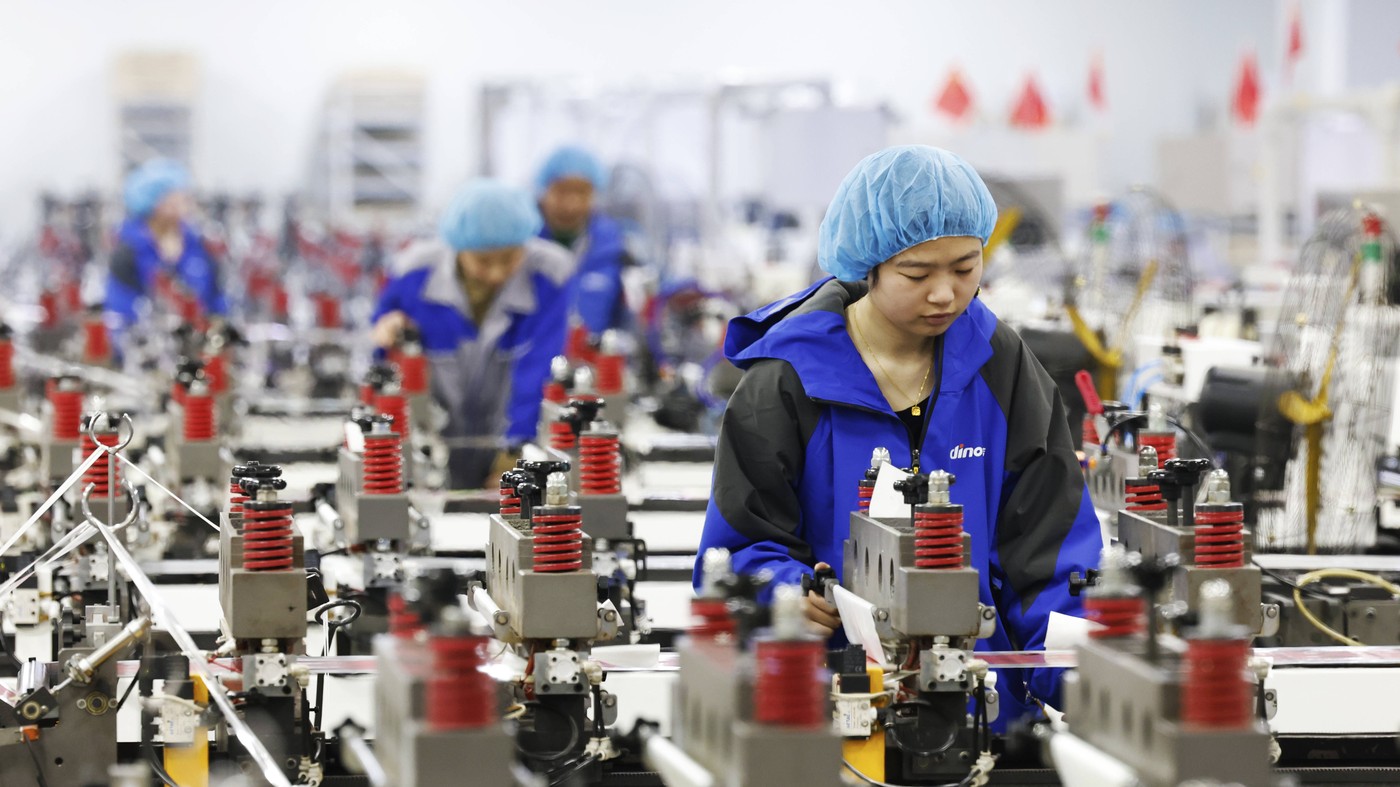
This conflict is putting pressure on factory orders, costs and jobs, and worker discontent is growing. “No one understands what our life is like,” says one man. Another asks for the help of the journalist of the British publication: “We work non-stop and have no personal life. Please help us.”
Workers appear desperate, struggling to earn enough to send money home as they grapple with massive changes in China's manufacturing industry, from cheap, mass-produced goods to advanced automated technology, the BBC writes.
In Foshan, Guangdong province, job offers are displayed in red letters: a few weeks molding plastic or assembling phones for 18-20 yuan an hour, which is about 2.30-2.50 euros. “I will try to find work elsewhere,” says a worker in his 40s, frustrated by the new period of uncertainty.
The labor market situation prompted Beijing to formally call for an end to the war.
Oil reserves and a leading position in renewable energies have shielded China from the worst effects of the energy crisis. However, the blockade of the Strait of Hormuz, a crucial sea route, worsens the situation for the Chinese economy, which is heavily dependent on exports.
“Costs have gone up by about 20 percent,” says a shopkeeper in Guangzhou as she coordinates the movement of rolls of fabric destined for global retailers such as Zara, Shein or Temu. Guangzhou, an hour's drive from Foshan, is home to the world's largest fabric market.
Here, the streets are blocked by trucks and motorbikes loaded with nylon, polyester and silk. Although the shops are hard to distinguish among the piles of goods, each owner has a similar story: their business depends on a constant supply of petrochemicals, and the rise in the price of oil is now severely affecting the entire sector.
“That means fewer orders,” says one trader. He says that some customers refuse to pay more, and rolls of fabric pile up in the warehouse.
Also in Guangzhou, at the Canton Fair, robots and new technologies are presented as the future of China. This is the image that Beijing wants to show to the world: a technology-oriented country, while the United States is engaged in war in the Middle East, notes the BBC.
Buyers keep coming, and the war has highlighted China's advantage in a key sector: electric vehicles (EVs). In March alone, Chinese manufacturers exported 350,000 electric vehicles, a 140 percent increase from last year, according to the China Automobile Association.
Although these vehicles are a major export to the Middle East, deliveries are now experiencing difficulties.
“Last year, 90 percent of our cars went to the Middle East, but this year we almost completely stopped doing business with them because of the war,” says Joyce Liu, a trader in the field. Some cars are still waiting stuck in Chinese ports, she adds.
Beijing “doesn't want to irritate Trump”
While the war will strengthen Beijing's continued efforts to become autonomous, China does not really emerge victorious in this scenario, says Yu Jie of London think tank Chatham House.
“Ironically, the decline of the United States is something that China hoped to see. But is this the America that China wanted? It would prefer a more predictable America that Beijing could more easily manage,” she explains.
It's a balancing exercise as Beijing “doesn't want to irritate Trump” and wants to secure the summit scheduled for May. “Beijing wants to do everything it can to secure that meeting.”
Behind the scenes, China is calling for a truce as it pushes its ally Iran to the negotiating table. And Trump seems to want the same thing. Xi also holds talks and phone calls with the crown princes of the United Arab Emirates and Saudi Arabia.
China is thus flaunting its diplomatic power, says William Figueroa, professor of history and international relations at the University of Groningen. “It wants to show both the United States and partners in the region that it takes its commitments seriously — and that has a global audience.”
It's a reminder that China is no longer just at the center of the global economy. It is increasingly at the center of global power.