Gold in the investor's portfolio. What is behind its long-term resistance to market crises?

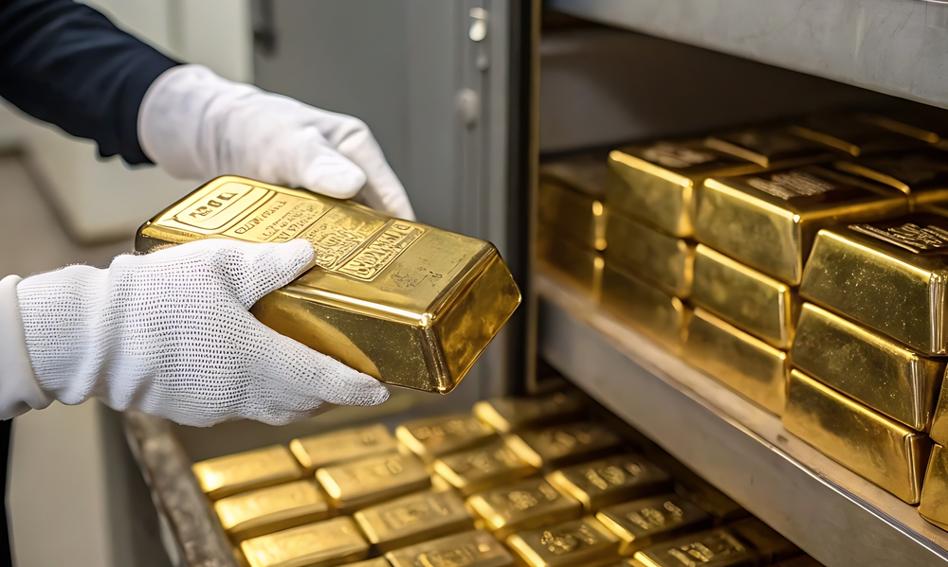
Today's financial world is based mainly on growing debt and paper money. Such a system is exposed to strong shocks that destroy our savings and reduce the value of money. In this uncertain world, gold has proven to be the ultimate asset protection for many decades.
The strength of gold is not that the price of the precious metal never falls, but that it can weather the biggest market storms and is not dependent on the promises of any government or bank. Gold is a true “safe haven” to which investors flee in times of chaos.
History shows that gold gains during crises
The modern history of gold as an investment began in 1971, when US President Richard Nixon finally separated the value of the dollar from the precious metal. From that moment on gold price increased by over 9400%. Gold moves in certain cycles – it rises most when people lose confidence in ordinary money. In the 1970s, during massive inflation and oil crises, its price skyrocketed.
Understanding gold – a new series of articles
We are starting a series of publications presenting the role, history and mechanisms governing the market of this unique precious metal. We will look at gold from many perspectives, from investment decisions, through global resources, the history of Polish gold, to purchases of the precious metal by central banks.
After two slightly weaker decades in the 1980s and 1990s, gold became extremely popular again during the great financial crisis in 2008, proving its role as anti-crisis insurance. We broke further records recentlywhen the pandemic broke out, governments massively “printed” money, and a war began in Ukraine.
Advertisement
Why does gold keep rising?
For many years, it was believed that gold lost value when banks raised interest rates (because then it was profitable to keep money in deposits or bonds). However, in 2024-2025 this rule stopped working. Despite high interest rates, cena of gold broke further records, approaching the level of $5,000 per ounce.
Why did this happen? First of all, because the debt of the United States has grown to an astronomical amount of $38 trillion in 2026. Investors stopped trusting that government bonds are completely safe and for protection they turned to physical gold. The rally in gold prices in recent months has also been fueled by geopolitics and US tariff wars.
The power of systematicity – the most important principle of investing
For gold to fulfill its insurance function well, systematic investment is extremely important. Market experts agree: it is not worth guessing when gold will be the cheapest and trying to buy it only at the “right” moment. The best way to get a good night's sleep is to buy gold on a regular basis for a fixed amount over the long term (purchase price averaging).
Gold should be part of our portfolio regardless of whether the stock markets are rising or falling. Advisors indicate that Frthe optimal share of the metal in our savings is about 5-15%. An important rule should be remembered: gold is not the main engine that is supposed to give us huge profits, but a heavy and reliable anchor that is supposed to hold us in place during the storm.
Mining costs protect against price declines
The value of gold doesn't just depend on whether people want to buy it. It also depends on the hard laws of physics and business. The costs of extracting gold from the ground are increasingly higher due to expensive electricity, rising pay for miners and strict ecological requirements. The average total cost of mining one ounce (the so-called AISC index) increased from $1,276 in 2023 to $1,375 in 2025. These costs create a natural limit on the market, below which the price of the metal rarely falls. When gold becomes too cheap on the stock exchange, mines simply stop working. They then shut down mining, there is less gold on the market, and this automatically causes its price to go up again.
When deciding to invest regularly, we can choose from several simple solutions. The safest is physical gold (e.g. coins or bars), which completely eliminates the risk of an institution's collapse, but requires a safe place to store it. Another option, great for automatic monthly purchases, are exchange-traded funds (so-called ETFs or ETCs), which are easy to sell.
The perspective of a Polish investor
For people who earn and invest in Polish zlotys, gold acts as double insurance. Usually, during global crises, the Polish currency loses value against the US dollar. Since gold is valued in dollars, the weak zloty causes the value of the precious metal in Poland to increase significantly. That's why in January 2026, the price of gold in Poland reached almost PLN 20,000 per ounce.
Today, Poles can also easily buy instruments based on the price of gold on the Warsaw Stock Exchange, where transactions are settled in Polish zloty.
Insurance without expiration date
Gold remains one of the most important pillars of wisely saving money. Large banks are optimistic about the future. According to Deutsche Bank, at the end of 2026 the price of an ounce may reach $6,000. JPMorgan goes even further and forecasts as much as $6,300 per ounce. The largest central banks in the world are also constantly in demand for gold, and the National Bank of Poland is the leader in purchases.
However, for an ordinary investor, the most important thing is not the promise of quick profits. The key to financial security in the coming years is to treat gold as insurance that has no expiration date. The necessary condition here is a cool head and systematic, consistent addition of small amounts to the golden pot. In this way, we will build lasting protection for our savings, resistant to (unwise) government ideas and stock market crises.
The publication contains affiliate links.