Japan on alert after a 7.7 earthquake: authorities warn of the risk of another major earthquake

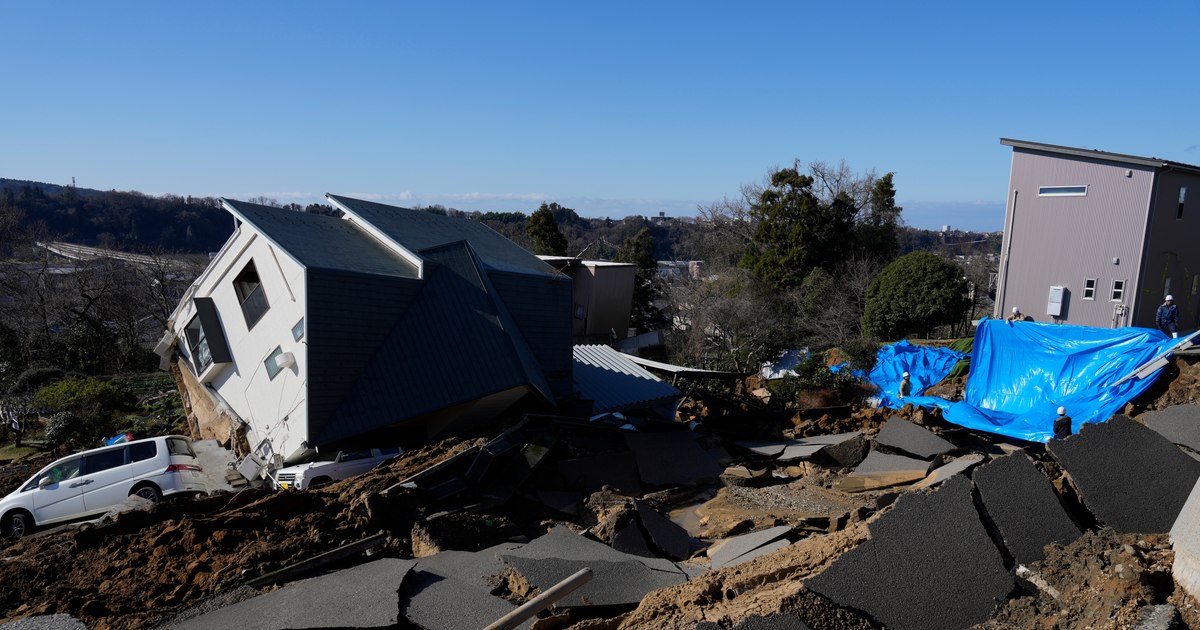
Authorities in Japan are warning that there is an increased risk of a “major” earthquake in the next week after a 7.7-magnitude earthquake struck off the northeast coast on Monday, April 20, triggering evacuation orders and tsunami warnings of up to three meters.
The Japanese authorities are expecting a mega earthquake/PHOTO: EPA/EFE
Thousands of people were urged to leave coastal areas and move to higher ground after the quake struck near Iwate Prefecture, about 530 km north of Tokyo.
The largest recorded tsunami waves were about 80 cm. The warnings were lifted a few hours after the earthquake struck on Monday.
However, the Japan Meteorological Agency said that in the coming days there could be more earthquakes, possibly with greater intensity and capable of generating stronger waves. Authorities said the likelihood of a magnitude 8.0 or greater earthquake is “higher than normal.”
The memory of the 2011 earthquake and tsunami disaster in Japan remains strong among the population. More than 18,000 people lost their lives then, and the failure of the Fukushima Daiichi Nuclear Power Plant caused one of the worst nuclear accidents in history.
Monday's quake, which struck at a depth of about 10 km, prompted new warnings to be issued for residents in areas near the epicenter, including the main island of Honshu and the northern region of Hokkaido. The earthquake was felt as far away as Tokyo.
In Hokkaido, tsunami warnings remained in effect for several hours after the earthquake struck at 16:52 local time.
“As soon as we heard the alert, everyone rushed down”Chaw Su Thwe, a Myanmar national living in Hokkaido, told the BBC. “This time, the shaking was relatively weak.”
She added that local authorities used loudspeakers to warn the population and call for vigilance, and employees were allowed to leave work early.
Chief Cabinet Secretary Minoru Kihara said several high-speed trains were affected and about 100 homes were without power. No major damage or casualties were reported.
Train traffic was resumed during the evening. In total, more than 170,000 people in several prefectures were ordered to evacuate after tsunami warnings were issued on the east coast.
The warning issued was the second highest alert level, with the population being advised to stay away from coastal areas and riverbanks and take shelter in safe places.
“Tsunami waves may strike repeatedly. Do not leave safe areas until the warning is lifted“, the Meteorological Agency sent, a call also supported by Prime Minister Sanae Takaichi, who asked the population to move to “higher and safer places”. Later, the warning was downgraded to alert level and, before midnight, it was lifted completely.
Located on the Pacific Ring of Fire, Japan is one of the most earthquake-prone countries, recording about 1,500 earthquakes annually and accounting for about 10% of earthquakes of magnitude 6.0 or greater globally.
In March 2011, the country was hit by a 9.0 magnitude earthquake, the strongest ever recorded in Japan, which triggered a devastating tsunami and the Fukushima nuclear crisis. Since then, the authorities quickly issue warnings and advise the population to move to high areas in such situations.