Alexandra Căpitănescu, Romania's representative at Eurovision 2026, about the song that caused controversy: “It's a personal manifesto”

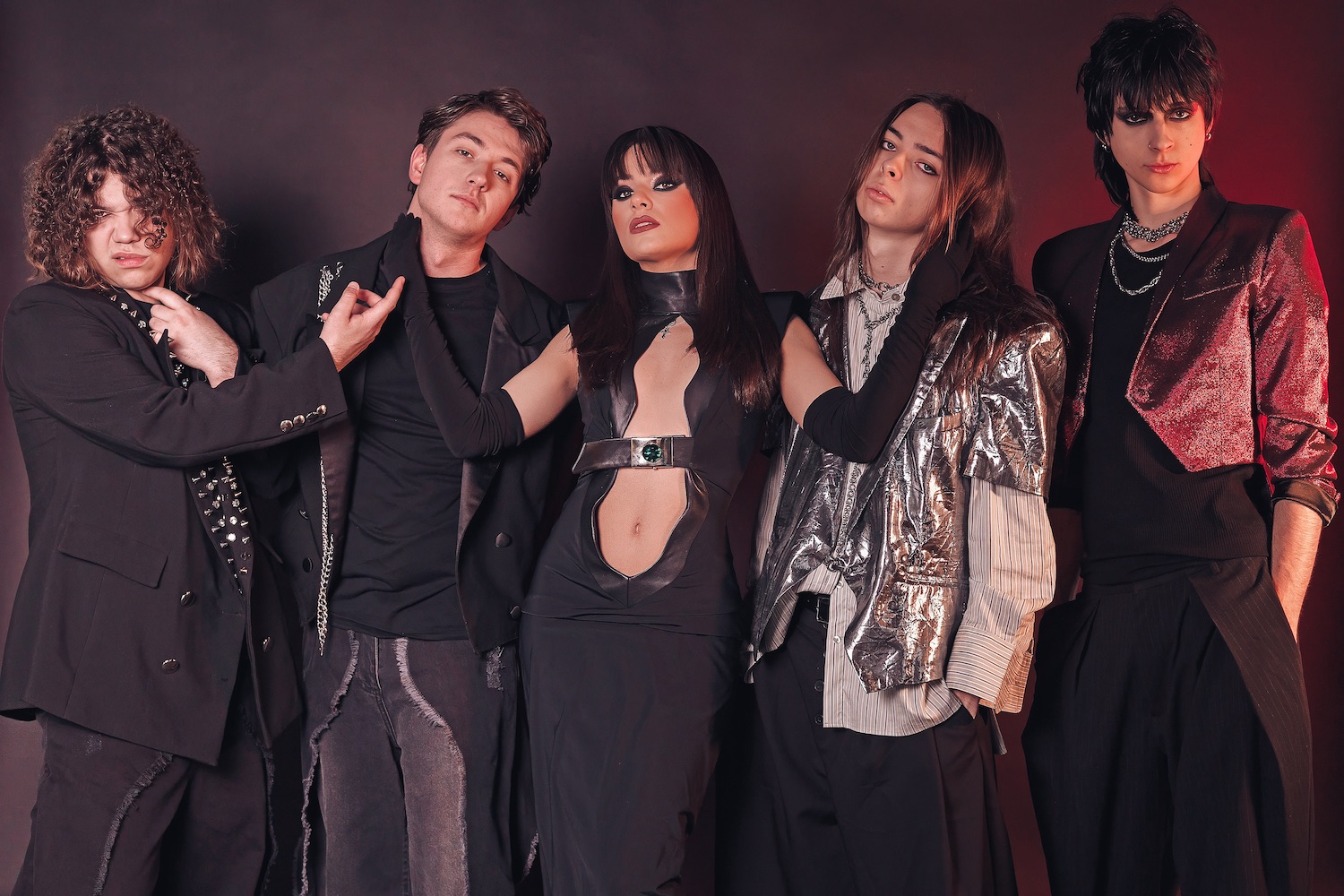
Just a few years after winning the “Vocea României” competition show, Alexandra Căpitănescu, the 22-year-old artist from Galați, went from the status of a vocal revelation to an artistic project in full definition. In a discussion with HotNews, the representative of Romania at Eurovision 2026 says about her song, “Choke Me”, which has caused so much controversy, that it is “a personal manifesto”. “It's a very honest story, about the fragile balance between falling and coming back,” says Alexandra Căpitănescu.
From the first single released immediately after the show, “Căpitanu”, to the EP of the same name, from the tribute tour dedicated to Laura Stoica (with which she was compared) to the collaboration with the band VAMA, Alexandra Căpitănescu's journey was not rushed, but rather carefully constructed, with each moment and step adding not only visibility, but also substance.
Winning the Eurovision Romania 2026 competition and the release of the song “Choke Me” thus marks more than a moment of competition, it is the point where all these stages start to connect. Together with her band, Alexandra proposes a sound that is a mixture of pop, rock and experimental accents, but also a concept that relies on emotion and authenticity.
“A Personal Manifesto”
About the song “Choke Me”, with which she won the national competition for Eurovision in March, the artist said that it is a personal manifesto. The play explores the inner struggle with personal fears and limits:
“It is both the song with which we participate in Eurovision and a declaration to our own people to let go of the fears and limitations of the past. Fears are represented by the ghost voice, which, although it is not seen, makes its presence felt in our minds. The conclusion is strong and says in the chorus that only love can break the circle of these fears and fears.” It is worth noting that on Spotify, the song “Choke Me” has already exceeded 1 million streams.
Alexandra told HotNews about what the transition from Voice of Romania to Eurovision means to her, what it's like to represent Romania at such an event, what we should expect, and what comes after.
About her transformation after winning the Voice of Romania contest, when she was only 19 years old, Alexandra says that it was, above all, an internal one.
“After Vocea României, I started to really discover myself, not only as a voice, but as an artist, as a person. I understood more clearly what I want to convey through my music and what kind of emotions I want to reach people. If then I felt that I had to prove that I could sing, now I feel that my goal is to tell authentic stories, in which people can find themselves. I have grown a lot, both vocally and emotionally, and I have learned enormously from all the people on whom I met along the way”, says Alexandra.
She also indicates that the biggest difference between Alexandra from Vocea României and the one from Eurovision is courage, not in the spectacular, effect sense, but in the less instagrammable version, of assumption.
“Then I had a lot of emotions and, in a way, I was looking for validation, I wanted to know that I was good enough. Now I feel that I know myself much better and that I have more confidence in myself. I go on stage assuming who I am, without feeling the need to be anything other than what I naturally am,” admits Alexandra.
“There was never any intention to suggest any sexual practice”
It's also felt in his song for the Eurovision Song Contest 2026, “Choke Me”, a title that, in itself, makes no effort to be comfortable and which has already provoked reactions in the international press because it “seems to glorify sexual strangulation”. Alexandra explained that she respects any opinion and that she knows she has a responsibility to the fans, but that the message and lyrics of the song are a metaphor for the pressure we sometimes put on ourselves and that we feel is suffocating us. “There was never any intention to suggest any sexual practice.”
It's an intense song, with a rock edge and an emotional tension that doesn't try to be “pleasant” in the classic Eurovision sense, and Alexandra also explained that the lyrics are about being able to control those anxieties and emotions that sometimes feel like they're suffocating you.
“It's a play about fighting yourself; those moments when you feel like your own thoughts become the biggest obstacle. It's about vulnerability, but also about the power to pick yourself up when it seems the hardest. It's a very honest story, about the fragile balance between falling and getting back up.”
The message, Alexandra admits, is as “autobiographical” as possible: “It's very autobiographical. I don't think I could have interpreted it any other way. Every line comes from a real emotion, from experiences I've been through. I think it's this sincerity that makes the song so powerful for me,” she confesses.
“I focus on the music, not the fear”
Returning to the way a contest like Eurovision can leave its mark on an artist's career, Alexandra says that she knows that it is an experience that can change her professionally, in one direction or another.
“Yes, without a doubt. Even the training period challenges you to rise to another level. Everything is much more intense, from rehearsals to creative decisions to international exposure. It's a lot of pressure, but at the same time an incredible opportunity. I already feel myself developing, becoming more disciplined and aware of every detail.”
Speaking of the pressure I was talking about earlier, which can lead to that suffocating feeling, I ask Alexandra how she manages the anxiety that can arise from the thought that, at just 22 years old, you are going to represent your country on one of the biggest music stages in Europe.
“I think about it often and it's a very strong feeling. Sometimes it can be overwhelming, but it's also extremely beautiful. I feel a great responsibility, but at the same time, an enormous pride that I can represent Romania on such an important stage,” Alexandra says, then continues.
“The pressure is there, for sure, and it's quite a lot. But I try not to look at it as something negative. I turn it into energy and motivation. I focus on the moment, the music and the message I want to convey, not the fear. I think when you stay connected to what you're doing, pressure turns into strength.”
The Internet and social media, inevitably, come together with a competition like Eurovsion and this work translates into comments, reactions, analysis, verdict in real time, bets. And these can be, and most of the time are, overwhelming.
“I still read comments, but I try to keep a balance. I think it's important to be connected to the public, but at the same time not to let yourself be defined by the opinions of others. I try to take what is constructive and leave out the negative things, but aggressively negative,” says Alexandra.
What helps, in all this context, is that he does not enter the competition completely unprepared. The experience at Vocea României is not just a mention in the CV, but a kind of simulation, on a smaller scale, of what the pressure of a big moment means.
“I learned to manage my emotions and to be present on stage. The final at Vocea României was definitely the key moment. Then I really felt for the first time what the pressure of a big stage and the responsibility of an important moment means.”
Collaboration with Tudor Chirilă
With the mentor/coach from Vocea României, Alexandra released the song “Butterflies in Stomach” together. On YouTube, the collaboration with VAMA has so far collected 745 thousand views.
“It matters a lot to me. His (no. Tudor Chirilă)'s advice is still extremely valuable and helps me stay balanced,” says Alexandra.
Otherwise, her speech about the competition is surprisingly non-aggressive. There is no “I want to win at all costs”, not even on a declarative level when I ask her how she compares to the other powerful artists in the region. “With much respect. Each artist comes with their own story.” It's either very well-calibrated diplomacy or a real perspective, but the truth is probably somewhere in the middle, as is usually the case.
On the less musical side of Eurovision, the geopolitical one, the answer is almost idealistic: “Music should be stronger than anything else. After all, that should be the goal: to connect people.” It may not always be true in practice, but at least it's a position that doesn't unnecessarily turn this experience into something cynical.
Alexandra also reveals that she and her team are working on a stronger concept, both visually and emotionally, to support and amplify the song's message. About the visual concept that will be transposed on stage, he says that it is of major importance:
“It's hugely important. At Eurovision, it's all about impact, not just aurally, but also visually. I want us to build a world on stage that reflects the inner struggle in the piece, so that the audience feels the message on a deeper level.” She also indicates that she is very involved in the decisions made for that moment. “I'm very involved. It's essential for me to find myself in everything that happens on stage.”
Authenticity and a clear vision are the things Romania should approach differently at Eurovision, Alexandra believes, but also a promotion strategy to bring the song to as many European audiences as possible and make it known.
In the end, perhaps the most relevant detail has nothing to do with the play, the scenography, or the strategy. It depends on how Alexandra Căpitănescu defines her success in this competition. “To go as far as I can and be proud of my moment.” And, above all: “To feel that I gave my best, regardless of the result.”
Romania, “possible surprise at Eurovision”
Ecstoday.com, an independent news site dedicated entirely to the Eurovision Song Contest, wrote on April 8 that Romania is considered a possible surprise at Eurovision 2026. Our country quickly climbed the bookmakers' rankings after the election of Alexandra Căpitănescu, attracting a large volume of support from the public and being seen as a “dark horse” capable of fighting for first place, even if Finland remains the main favorite.