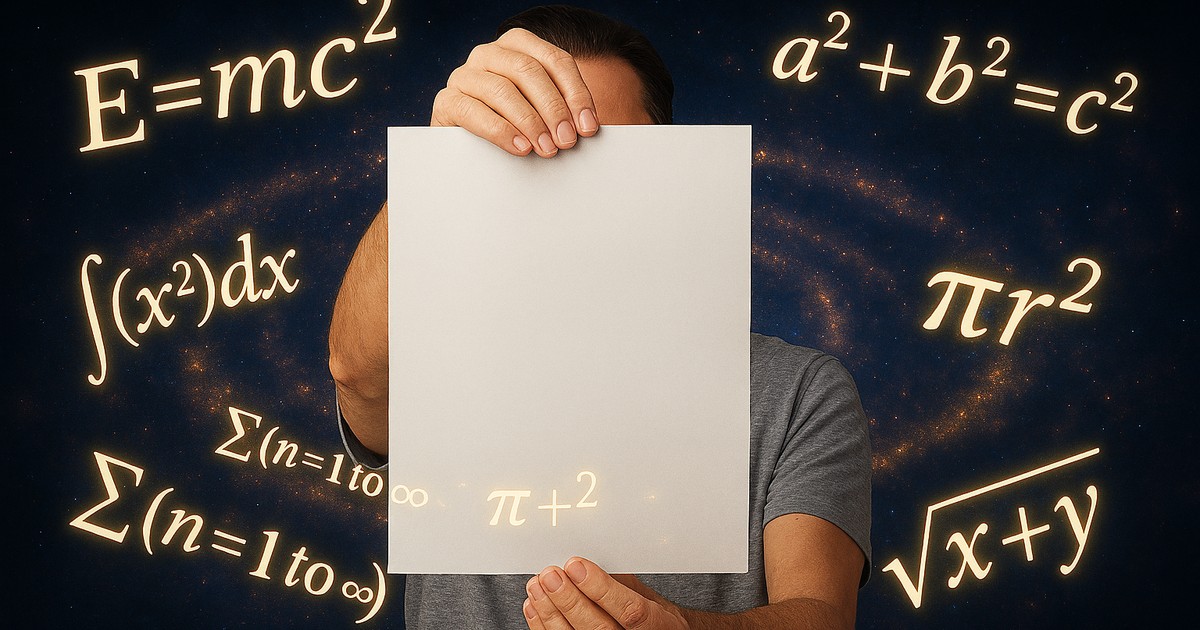
The A4 format is not a coincidence. This is a proportion that does not change, based on an area of 1 square meter. It is – literally – mathematical perfection that has conquered almost the entire world… and to this day distinguishes us from Americans. You may never look at a piece of paper the same again.
In today's world, standardization is the key to convenience and efficiency. Imagine the chaos if each electrical socket had a different shape – it would then be impossible to connect a charger to your phone in any country. Fortunately, in most of the world we have the same electricity, the same USB-C ports in new devices, the same Wi-Fi and Bluetooth protocols that allow smartphones, laptops and headphones to communicate without any problems.
- Read also: In Silicon Valley they print books like they did 150 years ago. One costs up to 10,000. hole.
This need for uniformity goes deep into history – from length measures to screw threads to document formats. One of the most brilliant examples of such standardization is the A paper format system, especially the most popular A4 sheet of paper – a simple, yet mathematically elegant invention that makes the lives of billions of people around the world easier.
A short history of A4
The need to standardize paper sizes arose with the development of printing and bureaucracy. Before the 19th century, formats were chaotic – they varied depending on the region, manufacturer and destination, which greatly complicated printing, storage and transportation. The first mathematically consistent proposal appeared at the end of the 18th century. In 1786, the German physicist Georg Christoph Lichtenberg suggested side proportions based on the ratio 1 : √2. Thanks to this, when the sheet was cut in half, it retained exactly the same shape (proportions). The idea was revolutionary, but it had to wait a long time for practical implementation.
Most documents today are in A4 format
|
Korawat photo shoot / Shutterstock
At the beginning of the 20th century, in 1922, German engineer Walter Porstmann developed Lichtenberg's concept into a complete, logical system. While working at the Normenausschuss der deutschen Industrie (the predecessor of today's DIN), he introduced the DIN 476 standard, in which A0 became the basic format. The system quickly gained popularity in Europe, and after World War II it began to conquer other continents. In 1975, the International Organization for Standardization (ISO) adopted it as the global standard ISO 216, covering the A, B and C series.
- Read also: The paper towel trick is taking the internet by storm. “I wish I had known him before”
Today, ISO 216 formats are used in almost every country in the world – throughout Europe, most of Asia, Africa, Australia and Latin America. The main exceptions are the US, which stubbornly sticks to its own system (Letter, Legal, Tabloid, etc.), and Canada, which, under US influence, uses a mix of formats. In some countries, such as Mexico, Colombia and the Philippines, ISO 216 is officially adopted, but in practice American sizes are still often found there – mainly due to close trade ties with the United States. This global (almost) adoption shows how much standardization makes international trade, printing and logistics easier – one A4 sheet of paper fits into printers, envelopes and binders virtually everywhere outside North America.
Mathematical elegance – why it's so brilliant
What makes system A so unique is the constant side ratio ≈ 1 : 1.414 (or exactly 1 : √2). Thanks to it, each format maintains identical proportions regardless of how many times we divide the sheet in half. The area of each subsequent sheet of paper is exactly half of the previous one, and the shape remains unchanged – a feature that no other popular proportion system has.
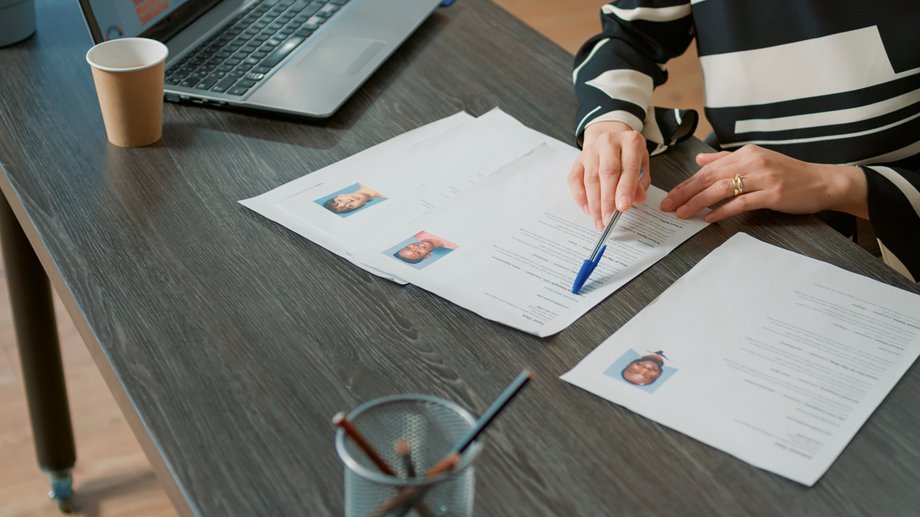
A4 surrounds us on all sides
|
DC Studio / Shutterstock
The basic A0 format has an area of exactly (or almost exactly) 1 m2. Its dimensions are 841 by 1189 mm – these numbers seem random, but their product gives ≈ 1 m2. After four divisions we get A4 with dimensions 210 × 297 mm and an area of exactly 1/16 sq m (0.0625 sq m). Each number in the name indicates the number of times the base A0 sheet has been divided in half:
- A1 (1 fold) = 1/2 area A0
- A2 (2 folds) = 1/4 of the area of A0
- A3 (3 folds) = 1/8 of the area of A0
and so on…
Mathematically, the format area can be calculated by the formula Aₙ = 1/2ⁿ sq m.
For A4 we have n = 4 → 1/16 = 0.0625 sq m with dimensions of 210 by 297 mm.
Beautiful, right? Walter Porstmann managed to achieve a difficult feat: combining the metric system of measurements with the “immeasurable” square root of two. That's why the phrases “about” and “approximately” are used so often – perfect accuracy is mathematically impossible, but differences of fractions of a millimeter don't bother anyone at all.
- Read also: Which side should the baking tray be placed in the oven? Most of us make a mistake
Why √2?
- Let the longer side = a, the shorter side = b.
- Cut/fold the card along the longer side:
- the new longer side is now twice the shorter side of the smaller piece of paper = 2b
- new shorter side = a
- So that the proportions remain the same: a / b = 2b / a
After transformations:
Only this proportion guarantees that the shape remains unchanged after each division. Other popular aspect ratios (1:1, 4:3, 16:9) lead to distortions.
Not only A format
In addition to the A series, there is also the B series – it has exactly the same side proportions (√2), but different basic dimensions. B0 is based on 1m, but not square. The shorter side is exactly 1 m, and the longer side is approximately √2 m, or in this case 1414 mm. Therefore, the B formats are slightly larger than the corresponding A sizes (B4 > A4, but smaller than A3). The B series is mainly used in printing – when printing books, notebooks, posters, covers, envelopes. For example, the B5 is particularly appreciated – it offers more space than the A5, and is more handy and fits better in children's hands and backpacks than the A4.
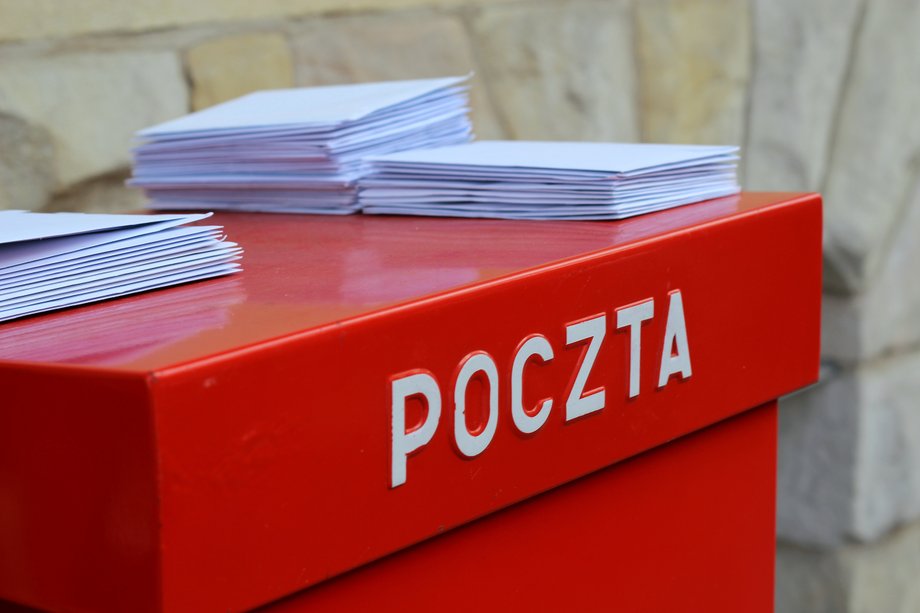
Envelopes break out of the A format and use… several others. B, C, and also… DL.
|
jstankiewiczwitek / Getty Images
There are also C series (mainly envelopes), D and others, but this is a topic for a separate article.
An ordinary A4 sheet of paper for a printer turns out to be not an ordinary piece of paper. This is proof of how the beauty of numbers and centuries of scientific development can improve everyday life in the simplest way. Because even the most ordinary thing that we hold in our hands every day can be based on deep mathematics and hundreds of years of human thinking.