The war with Iran affects the US position on several global fronts, US embassies report to Washington

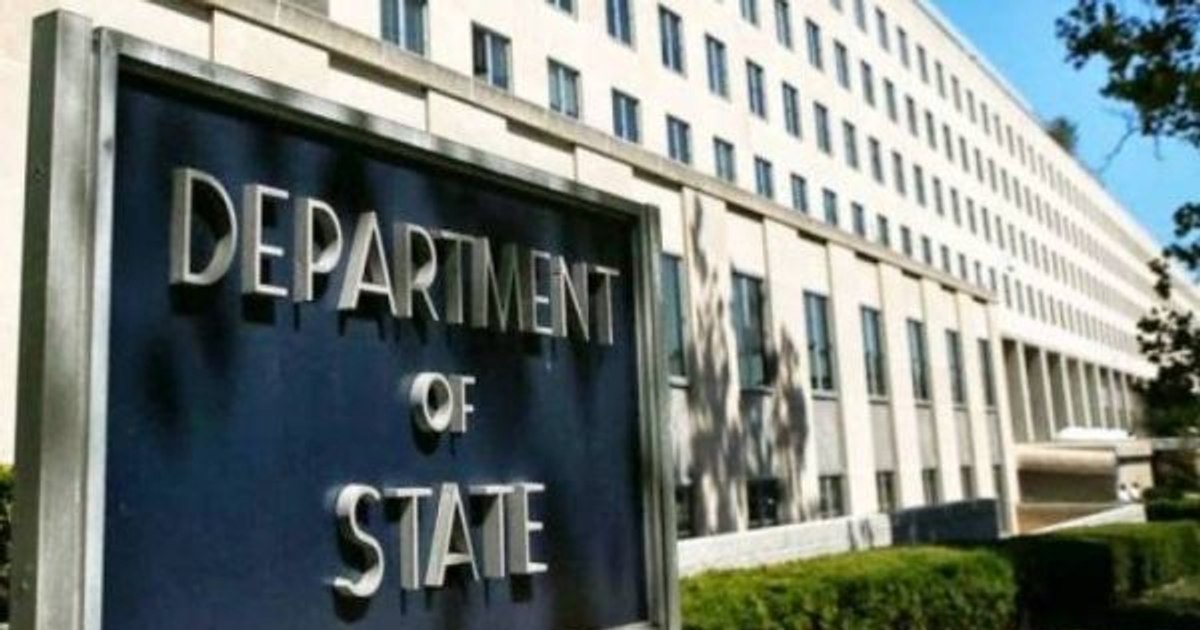
A set of US State Department diplomatic cables obtained by Politico indicates that the war with Iran is beginning to affect the United States' international relations and erode the country's image, particularly among Muslim populations.
US DEPARTMENT OF STATE/PHOTO:X
The documents, dated Wednesday, April 15, describe the impact of the conflict on Washington's position in three states in different regions: Bahrain, Azerbaijan and Indonesia.
American diplomats in embassies in these countries paint the picture of an America under pressure in the media space, where pro-Iranian messages are gaining ground, especially in the digital environment.
In Azerbaijan, relations that seemed to be improving have stagnated or even deteriorated. In Bahrain, authorities are facing questions about the U.S. commitment to the kingdom's security. In Indonesia, political leaders may be under domestic pressure to reduce security cooperation with Washington.
Some cables describe immediate effects, such as increased anti-American sentiment, while others warn that bilateral relations could be damaged in the long term if the conflict continues.
Overall, the documents suggest a decline in trust both among the population and potentially at the government level.
US messages, outdated in the digital space
The telegrams include indirect calls to the US administration to allow embassies to react more quickly and flexibly online.
The US Embassy in Jakarta emphasizes the need for “fast and proactive” communication on social media to face competition in a crowded information space.
Currently, however, American diplomatic missions have restrictions on public communication, being limited mainly to the redistribution of official messages approved by the White House or the State Department.
The sending of these telegrams is, in itself, considered an alarm signal, in the context in which, according to some quoted diplomats, there is reluctance to express such concerns in the current political climate.
In contrast, Iran makes heavy use of digital tools—from social media and memes to influence networks in the religious and cultural spheres—to promote its messages and undermine the image of the US.
Bahrain: Questions over US commitment
In Bahrain, a traditional US ally and home to the US Navy's Fifth Fleet, the public perception is that Washington has prioritized protecting Israel over the kingdom's security.
Unprecedented mobilization in Iran: 26 million volunteers reportedly signed up for the army through the “Donate Your Life” campaign
Messages shared on social media suggest that the US military presence would make Bahrain a target and call for the withdrawal of US troops.
US diplomats note that a lack of effective US communication has allowed these perceptions to be amplified, fueled by Iranian propaganda and incomplete media reporting.
Also, the local press emphasized the actions of the Bahraini army in intercepting the attacks, without highlighting American support, which contributed to diminishing the visibility of the US role.
Azerbaijan: relations in decline
In Azerbaijan, the conflict risks undermining the progress made in bilateral relations after the 2025 peace summit between Azerbaijan and Armenia.
After an initial period of neutrality, local media became more critical of the US and Israel, accusing them of starting the conflict and lacking a clear strategy.
Although the recent ceasefire has partially tempered the tone, public opinion remains predominantly critical amid rising prices and regional disruptions.
However, the documents point out that this criticism has not translated into a significant increase in sympathy for Iran.
Indonesia: risk to security cooperation
In Indonesia, the country's largest Muslim-majority democracy, the cables signal a broad influence campaign by Iran.
Tehran's messages emphasize Muslim solidarity and anti-colonial themes, portraying the US and Israel as imperialist powers.
The activity of the Iranian embassy has increased significantly, including through direct interactions with political and religious elites.
US diplomats warn that if current trends continue, security cooperation between Washington and Jakarta could be affected.
The main risk identified is not necessarily the full acceptance of Iranian messages, but the amplification of anti-American sentiment to the point where Indonesian leaders would have little room for maneuver in their relationship with the US.
In this context, the US embassy calls for a more active involvement in the public space to counter these trends.
An increasingly complicated global context
Overall, the diplomatic cables paint a picture of an intense competition in the global information space, in which the US appears to be losing ground to a more nimble and adaptive strategy on the part of Iran.
The evolution of the conflict and Washington's ability to adjust its communication will be critical to maintaining its influence in these regions.