Hungary is entering the post-Orban era. Dismantling the regime may not be enough [OPINIA]

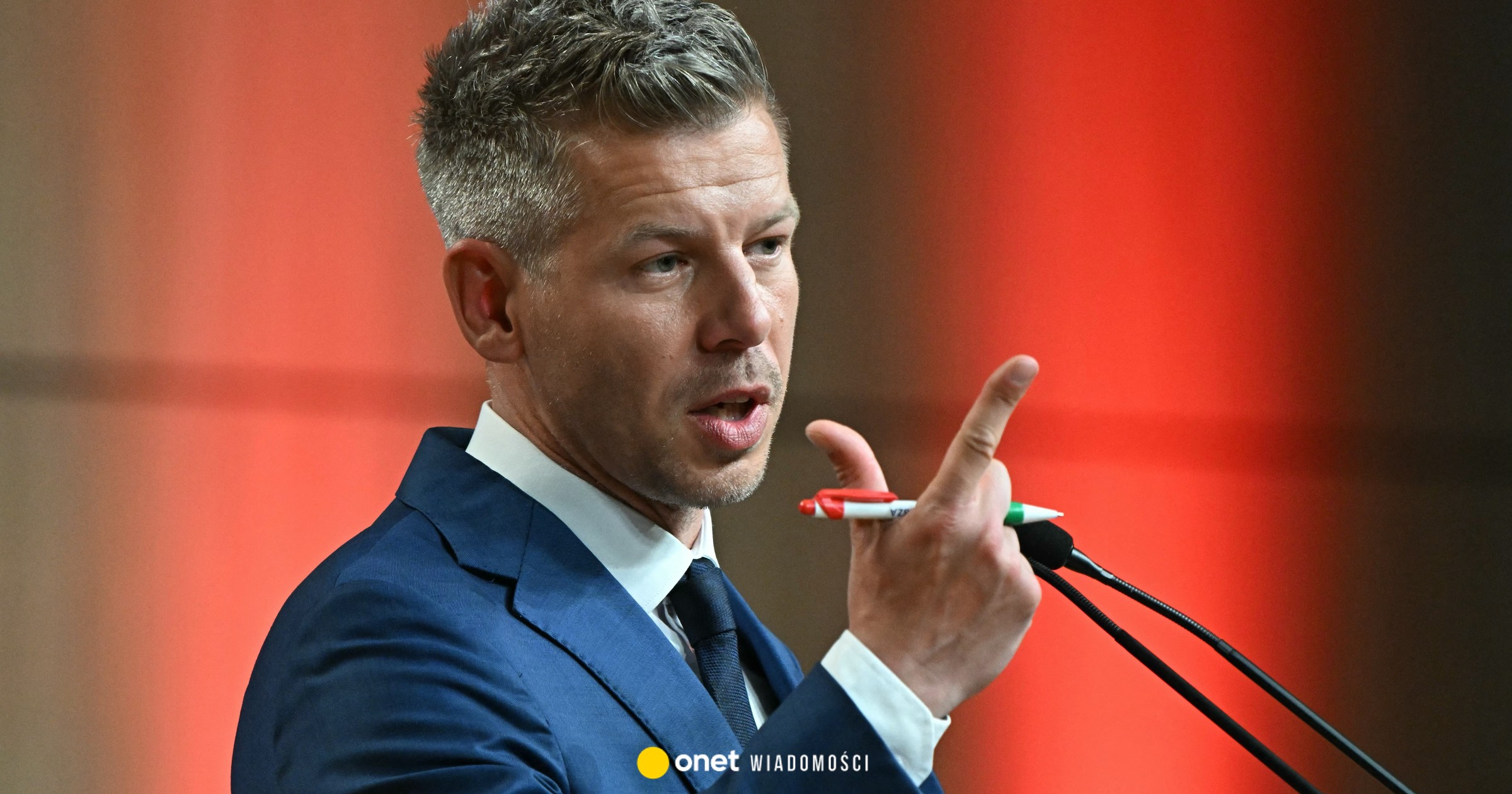
During the campaign, the winner of the Hungarian parliamentary elections, Peter Magyar, did not limit himself only to slogans regarding political changes towards Viktor Orban's government. In one of the most explosive issues, he even elevated it to the status of state security.
On another occasion, he went even further: “If this information is confirmed, it is treason punishable by life in prison.” His reaction to Szijjarto informing and helping the representative of the Russian Federation was in line with the statement of Prime Minister Donald Tusk, who described it as “absolutely disqualifying”.
France spoke of betrayal of European solidarity. Similar comments were made in other Member States. There have been calls in the European Parliament to investigate Russian interference in Hungarian affairs.
This led to the suspicion that Orbán's government is no longer just a proverbial Russian Trojan horse, but at certain moments acts as a transmission belt for Russian interests that directly penetrate the European decision-making process. It has become a security threat and an unreliable partner for the EU.
Analysts say that Szijjarto's contacts with Lavrov and Orbán's contacts with Putin caused a strong negative reaction in Hungarian society. Opposition to cooperation with Russia became one of the key factors in the crushing victory of the TISHA party.
The fact that this public anger is justified and the downplaying of the information leak by representatives of the Slovak government is not, is also proven by the explanation of the spokesman of the Russian president, Dmitry Peskov, why the Kremlin will not congratulate the results of the elections in Hungary:
“We do not congratulate hostile countries. And Hungary is a hostile country, it supports sanctions against us.” To put it bluntly, Orban and Szijjarto helped a country that considers the EU and all its member states as enemies.
An attempt to cover up the traces
Therefore, the elections in Hungary were associated with expectations that the new government would put an end not only to the practice of breaking the European consensus, but also – and above all – the disclosure of confidential information and practical assistance to Russia, which has been waging a full-scale war against Ukraine for the fifth year.
Shortly after the election, it became clear that Peter Magyar was serious about fixing the system. He pointed out that documents regarding sanctions and contacts with Russia are being destroyed in ministries – especially in the ministries of foreign affairs. He was talking about shredders running at full speed. This allegation cannot be dismissed as a mere political skirmish.
This shows that the Orban regime, after a devastating defeat, is trying to decide what will remain after it, according to the logic: who controls the documents, controls the narrative – and who controls the narrative, also controls accountability. In his speech after the elections, Peter Magyar emphasized that Hungary cannot be a country where there are no consequences.
If the suspicions about the destruction of documents are confirmed, the consequences will be more serious than the revealed telephone correspondence with Lavrov, Putin and Energy Minister Pavel Sorokin. It would no longer just be a question of obfuscating what was happening, but also whether it could even be examined retrospectively.
The system should be dismantled, not destroyed
After the elections, the tone of Magyar's statements regarding Szijjarto, who was threatened with life imprisonment, is calmer. In fact, however, it is not milder. He talks about a “change of the regime” led by an “organized criminal group”, an investigation into the abuse of power, accession to European control mechanisms and the restoration of the rule of law.
The difference with the campaign is that it no longer only talks about the guilt of individuals, but about the need breaking down the mechanisms of the functioning of the state into prime factorsthat made such proceedings possible. The accusation of destroying documents fits perfectly into this logic. This is not an episode of post-election political communication.
This is a signal that the fight is also about the state's memory and past and current control over its functioning.
Russian President Vladimir Putin with Hungarian Foreign Minister Peter Szijjarto in Moscow, March 4, 2026.Grigory SYSOYEV / POOL / AFP / AFP
If we want to understand how TISZA intends to protect Hungary from Russian influence, it is not enough to focus solely on harsh words. You have to look at what he wants to change. Its program includes anchoring in the EU and NATO, adopting the euro, joining the European Public Prosecutor's Office, restoring the institution's independence and ending energy dependence on Russia by 2035.
These are not just political slogans. This is an interference in the conditions under which Russian influence in Hungary was established. They were not based solely on Viktor Orban's personal sympathies towards Vladimir Putin, his conservative ideology and method of exercising power.
It was a system based on energy dependence, clientelism and political isolation. The first pillar tied the state economically to Russia, the second distorted the decision-making process within the state, and the third consciously separated it from the control mechanisms of the European Union. TISZA doesn't seem to be trying to tear down this system with one decision. He tries to dismantle it.
Rebuilding a country without memory
However, the most sensitive issue remains open. How deeply has the country been infiltrated by Russian influence and what does this mean for the security services? Peter Magyar has not yet announced dramatic purges or detailed reorganization of intelligence structures.
Apparently, he wants to first obtain documents, find out about the connections, and only then change institutions. However, if it turns out that some of the documentation was destroyed, this process becomes more complicated. Rebuilding a country without memory is always slower and less precise.
This is also why the accusation of destroying documents is more important than it seems at first glance. This is not just a dispute between the outgoing and incoming authorities. This is a dispute over whether it will be possible to determine exactly how Orban's system functioned, where ordinary politics ended and where security problems began.
A fundamental difference from Orban
Peter Magyar also talks about a pragmatic dialogue with Russia. Not because he doesn't see the threats, but because the country cannot be rebuilt overnight. The economy remains interconnected, energy dependencies persist and are expected to be eliminated by 2035.
The institutions, or rather their staffing, have not changed, and the state apparatus functions according to the old rules. The new government intends to follow a path of gradual dismantling of elements of Orban's regimethat pose a threat to security.
The question is not whether it is realistic. The question is whether this will be enough. However, the difference with Orban is fundamental.
While Orban has made Hungary the weak link in Europe, Magyar talks about returning to its core. While Orban relativized the Russian threat, Magyar calls it by name. While Fidesz has built broad and deep dependence on Russia, TISHA wants to weaken and eliminate them. And if it is confirmed that the Minister of Foreign Affairs passed information to Russia, the future prime minister claims that the matter should be investigated by independent bodies.
This is good news for the EU. This may be even more important for Slovakia. If the Hungarian government stops acting in favor of the Russian Federation, Slovakia will lose its closest partner in relativizing the Russian threat. This could change relations in the region more than simply replacing one prime minister with another.