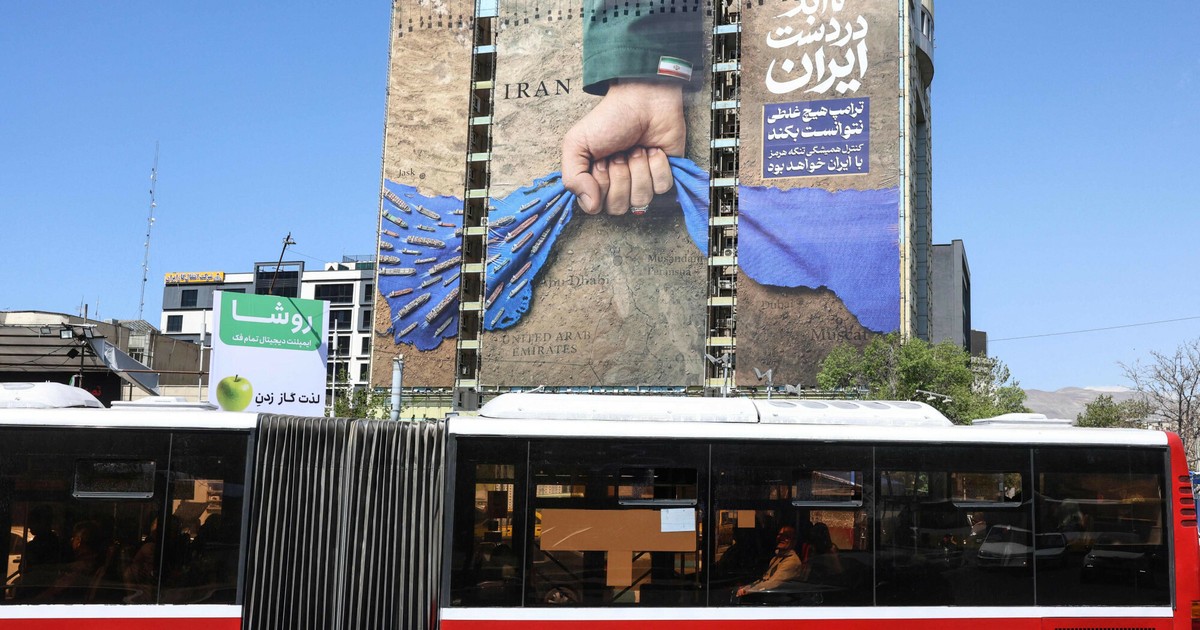
Over 90 percent Iranian maritime trade, estimated at $109.7 billion. annually, goes through the Strait of Hormuz, and Iran does not have any significant alternative trade routes – says Miada Maleki from the Foundation for Defense of Democracies, a think tank in Washington, quoted by CNBC.
Maleki estimates that the blockade costs Iran about $435 million. per day in total economic losses.
See also: Donald Trump tests Iran's pain threshold. “The USA opens a new chapter in the war”
Strait of Hormuz. What does the blockade of Iranian ports look like?
The US blockade of Iranian ports took effect on Monday during a fragile two-week ceasefire.
According to the US armed forces no ships passed through the blockade in the first 48 hours. In turn, Iranian media report that four ships passed through.
As US Central Command (CENTCOM) announced on Tuesday evening, the blockade has “completely” cut off Tehran from international maritime trade.
Middle East
|
Adam Ziemienowicz, Mateusz Krymski / PAP / photos
CENTCOM clarifies that the blockade covers Iranian ports in the Persian Gulf and Gulf of Oman, but not the strait itself, and non-Iranian transit traffic can continue.
See also: “The US and Iran want to give each other more time.” Another two weeks in the game
US blockade. Ships still sailing to Iran?
Iranian media reported that four ships passed through waters near Iran on Wednesday, traveling to and from the country despite a U.S. blockade.
According to Iran's semi-official Tasnim and Mehr news agencies, these were:
- Agios Fanourios (Greek cinematographer),
- Alicia and RHN (Chinese operator)
- Golbon container ship flying the Iranian flag
MarineTraffic data shows vessel movement – three of which entered Iranian waters while the Golbon was heading out to sea, CNN writes.
The Iranian container ship Golbon – sanctioned by the US Treasury Department's Office of Foreign Assets Control (OFAC) – “continued to operate near the Strait of Hormuz despite US threats and a US Navy blockade,” Tasnim news agency reported.
Iran cut off from maritime trade?
CENTCOM said in a Wednesday post on X that “In the first 48 hours of the U.S. blockade of ships entering and leaving Iranian ports, none of them passed U.S. forces.”.
“Additionally, nine ships complied with U.S. forces' orders to turn around and return toward an Iranian port or coastal area,” it said.
According to the American military, over 10,000 people are involved in the blockade. U.S. troops, more than a dozen naval ships and fighter jets in the Gulf of Oman and the Arabian Sea.
See also: Trump announced the blockade of the Strait of Hormuz. Media: ships do pass
Maritime intelligence firm Windward identified at least two ships that passed through the Strait of Hormuz during the first full one, including the Chinese-owned and U.S.-sanctioned oil tanker Rich Starry, which left the Persian Gulf on Tuesday.
Can Iran reduce the effects of the blockade?
“Iran has several options offsetting the economic effects of the US blockadebut their overall impact is uncertain” Hasan Alhasan, senior research fellow for Middle East policy at the International Institute for Strategic Studies in Bahrain, told CNN.
Alhasan estimated this could include gas exports via pipelines to Iraq, Turkey and Armenia or crude oil exports through the Neka oil terminal in the Caspian Sea.
“Iran could also increase fuel smuggling across its long land border with Pakistan or circumvent the blockade by mixing its own oil with Iraqi oil, as it has done in the past,” Alhasan noted.
Source: CNBC, CNN