
The nuclear arms race. Poland in the game. “Such discussions take place”

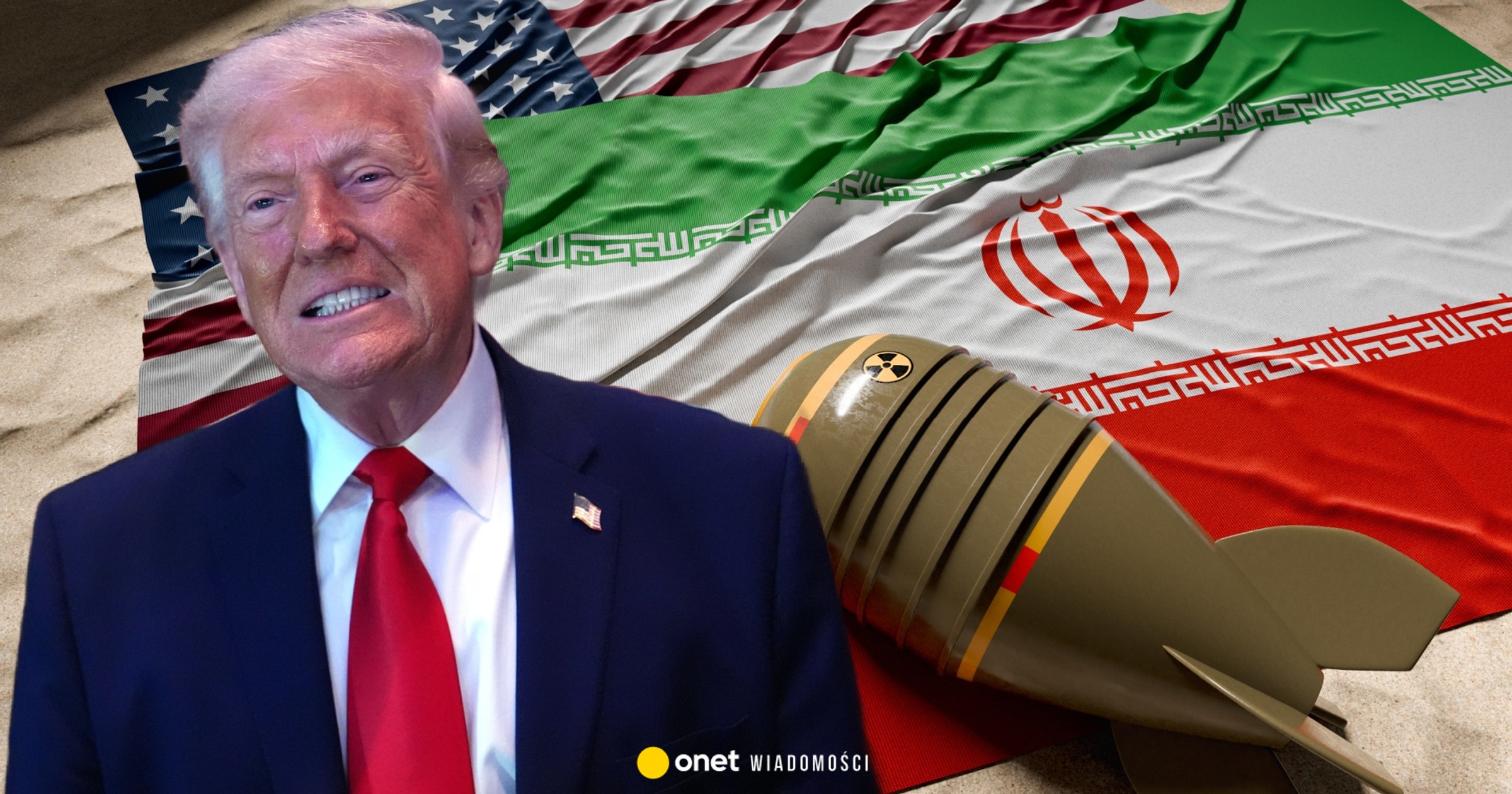
Grossi is not afraid to make disturbing predictions. More and more countries are unsure of the American nuclear umbrella and are therefore considering various solutions. Poland is also mentioned among these countries. “Such discussions take place,” says Grossi.
— I don't want Germany to be equipped with nuclear weapons, a European diplomat whose country suffered greatly during World War II tells The Economist. It lists a dozen countries that are likely to be seriously exploring nuclear options, from northern Europe to Indonesia, Turkey and the United Arab Emirates.
— One morning we may wake up to a flash of lightning in the desert, says one expert anonymously in an interview with The Economist.
If a nuclear arms race can be avoided, one of the main reasons will be that currently the country that starts such a race first risks a lot.
Rogue states caught acquiring raw materials to create a bomb risk crippling sanctions and military attacks.
Meanwhile, any state with even a modicum of respect that disregards the Nuclear Non-Proliferation Treaty — a legal ban on the creation of new nuclear-armed powers signed by 191 states — risks becoming a pariah, incurring unpredictable economic and diplomatic costs.
In an interview with Inside Geopolitics, a video program produced by The Economist. As director general of the International Atomic Energy Agency (IAEA), Grossi is tasked with persuading countries to did not violate restrictions on nuclear weaponsand alert if they try to do so.
Asked if he is worried about the nuclear arms race, the veteran Argentine diplomat replies simply: “I'm really worried.” Can he confirm reports that many countries are secretly considering acquiring nuclear weapons? This concerns Iran's neighbors in the Persian Gulf, or America's allies – Germany, Japan, Poland and South Korea – who are no longer sure whether they are protected by the American nuclear umbrella. — Such discussions take place – he replies.
Grossi admits that the existing nuclear non-proliferation regime has failed over the years to prevent several countries from joining the club of nuclear powers. She calls him though “one of the last points of stability we have” in a dangerous world.
According to the expert – if more countries strive to have nuclear arsenals, the domino effect will “inevitably” lead to “a large number of countries” following in their footsteps.
Grossi condemns the strategy of nuclear bluff that has led Iran to its current dismal fate. He points out how the Iranian regime boasted that it had all the elements needed to build a nuclear bomb, including uranium enriched almost to weapons-grade levels, and then asked the world to believe that it had no intention of building bombs or warheads.
Nor does he support the view of Americans and Israelis that an Iranian nuclear breakthrough was inevitable. Instead, it describes unsuccessful appeals to Iranian authorities to grant IAEA inspectors the full access that the country's large and ambitious nuclear program required because in the nuclear field “promises are not enough.”
Unfortunately, Iran's leaders preferred a policy of ambiguity, and American and Israeli patience ran out. Grossi speaks directly about the disastrous consequences of the risk taken by the authorities in Tehran. He was also in Iran's underground nuclear complexes, which now lie in ruins. He spoke to Iranian officials and scientists killed in airstrikes and targeted killings.
The head of the IAEA believes that lessons can be learned from the deaths of Middle Eastern leaders who sought to acquire nuclear weapons in Iran, Iraq and Libya. Rulers with nuclear ambitions should return to the negotiating table. He is too diplomatic to mention Israel's unofficial nuclear arsenal and the concern it raises among some neighbors.
Others draw exactly the opposite conclusion. The European diplomat interviewed by The Economist often discusses nuclear strategy with governments across the continent. It describes the cynical mood that gripped European capitals when Russia invaded Ukraine in 2022 and intensified after President Donald Trump returned to office last year.
Behind closed doors, European officials agree that “Ukraine would not be attacked if it had nuclear weapons.” Yes, Grossi is “absolutely right” that the world as a whole is safer without additional nuclear weapons. – But let's look at the interests of individual countries – insists the diplomat. Governments in Iran, Iraq and Libya have been negotiating with the West over their nuclear programs. They're all dead now.
— The only one alive is Kim Jong Un, we hear. It's about a North Korean despot who defied the world by building intercontinental ballistic missiles with nuclear warheads. The diplomat lists a dozen countries that are likely to be seriously exploring nuclear options, from northern Europe to Indonesia, Turkey and the United Arab Emirates.
— I don't want Germany to be equipped with nuclear weapons, says a European diplomat whose country suffered greatly during World War II. But he predicts that one day Berlin will want a nuclear bomb “and will get it because it can't rely on the United States, and I can't believe I'm even saying that sentence.”
In search of safety in a lonely world
Grossi is not shocked by regimes that believe they would feel safer if they had nuclear weapons. Instead, it calls for an in-depth analysis of individual countries' motivations. The argument that nuclear weapons serve as protection is 'right in the case of North Korea' – he admits.
But the Kim regime must first withstand pressure from America, China and South Korea in its corner of northeast Asia. However, he argues, the geography and politics of the Middle East generate complex dynamics that make it more risky for a state in this region to “burn bridges” and pursue nuclear weapons.
However, even in the Middle East, force is not a panacea. Grossi is convinced that Iran's nuclear program cannot be completely destroyed by bombingamong other things, because “you can't unlearn what you've learned.” The only solution for him is a negotiated settlement.
Other diplomats and experts offer more bleak forecasts. As the Gulf War drags on, they see more and more reasons why Iran should pursue nuclear weapons, although its program may become smaller and even more secret to counter infiltration by Israeli and US intelligence, and the devices it produces may be quite primitive.
“We may wake up one morning to a flash of lightning in the desert,” says one expert. But even a simple nuclear explosion sends a signal that neighbors will be forced to heed. The nuclear dominoes are already falling. One more push could knock them over.
© The Economist Newspaper Limited, April 14, 2026


