Germany wants to knock the ace out of Trump's sleeve before he pulls it out. With the help of spies


Germany is taking steps to give its spies broad new powers in preparation for a potential “divorce” with the US. The current restrictions result from deliberate safeguards introduced after World War II to prevent a repeat of abuses committed by Nazi intelligence services.
Officials in Berlin say that just as European countries must radically strengthen their armed forces to gain greater autonomy, Germany's intelligence services must now become much more efficient.
— We still want to cooperate closely with the Americans, but if the president [USA]whoever it may be, decides to act independently in the future, without Europeans… we must be able to stand on our own feet, explains Marc Henrichmann, chairman of the special committee of the German Bundestag that supervises the country's intelligence services, in an interview with POLITICO.
German leaders believe the need is particularly urgent in their country, where foreign intelligence services, or BND (German: Bundesnachrichtendienst), are subject to much greater legal restrictions than intelligence agencies in other countries. These restrictions are the result of deliberate safeguards introduced after World War II to prevent a repeat of abuses committed by Nazi intelligence services.
These had limitations, however a side effect of Germany's special dependence on the United States for intelligence gatheringwhich is currently perceived as a potential threat.
— In the intelligence industry, the question always arises: what do you have to offer me, and what can I offer you? says Henrichmann. “If Germany is just the recipient (of intelligence), the risk is simply too great,” he adds.
German Chancellor Friedrich Merz now wants to strengthen and free his country's foreign intelligence service, giving it much broader powers to carry out acts of sabotage, conduct offensive cyber operations and conduct more aggressive espionage activities.
A similar change, Frei said, “must now also be applied to our intelligence services.”
Nazi legacy
The German intelligence agency BND was founded in 1956 with legal restrictions intended to prevent a repeat of abuses committed by the Nazi Gestapo and SS — although at the time many of its agents were former Nazis.
To strictly separate the BND from the police and prevent interference in internal affairs, the agency was placed under the supervision of the chancellery and was subject to strict parliamentary control. Its powers were limited to collecting and analyzing intelligence data. Agents had no authority to intervene to thwart potential threats.
These restrictions remain in force today. German spies, for example, can learn about a planned cyber attack thanks to surveillance, but not stop it on their own. They can eavesdrop on conversations under strict legal supervision, but cannot carry out acts of sabotage to eliminate a detected threat.
Germany's strict data protection laws – which are largely a reaction to the legacy of the East German secret police, or Stasi – further limit the BND's activities. For example, the agency must remove personal data from documents before forwarding them to other intelligence services.
According to German officials, such restrictions are no longer justified, especially in light of the growing threat of sabotage from Russia.
— If there are attacks on Germany, in my opinion it is not enough for us to just observe, we must also be able to defend ourselves, says Frei, the chancellery official responsible for BND reform. “All other countries in the world that have adequately sized services do this,” he argues.
This heavy dependence on the United States has led some German leaders to sound the alarm that the alliance with Washington must be maintained as much as possible, even as Berlin gradually moves to reduce its dependence on it.
Without the United States sharing intelligence, “we are vulnerable,” Foreign Minister Johann Wadephul said in a radio interview this week. “This is the naked truth that I cannot spare anyone,” he added.
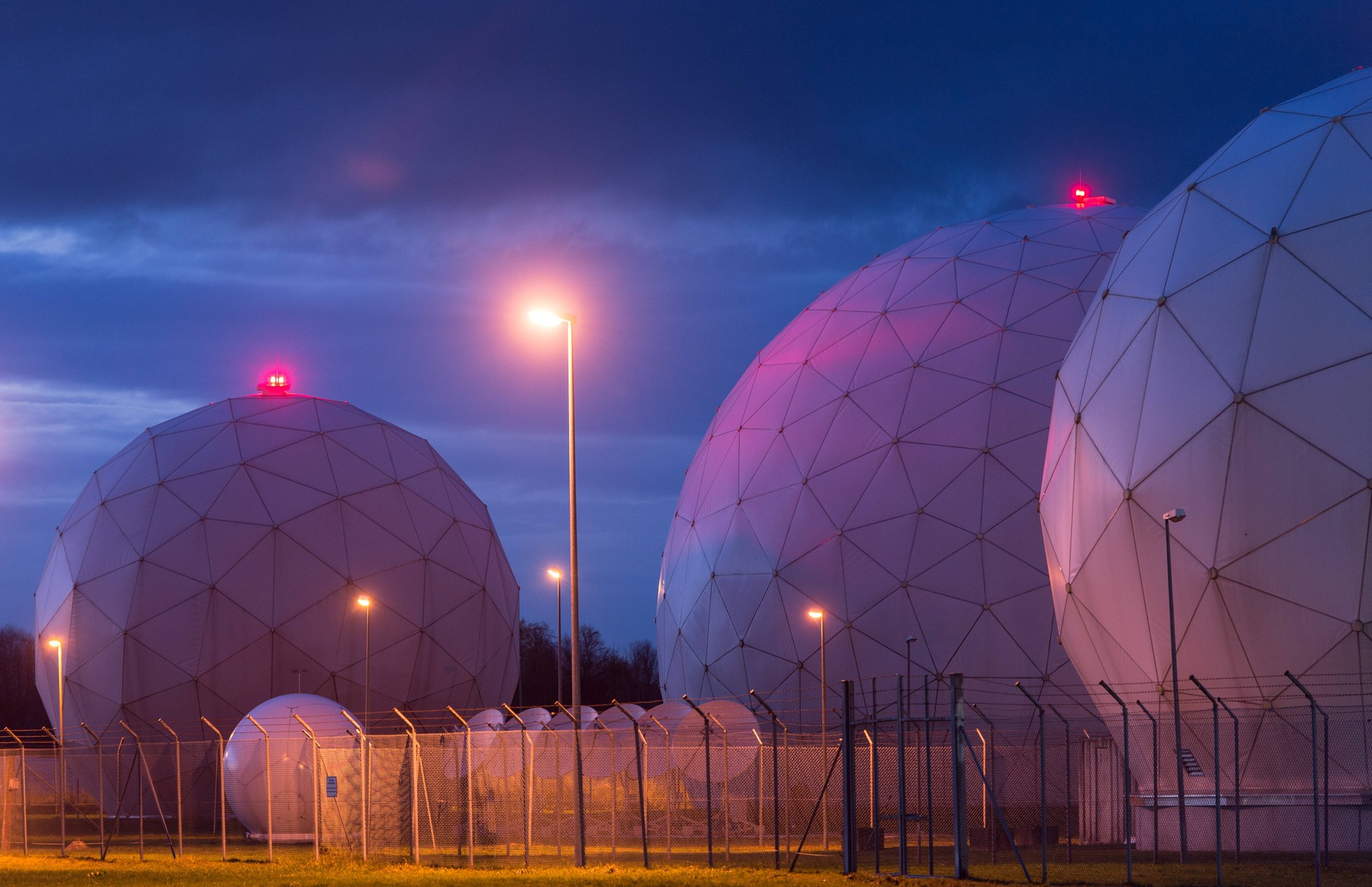
Radar domes at the communications interception station of the German Federal Intelligence Service (BND) in Bad Aibling, Germany, November 21, 2015.MATTHIAS BALK / PAP
“A game without rules”
A few months later, Merz promised to significantly expand BND's capabilities.
“The old certainties have lost their value, the proven principles no longer apply,” Merz said in a speech to agency officials. “Given the responsibility we bear in Europe due to our size and economic power, our desire is for the BND to operate at the highest level in the intelligence field,” he added.
The Merz government increased the BND budget this year by approximately 26%, to EUR 1 billion 51 million (PLN 6 billion 370 million). The Chancellor is also seeking to relax the data protection rules to which the BND is subject, allowing the use of artificial intelligence and facial recognition.
The office hopes that the full package of proposed reforms will be put to a vote in parliament in the fall.
Nevertheless there will likely still be significant restrictions on BND. According to German media citing the draft proposal, the agency's expanded powers will depend on the chancellery's national security council declaring a “special intelligence situation,” which will also be subject to approval by two-thirds of lawmakers on the parliamentary committee that oversees the BND.
Many MPs from the German government coalition believe that the proposed changes will significantly improve the country's ability to defend itself.
“Those who are working against us – Russian agents, Russian cyberspace factories – are acting in the same way as the Nazi intelligence services once did,” said Henrichmann, a Conservative MP who chairs a parliamentary committee. — In a game without rules, we cannot stand aside and impose artificial restrictions on ourselves.