ASML, the only existing supplier of equipment necessary to produce the most advanced chips, presented its financial results for the first quarter of 2026. In short: after a year of growth The Dutch expect another year of growth, which will be better than initially expected.
As the company's CEO, Christophe Fouquet, said during the presentation, “We expect supply in the near future [chipów] will not meet the demand”, which is why producers of the most advanced semiconductors decide to build further factories, which must be equipped with, among others, ASML lithography machines.
ASML increases machine production
This is, of course, the result of the ongoing boom in AI accelerators, processors and computer memory, driven by the growing use of artificial intelligence. Under these conditions ASML's revenue growth rate will largely depend on how quickly it increases production of subsequent machinesbecause in practice this company remains one of the key bottlenecks in the global chip production infrastructure.
ASML is trying to increase production capacity and during the conference the company announced that it wants to produce 60 advanced EUV lithography machines in 2026 (last year there were 48). However, if the market continues to be as hot as it is now, it plans to increase their production to 80 units in 2027. Depending on the type of machine and its equipment, they cost from approximately EUR 200 to approximately EUR 400 million. In connection with ASML forecasts that this year it will obtain a record EUR 36-40 billion from the sale of its equipment and serviceswhile previously it was about EUR 34-39 billion.
ASML's EUV lithography system is required to print all of the world's most advanced semiconductors
|
ASML
China is an increasingly less important market
Many people watching ASML's financial report were waiting for the company's comment on China. At the beginning of April, a project appeared in the USA to… tighten sanctions on the sale of chip-making machinery to Chinawhich in the last quarter of last year were responsible for 36 percent quarterly sales of ASML systems.
Currently, ASML cannot sell its newest and most expensive EUV lithography machines (Extreme Ultraviolet, using light with a wavelength of 13.5 nm) to this country, but it can still sell – although with certain restrictions – older-type DUV lithography machines (Deep Ultraviolet, 193 nm). They are used by China's largest chipmaker, SMIC, to produce semiconductors for, among others, Huawei. If the American project were to come into force, it would also affect the most advanced DUV machines and their servicing.
However, as Roger Dassen, CFO of ASML, assured – “We believe that within the forecasts we presented, assuming an amount of EUR 36 to 40 billion, we are able to take into account the potential effects of ongoing export control talks.” In other words, ASML is betting that even if it loses a large portion of the Chinese market, it will still record a record year.
South Korea is filling the “Chinese” hole
Analysis of other data presented by ASML shows us where this optimistic assumption of a relatively small impact of possible new sanctions on the company's financial situation comes from. The slide below is key:
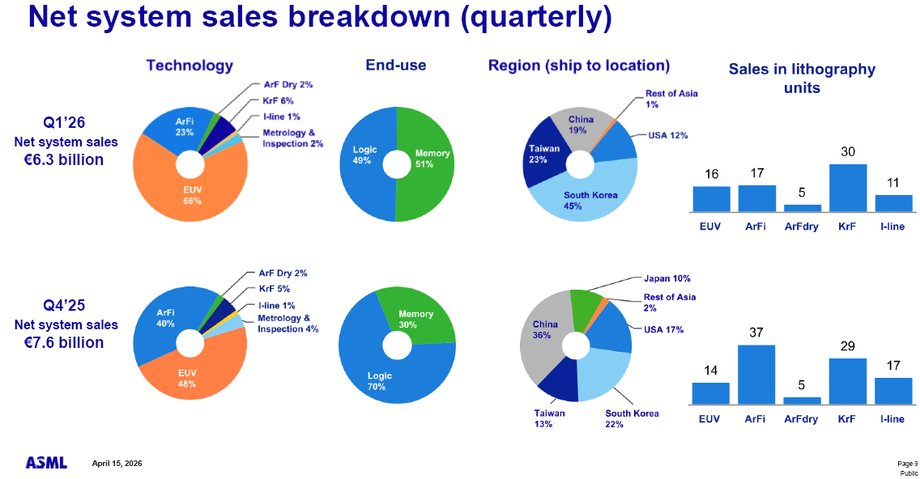
Detailed information about the devices sold provided by ASML.
During the quarter the share of system sales to China decreased, and the share of South Korea increased significantlyor more precisely, Korean computer memory producers. Historically, memory manufacturers have been reluctant to expand their production capacity and delay large-scale adoption of the latest semiconductor technologies for as long as possible because such investments rarely pay off. However, the ongoing boom in data center expansion – and especially in AI accelerators using HBM memory – has made it SK Hynix and Samsung are building large modern factories and modernizing their production lines, ordering more equipment from ASML than before. SK Hynix itself confirmed at the end of last month that it will spend over USD 8 billion with ASML within two years. for EUV lithography machines.
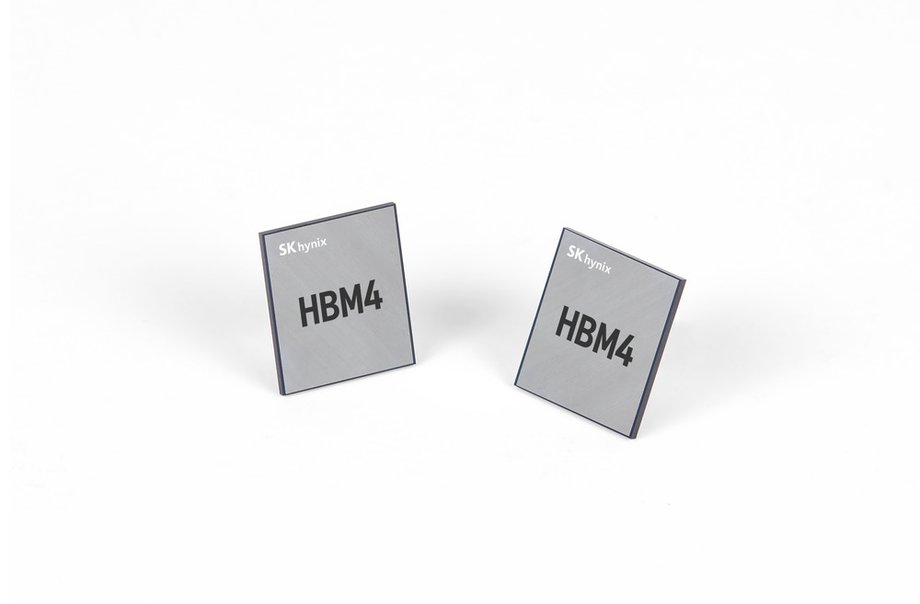
Memory manufacturers are currently investing huge amounts of money in building new and upgrading older factories.
In practice, this means that an increasing part of the semiconductor market uses newer types of machines. And the more ASML sells, the less important China will be in the overall sales mix for the Dutch company.
The same cannot be said about the Japanese Nikon, the second existing manufacturer of advanced DUV machines, which does not have EUV lithography equipment in its portfolio.