Jamie Dettmer is the opinion editor and foreign affairs columnist at POLITICO. He also covers the war in Ukraine and the conflict in the Middle East.
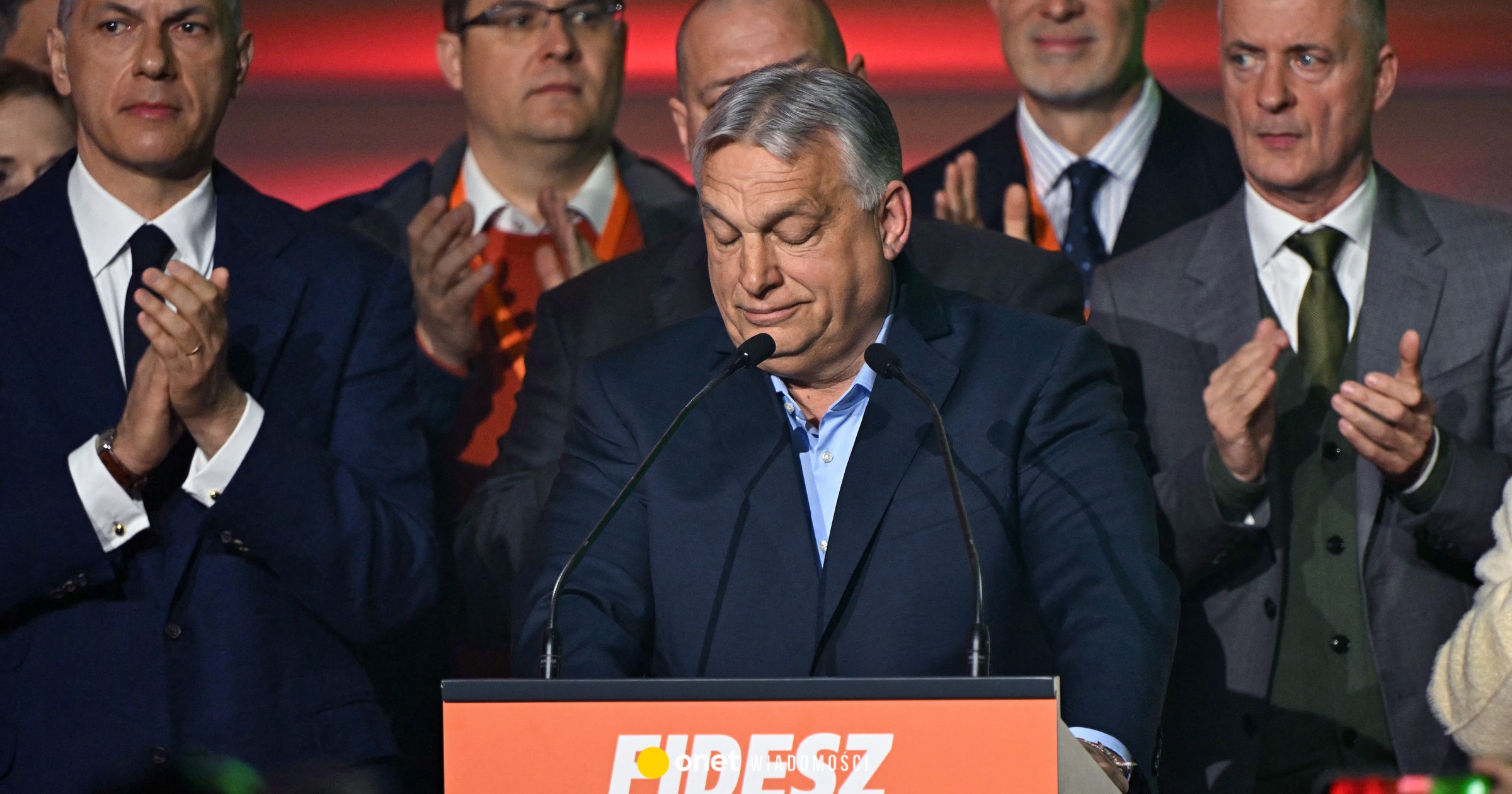
German Chancellor Friedrich Merz was in a great mood after Hungarian politician Peter Magyar decisively defeated incumbent Prime Minister Viktor Orban in Sunday's parliamentary elections in Hungary. “It's a good day and a very clear signal against right-wing populism,” he told reporters.
But is Merz right to see Magyar's stunning victory as a rejection of national conservatism and a defeat for the global far-right movement? Not really.
While Europe's centrist politicians rejoice over the defeat of their black sheep and many Orban-aligned parties fear that US President Donald Trump has now become toxic to them, everyone risks overinterpreting the election results in Hungary, which is far from a victory for left-wing liberalism.
It was an election campaign focused on economic issues and corruption, and Magyar himself attributed his victory to “a good kind of populism” during a press conference on Monday. As a result, a new Hungarian parliament will be created that will be fully right-wing, nationalist and sovereignist.
For the MAGA movement, Magyar's victory was, of course, a shock. When Merz delivered his speech on Monday, there was still an eerie silence in Washington over the fall of the movement's strongest ideological ally in Europe — affectionately known as “Trump before Trump.” And while leaders from across Europe, including Italian Prime Minister Giorgia Meloni, congratulated Magyar, the US president remained silent.
A blow to the far right?
This silence spoke volumes, perhaps suggesting that Washington also perceived Magyar's victory as a sign of an unfavorable trend for populists. Typically, Trump can't help but share his every fleeting thought with the world. Not this time – and no wonder.
Trump and MAGA have invested heavily in Hungary in an attempt to tip the scales in Orban's favor, gleefully breaking the taboo on interfering in another country's elections.
The US president has endorsed his ideological Hungarian ally at least six times, including last Friday, two days before the vote. He also promised Hungarians that the United States was ready to support their country with its “full economic power” if they voted for Orban. “We look forward to investing in the future prosperity that will come from Orban's continued leadership!” Trump declared on his Truth Social platform.
The article continues below the video
It was MAGA's latest support for the Hungarian leader, following US Vice President J.D. Vance's two-day trip to Budapest in support of the prime minister. Washington's dispatch of Vance — and before him U.S. Secretary of State Marco Rubio — showed how seriously the administration took the Hungarian elections.
— For MAGA, the two most important votes this year are the elections in Hungary and the midterm elections in the United States, Timothy Ash of the British think tank Chatham House told POLITICO during the election campaign.
But despite all the persuasions, threats and grim warnings – echoing Orban's own message that without him, both Brussels and Ukrainian President Volodymyr Zelensky would drag Hungary into the war raging on the other side of the border – Hungarians did not fall for it.
Peter Magyar speaks to supporters after the polls close in Budapest, April 12, 2026.Janos Kummer/Getty Images/Getty Images
Yet this is not as devastating a blow to the far right as it is made out to be.
Politicians and journalists are often quick to announce this or that election as the beginning of a broad and lasting transnational political trend. Sometimes it's right, and elections – especially ones that take such a dramatic turn – can actually be trend-setting. However, in most cases, elections do not strictly follow international trends, instead reflecting local political and economic conditions or simply being a natural, local swing of the pendulum.
The latter was likely an explanation for the British Labor Party's landslide victory in 2024 – which came despite it winning fewer votes than in its 2019 electoral defeat – after 14 years in opposition. It was a rejection of conservatives rather than conservatism; a testament to the huge unpopularity of the Tory Party (they lost 7 million votes compared to 2019), and the party itself admitted that it spoiled its term.
There is no doubt that Magyar's victory will continue to be seen as a symbolic defeat of populismperhaps even more so due to the massive efforts of the global far-right to support Orban in his time of need and Washington's increasing determination to step up support for like-minded political players across Europe.
Even before the election results were announced, some in the populist movement — such as Orbán ally Frank Furedi, who heads the Brussels think tank Mathias Corvinus Collegium — were already ready to admit that a prime minister's defeat would certainly be bad news. “If he lost, it would be seen as an ideological or intellectual failure,” Furedi told POLITICO.
— It is important to remember that Orban plays a disproportionately large role in shaping the views of many of these parties and their leaders who have strong sympathy for him, he noted. — I think that failure would have an impact, at least in the short term, in terms of shaping political dynamics across the continent, he said.
Magyar's victory will certainly ensure one thing: it will leave Slovak Prime Minister Robert Fico isolated in the European Council. This is likely to undermine the morale of other Eurosceptic populists, and as Furedi noted, it will a blow to the image of far-right movements around the world.
Political “kiss of death”
It will also likely encourage European populist leaders to distance themselves from MAGA – something that has been happening at a rapid pace since last spring, in response to the US president's risky economic policies and Vance's aggressive speech at the Munich Security Conference.
Since then, antipathy toward Trump has grown among populist-leaning European voters — a warning to right-wing populist parties trying to gain broader support that there are risks in moving closer to Trump. Support from the American administration is by no means a guarantee of victory and may become the “kiss of death”.
But in the case of the Hungarian elections, the outcome depends not so much on ideology as on jobs, economic stagnation, deteriorating public services and anger over corruption.
As Magyar, who is himself a conservative skeptical about Ukraine and is unlikely to break with Orban's migration policy, noted on X: the history of Hungary “is not written in Washington, Moscow or Brussels.” And in Hungary, voters have become restless. They were increasingly tired of Orban and his ruling Fidesz party after 16 years of political domination.
Indeed, the real lesson for every national conservative and populist leader, and for every incumbent politician, is this: If you don't meet expectations financially, you risk failure.
Or as Magyar himself put it: “You have to stay with the people.”
I’m Ashley Davis as an editor, I’m committed to upholding the highest standards of integrity and accuracy in every piece we publish. My work is driven by curiosity, a passion for truth, and a belief that journalism plays a crucial role in shaping public discourse. I strive to tell stories that not only inform but also inspire action and conversation.