Wizzair and others in trouble. The aviation industry is losing money on the stock exchanges

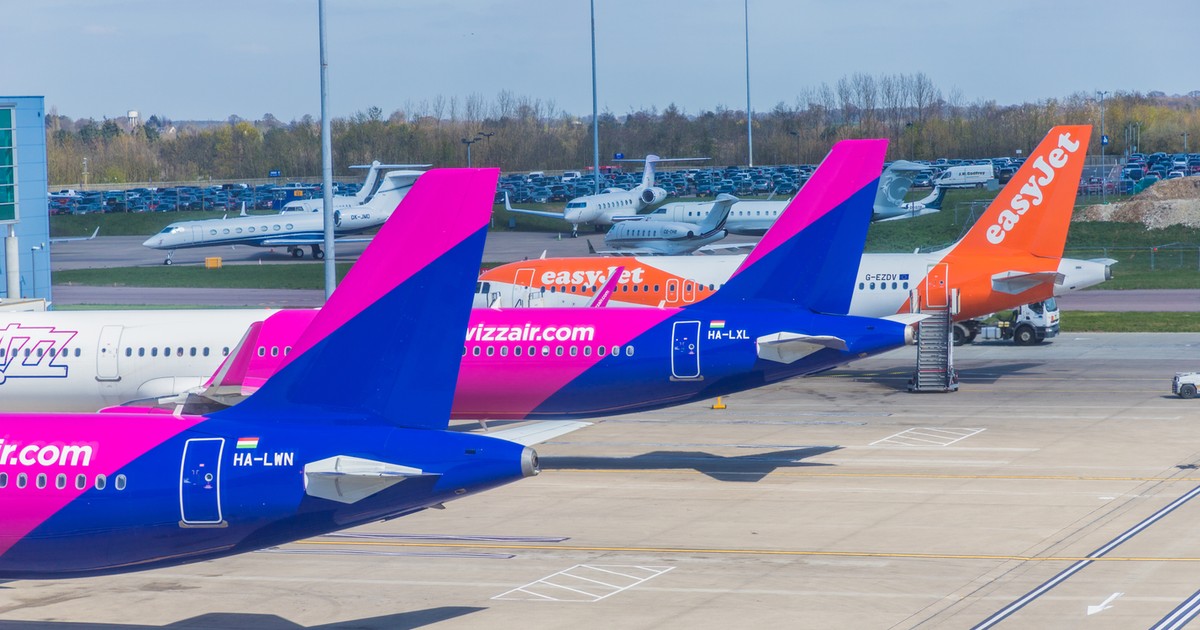
Aviation fuel shortages would likely mean flight cancellations and higher ticket prices for travelers.
Airline stocks were hit hard on Monday after President Donald Trump announced plans to block the Strait of Hormuz.
See also: Where to invest money now? We asked Wall Street experts about it. Here are their strategies
This is how the tourism industry is declining
While the British, German and pan-European indices fell by approximately 1%. at the opening of markets, the tourism industry has been hit harder.
Wizz Air, a Hungarian low-cost airline, lost almost 8% on Monday. Since the beginning of the year, their shares have fallen by approximately 30%.
Last month, Wizz Air announced that expects a loss of EUR 50 million due to war, rising energy costs and travel disruptions. The airline has canceled its services to Dubai, Abu Dhabi, Amman and Jeddah until September.
As the Strait of Hormuz is a key bottleneck for oil trading, concerns have been raised that European airports may face aviation fuel shortages in the coming weeks. Last week it was reported that the European branch of industry body Airports Council International had warned of possible shortages within three weeks.
EasyJet, british low cost airlines, they lost over 4%. approx. 11 a.m. local time. On the other hand TUI, a travel company that also runs its own airline, decreased by approximately 3.5 percent
Traditional carriers also had difficulty reassuring investors after Trump's announcement. German Lufthansa fell by 4.5 percent, and IAG – the holding company that includes British Airways and Iberia – lost about 3%.
In the United States shares of United Airlines, Delta Air Lines and American Airlines fell 2-3%. in pre-market trading.
Since the outbreak of war with Iran, airlines have canceled hundreds of flights, raised ticket prices and increased baggage fees in an attempt to offset the sharp rise in jet fuel prices.
See also: You could earn surprisingly a lot on the Warsaw Stock Exchange. What's next? We asked the experts
Oil prices continue to rise
Meanwhile, oil futures did the opposite – the price of Brent crude oil increased by over 7.5%.
This means that a barrel of oil costs over $100 again. after falling below that level during last week's fragile ceasefire. However, after Iranian and US leaders met in Pakistan over the weekend for peace talks, negotiations stalled.
Trump then wrote on Truth Social on Sunday: “Effective immediately, the United States Navy, the best in the world, will begin a process to BLOCKADE all ships attempting to enter or leave the Strait of Hormuz.”
On Monday morning, he added that the US would begin blocking ships trying to enter or leave Iranian ports from 4 p.m. Polish time.
The above text is a translation from American edition of Business Insider