The war in Iran is devastating the energy sector of the Persian Gulf. It will take years to rebuild

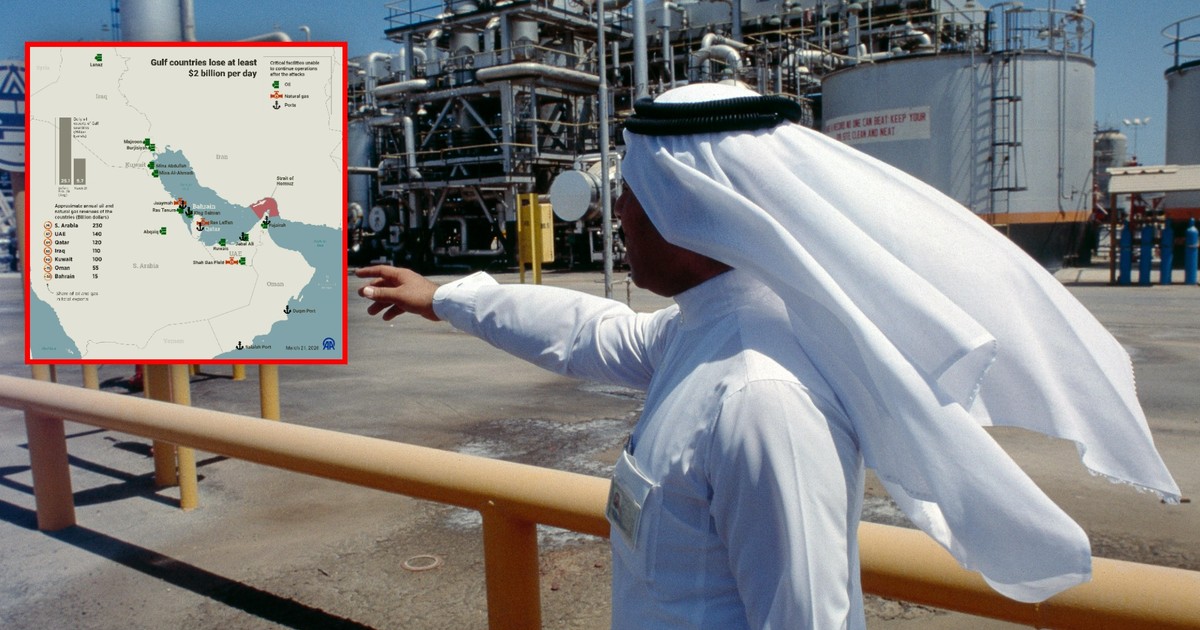
Mining installations and refineries have become a permanent target of attacks during the Persian Gulf War.
— The oil installations were not damaged to such an extent that talk about the necessary reconstruction taking years. The refinery's operations would probably return to normal within two or three months. The situation is worse with gas. The LNG installation in Qatar, responsible for approximately 20 percent, was destroyed. local gas. Its reconstruction is expected to take 3-5 years, so the effects are serious and will be felt for a long time – says Rafał Zywert, fuel market analyst at Reflex.
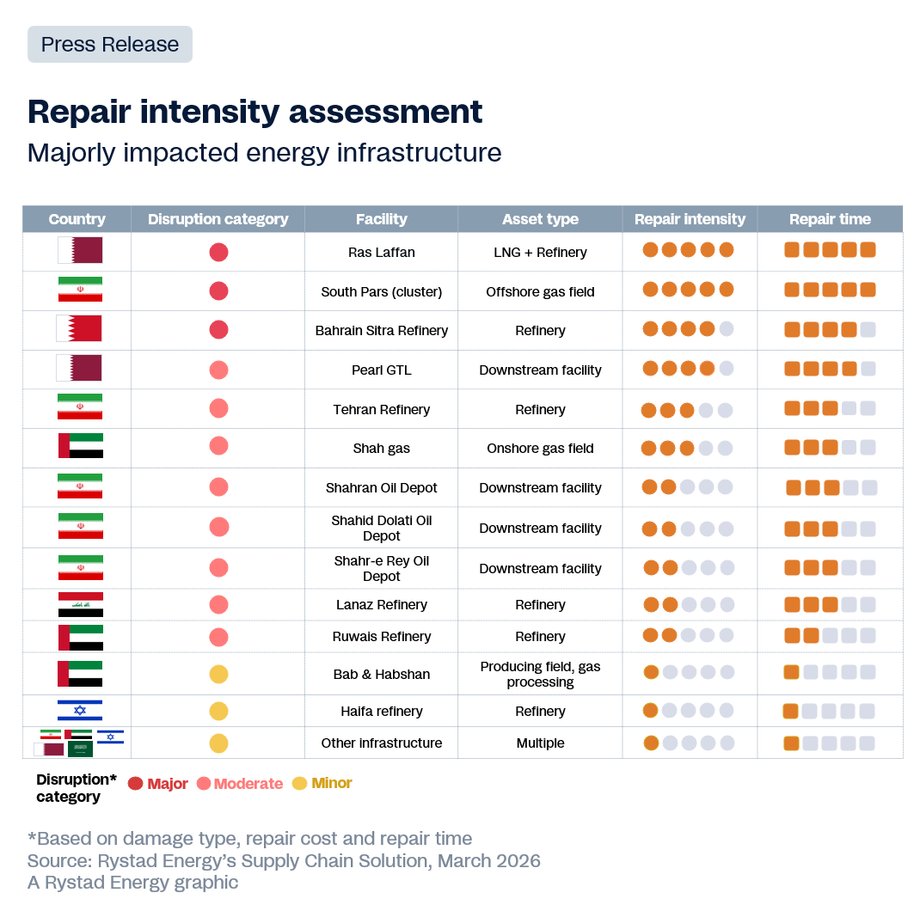
According to the release International Energy Agency (IEA) on March 23, 40 power facilities in nine Gulf countries were seriously or very seriously damaged. In turn, estimates from the analytical company Rystad Energy indicate that the costs of repairing the energy infrastructure in the region may reach at least USD 25 billion.
Rystad Energy Analysis
|
Rystad Energy
“Some assets may be restored within a few months, others may remain out of service for years” – Rystad analyst Audun Martinsen emphasized in the statement.
Shock on the LNG market
So far, the biggest shock for the commodity market was the attack on Ras Laffan in Qatar, the world's largest LNG hub. QatarEnergy confirmed fires and damage to infrastructure, including installations belonging to Shell, and announced a state of “force majeure” for some long-term contracts with customers in Europe and Asia.
Rystad Energy Inventory
|
Rystad Energy / Rystad Energy
In the United Arab Emirates, operations of Habshan, the largest gas processing installation in the country, were suspended following a fire sparked by an attack. Production was also suspended in the Shah gas field and limited on Das Island, where installations are being carried out LNG is operating at a reduced level due to the lack of safe export through Hormuz.
On the Iranian side of the border, the target of Israeli attacks was the “energy heart of Iran”, i.e. installations in the South Pars field. It is the largest natural gas field in the world, shared with Qatar. The fires led to the shutdown of some production units. Additionally, a gas pressure regulation station and administrative facilities were damaged in Isfahan province.
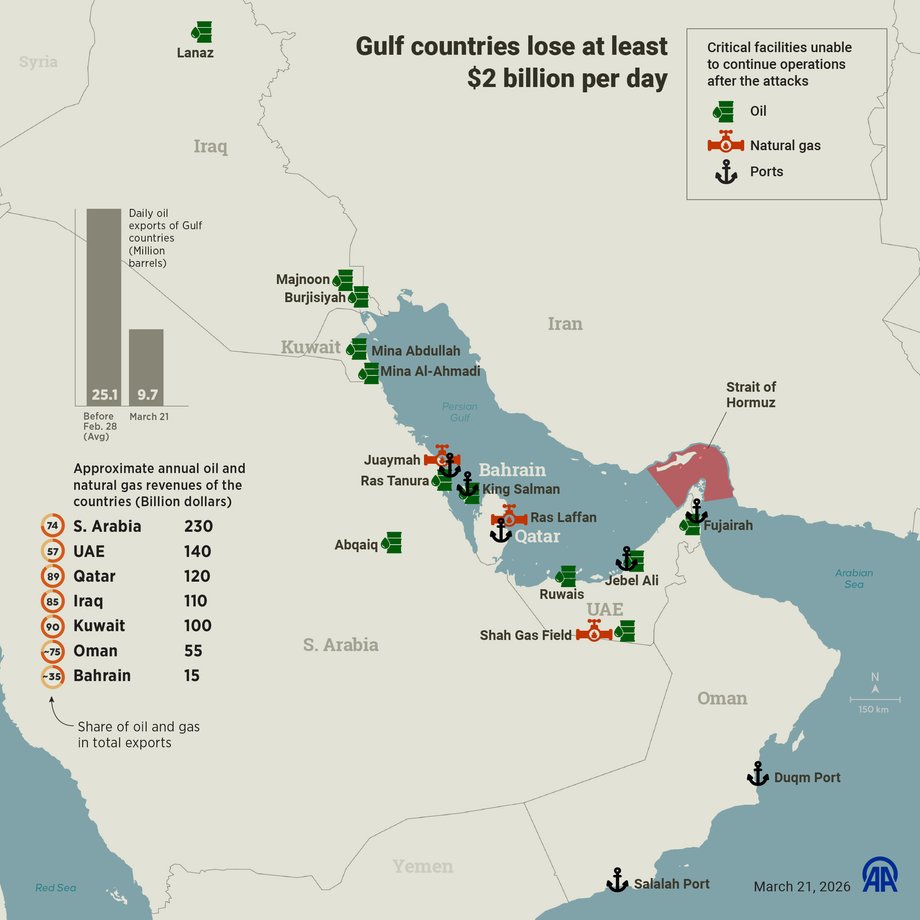
According to some calculations, the Gulf states are losing up to $2 billion from the blockade of the Strait of Hormuz. daily
|
Yilmaz Yucel/Anadolu via Getty Images / Getty Images
Refineries under less pressure than gas
Oil refineries suffered slightly less damage, which means that in this case, filling in the gaps may take several months.
Temporarily closed refineries generally returned to activity relatively quickly. In the United Arab Emirates, operations at the Ruwais complex, one of the world's largest refinery facilities, were temporarily suspended after a drone attack sparked a fire in an industrial zone. Although the decision was preventive in nature, the scale of the installation meant that even a short shutdown had an impact on regional fuel balances.
In Saudi Arabia, Saudi Aramco had to temporarily shut down the Ras Tanura refinery, the country's largest oil processing facility, at the beginning of the war with a capacity of approximately 550 thousand barrels per day. In parallel, an incident involving a drone was reported at Samref, a refinery co-controlled by the American ExxonMobil.
According to the official statement of the Ministry of Energy of Saudi Arabia, the attacks caused damage to production capacity in the Khurais and Manifa fields, resulting in a loss of approximately 5%. the kingdom's normal production capacity of 12 million barrels per day.
The ministry also reported that this week's attack on the east-west pipeline bypassing Hormuz also resulted in capacity decrease by approx. 700 thousand barrels per day.
In turn, in Bahrain, the Bapco Energies refinery, capable of processing approximately 400,000 barrels per day, was damaged so much that the operator announced “force majeure” on some contracts, similarly to QatarEnergy.
Kuwait also came under pressure. The Mina Al-Ahmadi refinery there was hit several times, and the attack on April 3 led to to fires in several operational units. Earlier incidents forced the operator to temporarily shut down part of the installation also in Mina Abdullah. In Iraq, operations at the Lanaz refinery in the Erbil region were suspended after a fire caused by a drone strike.
Ports and export bottlenecks
Damage to land infrastructure coincided with increasing pressure on ports that had become an alternative to Hormuz. Despite the partial takeover of exports beyond the strait, the global market still lost about 8%. oil supply compared to pre-conflict levels.
In Saudi Arabia, the port of Yanbu on the Red Sea, a key port for oil exports through pipelines bypassing the Gulf, stopped loading for several days. In the UAE, the port of Fujairah, located outside the strait, was attacked several times by drones, disrupting fuel supplies. Congestions in ports may therefore also be an element hindering the efficient transport of raw materials even after the strait is unblocked.